
Did you know that 73% of sellers are more likely to list their homes with an agent that uses video? Video trumps static photos every time. Buyers want to see the layout, the unique features, and the story behind the home. These are things that static photos cannot deliver. Since an online listing is their initial touchpoint for a home, make it stand out with video. If you haven’t jumped on the real estate video bandwagon yet, 2026 is your chance to revamp your marketing strategy with real estate video marketing tools.
Summary
Create an AI Video Tours from PhotosTry it For Free
Complete List of Real Estate Marketing Tools
Adding video to listings resulted in 403% more inquiries than listings without one, according to the National Association of Realtors (NAR). So, why aren’t more agents using video on their listings and marketing materials? To be specific, only 38% of agents use video on their real estate listings.
Part of the reason is the lack of access to (or knowledge of the best) real estate video marketing tools. If you want to become one of the agents that sold homes 31% faster because of video tours, you’ve come to the right place.
We’ll break down the various tools and technologies to optimize your video marketing performance in 2026.
Creation
Video creation is the most critical phase in video marketing, so it makes sense to start with this. There was a time when making real estate videos meant spending thousands of dollars on expensive, professional-grade cameras and hiring a professional videographer (some niches, like real estate, tend to be more expensive).
But since the advent of AI technology, things have changed dramatically. An AI real estate video app now makes it possible to create professional-quality videos with smooth transitions and visual effects.
The best real estate video apps include Videotour.ai. The AI video maker transforms your real estate photos into captivating video tours using cutting-edge AI technology. Instead of using static photos, you can enhance the engagement on your listings with dynamic and captivating video tours that make potential buyers look at each property more in-depth, rather than glossing over it.
The AI video creation process only takes minutes, not hours or days, unlike the traditional method. It offers automatic video editing that allows AI to incorporate the best special effects, trending music, and visual transitions to make it look professional. Even if you’re not a video editing expert, you’d be surprised by the results!
Here’s a step-by-step guide to using the AI real estate video app:
Step 1: Add photos, and the AI automatically generates the video. You can add up to 30 photos, and the video will be generated within minutes.
Step 2: Preview the video and add your preferred customization. This step is when you can make customizations to fit your real estate brand.
Step 3: Download your video. Once you’re happy with the customization, you can download and share the video on your listings and social media.
A free account is available with this AI real estate video app, but you can upgrade to premium plans to enhance your video capabilities. The various plans available offer more flexibility with your budget and needs, and the number of videos you can generate per month.
Distribution
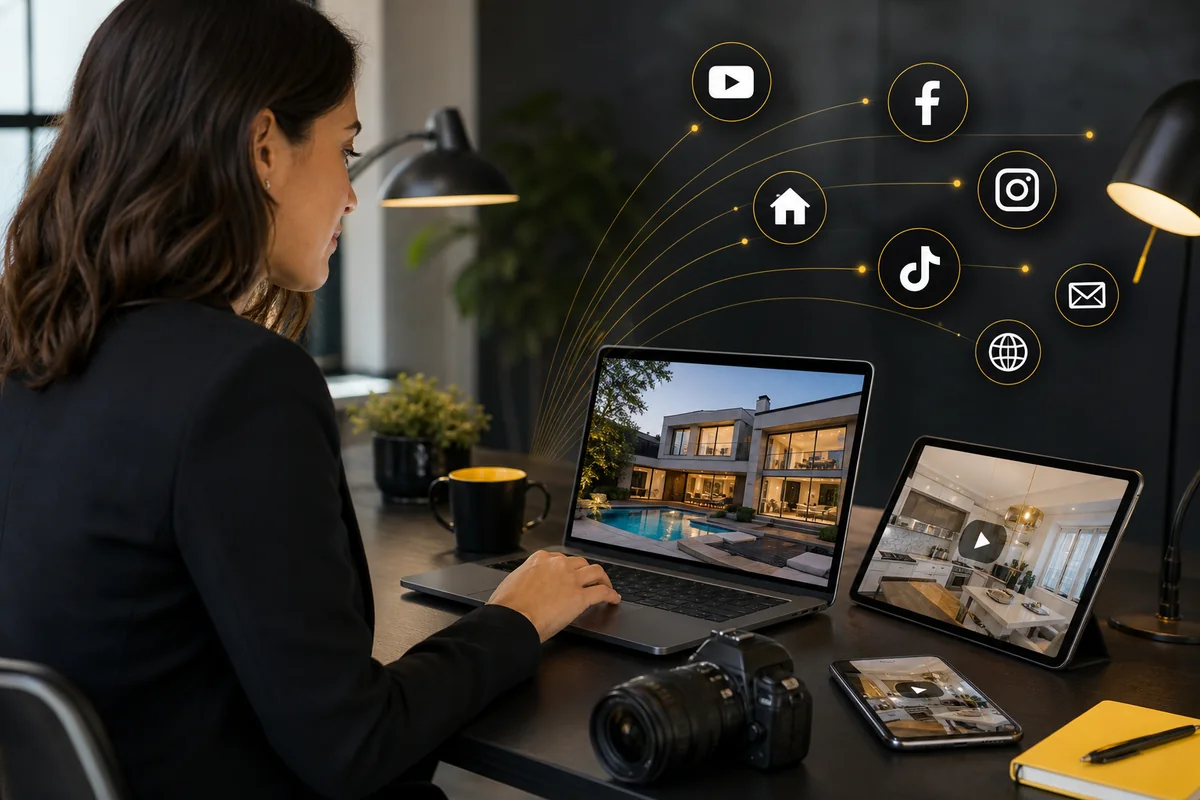
Once your real estate video is ready, the next step is to distribute it. Share your video on as many platforms online to expand reach and help potential buyers find your listings.
Currently, 51% of home buyers turn to YouTube when exploring properties in their area. It’s unsurprising because YouTube is the top video search engine. Hence, it is a go-to resource for home buyers. Some use it as a resource before they schedule an in-person visit. Posting virtual home tours on YouTube is an excellent way to help potential buyers find your videos and engage with your online listings.
Aside from being the top video search engine, YouTube is the second most-visited website globally. With only 25% of real estate agents utilizing YouTube, sharing your AI real estate videos on YouTube allows you to stay ahead of the competition.
YouTube is the primary distribution platform for real estate videos, but it’s not the only one. Instagram is another one with untapped potential for real estate agents, with 65% of marketers using Instagram for sharing videos on social media.
So, what’s the incentive for sharing videos on Instagram? Instagram videos receive twice as much engagement as other content on the social media platform. This statistic aligns with the report that 91% of consumers prefer video content over other content formats.
But more than viewing video content on Instagram and social media, users are more likely to share video content with their friends and family, expanding your video’s reach and potential.
Editing
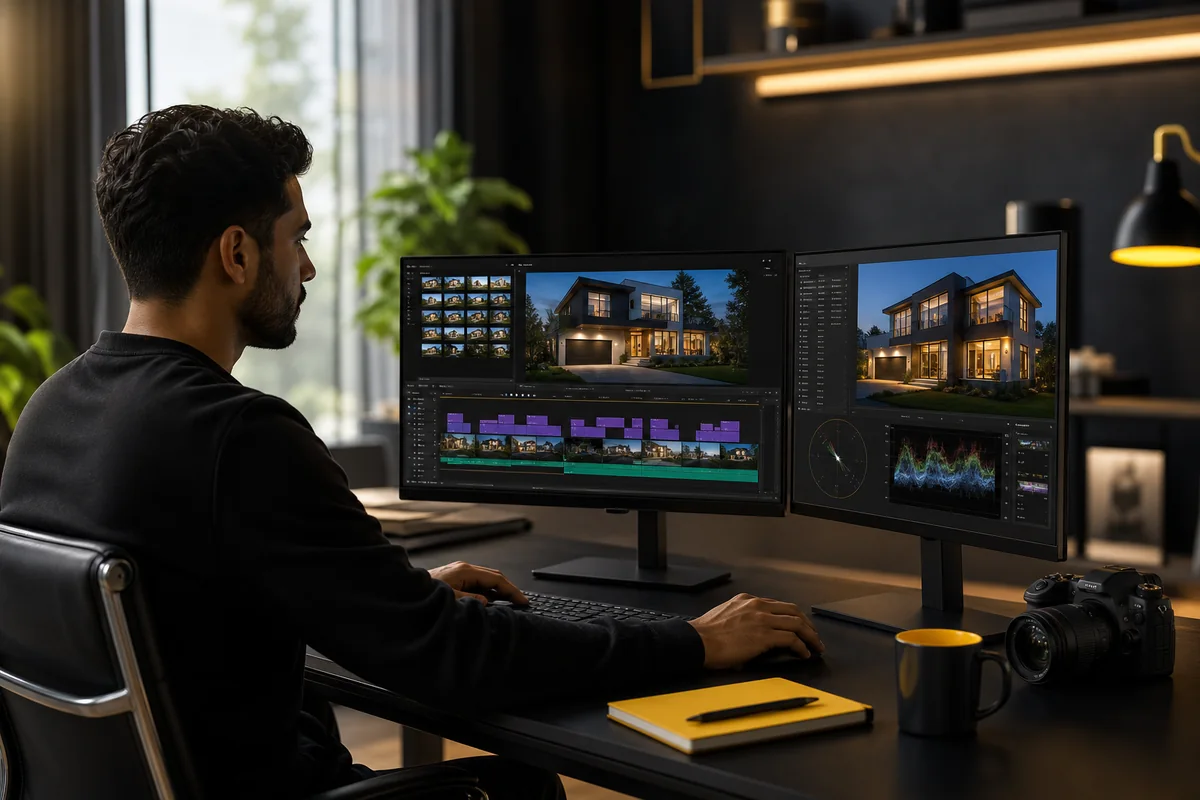
A video editor is another one of the essential real estate marketing tools that every agent should have in their arsenal. With a vast array of options available, choosing the best editor can easily overwhelm. CapCut emerges as a solid choice for real estate agents, especially those who are new to real estate video creation.
CapCut offers an impressive suite of video editing capabilities. The easy-to-use video editing functions blend seamlessly with the best real estate video apps, allowing you to enhance the video quality with keyframe animation, stabilization, slow-motion effects, and background removal. It provides better control of the final video output by tweaking the video to suit your preference and intended use.
Since CapCut offers user-friendly functions, you can easily navigate those features without technical know-how or prior experience in video editing.
Hardware
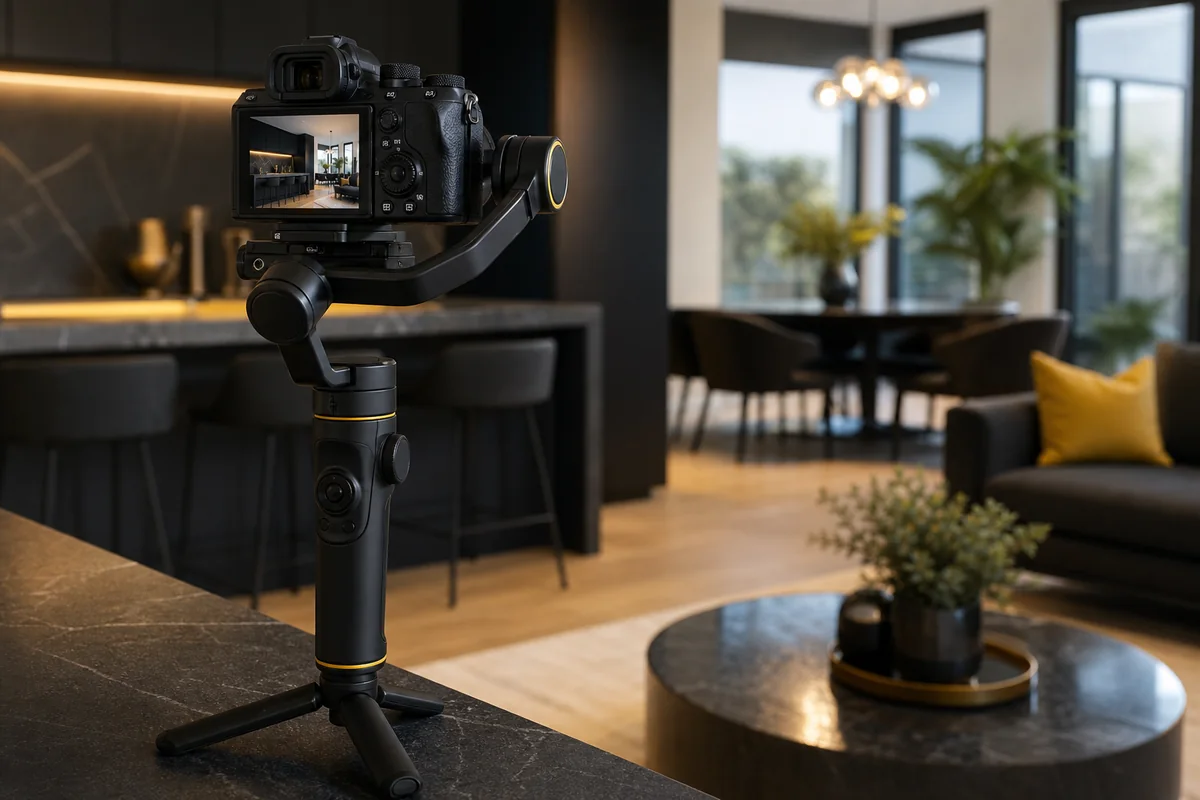
Despite the rise of AI real estate video apps, investing in hardware for high-quality video creation is a wise choice. Real estate video marketing will only grow in the coming years, so you can depend on the best hardware tools to achieve professional results.
One of the best investments for real estate video creation is a gimbal. It is essential for smooth and professional video footage. The reason why a gimbal is necessary is that many video walkthroughs of properties are done while moving. A stabilizer ensures quality and smooth video.
Nowadays, you can find various gimbal models, especially lightweight models. A durable yet handheld gimbal makes it easier to capture videos with smooth panning from room to room.
In addition, a good-quality microphone is a smart investment for agents. Like the gimbal, you can find various models ranging from a professional condenser mic kit to a compact wireless system like the DJI Mic 3. Invest in a microphone with AI noise cancellation for doing voiceovers for the video tour, or high-sensitive ones that capture immersive ambient audio.
FAQ
What is the best app to use for making videos?
It depends on what your goal is for making videos. But for beginners, an AI real estate video app is recommended since you can easily generate videos from photos and edit them with visual effects, smooth transitions, and add trending videos.
Can I use my iPhone for real estate photography?
Yes. Newer iPhone models are equipped with powerful cameras and photography features that make them ideal for real estate photography. Proper preparation for the listing and the right camera settings can produce professional-quality photos with an iPhone.
What are common mistakes in real estate videos?
Poor visual quality is the primary mistake in real estate videos. A lack of detail is also commonly overlooked in many videos, which deprives buyers of the ability to visualize the property online. Other common mistakes include shaky handheld footage, poor audio, or too much ambient noise.
Conclusion
With this complete guide to real estate video marketing tools, you’re ready to start planning for your real estate videos. However, your ideal toolset depends on your goals and target audience. Also, the tools you use are only as good as the quality of the content.
Emphasize story over specs. Buyers’ decisions are hinged on emotion. Storytelling is still critical in capturing their attention, so craft a narrative that appeals to those emotions and use your video as a medium. Focus on the lifestyle that the home offers, not just the square footage or number of bedrooms.
Next, focus on motion. Static images for real estate listings are a thing of the past. Dynamic videos offer a more immersive experience that captures and holds people’s attention on social media or listing sites.
And finally, choosing the right platform ensures that your real estate video reaches the right audience. Share your videos to connect with your followers and build credibility as a real estate agent.