
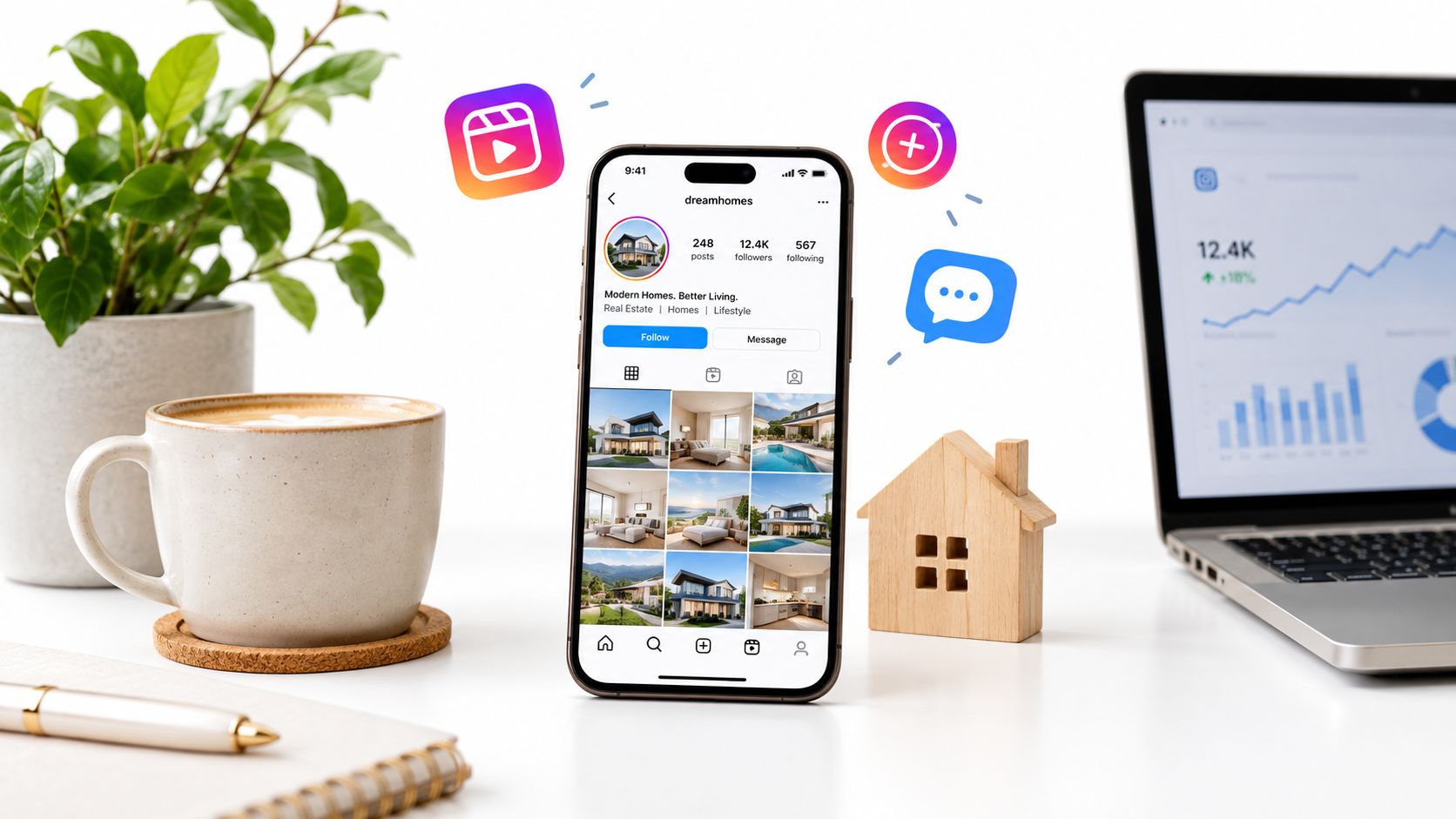
You've posted the new listing, shared the polished photos, and checked Instagram more times than you'd like to admit. The grid looks professional, yet inquiries remain sporadic. A few likes arrive, but no seller consultation or buyer conversation follows.
That's the central problem with real estate Instagram marketing. Instagram isn't merely a digital portfolio, and follower growth isn't the final objective. It's a lead-routing channel that should move the right person from discovery to profile visit, from profile visit to message or click, and from that action to a qualified conversation.
That's the central problem with real estate Instagram marketing. Instagram isn't merely a digital portfolio, and follower growth isn't the final objective. It's a lead-routing channel that should move the right person from discovery to profile visit, from profile visit to message or click, and from that action to a qualified conversation.
Summary
Create an AI Video Tours from PhotosTry it For Free
The Reality of Real Estate Instagram Marketing Today
A stagnant grid usually reflects a missing system, not a lack of effort. Agents often publish whenever a listing launches, measure likes afterward, and then move on to the next urgent task. That approach creates activity without a reliable path from attention to an appointment.
Instagram performance also varies sharply depending on the audience, format, account type, and measurement method. Hootsuite's benchmark places the broader “Real Estate, Legal and Other Professional” category at 3.70% engagement, while Dash Social's real-estate-specific benchmark reports about 0.30% for July–December 2024 activity (benchmark comparison). The difference matters because it warns you not to treat one benchmark as a universal promise.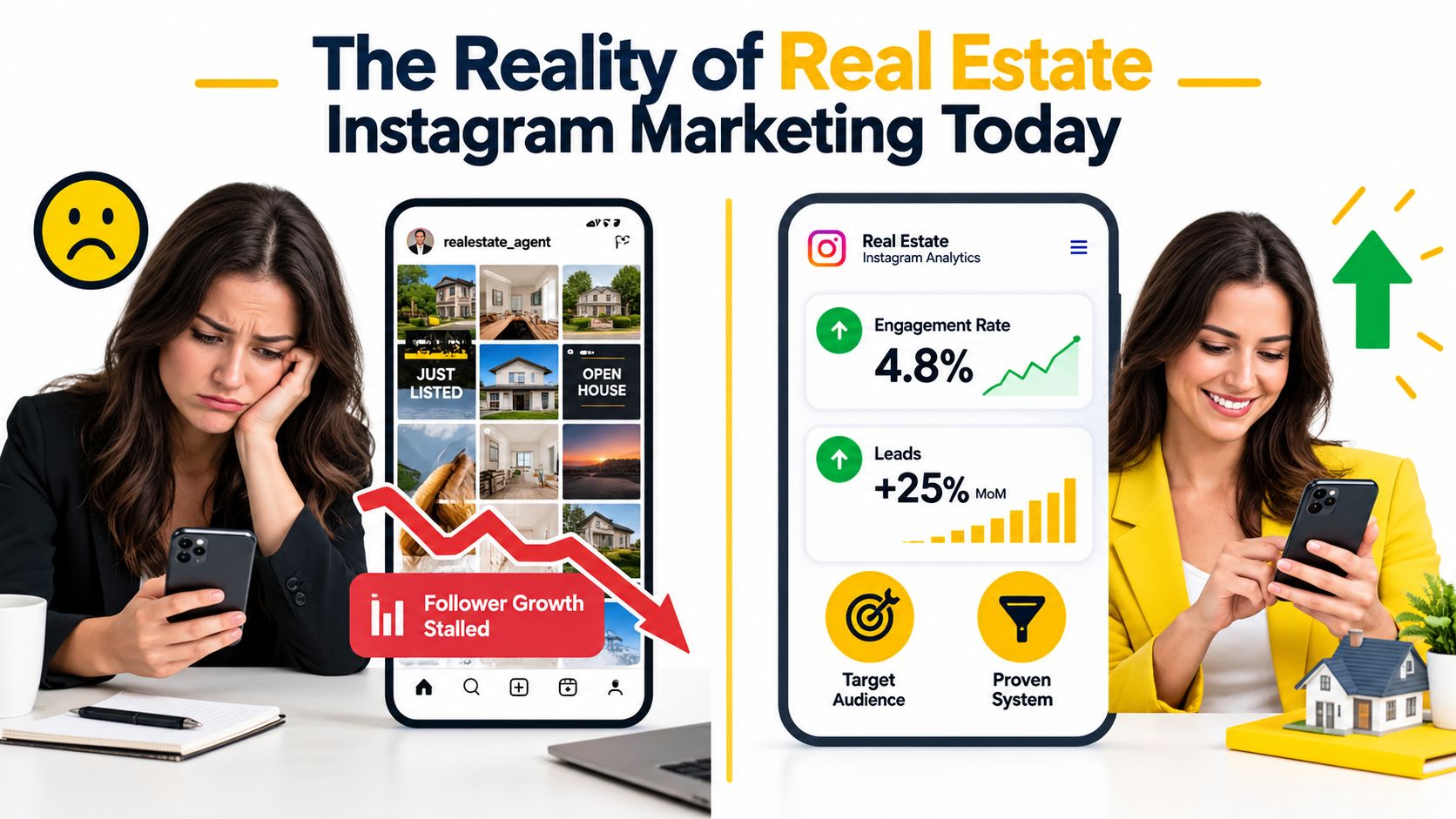
A 2026 study identifies meaningful real-estate engagement as comments, shares, saves, direct messages, link clicks, WhatsApp leads, price questions, location questions, requests for available units, and site-visit requests (social media engagement research). Your reporting should therefore separate discovery from intent.
Buyer-oriented content should reduce search friction. Use walkthroughs, neighborhood context, floor-plan explanations, financing questions, and clear availability prompts. Organic content can build trust and discoverability, while paid amplification can put a specific listing or offer in front of a defined local audience. Neither replaces a response process.
Instagram performance also varies sharply depending on the audience, format, account type, and measurement method. Hootsuite's benchmark places the broader “Real Estate, Legal and Other Professional” category at 3.70% engagement, while Dash Social's real-estate-specific benchmark reports about 0.30% for July–December 2024 activity (benchmark comparison). The difference matters because it warns you not to treat one benchmark as a universal promise.
Replace vanity metrics with routing signals
A seller lead may begin with a Reel view, but the useful signal comes later. Did the person visit your profile, save a pricing guide, ask about selling, click a valuation page, or request a call? A buyer may never comment publicly, yet send a private message asking whether a property is still available.A 2026 study identifies meaningful real-estate engagement as comments, shares, saves, direct messages, link clicks, WhatsApp leads, price questions, location questions, requests for available units, and site-visit requests (social media engagement research). Your reporting should therefore separate discovery from intent.
Assign content a job
Seller-oriented content should reduce uncertainty. Use market explanations, preparation checklists, pricing considerations, neighborhood demand signals, and before-and-after listing preparation to demonstrate judgment.Buyer-oriented content should reduce search friction. Use walkthroughs, neighborhood context, floor-plan explanations, financing questions, and clear availability prompts. Organic content can build trust and discoverability, while paid amplification can put a specific listing or offer in front of a defined local audience. Neither replaces a response process.
Practical rule: Every post needs one intended next action. If you can't say whether you want a save, a profile visit, a reply, or a consultation, the post is unfinished.For a broader framework, review this guide to real estate social media marketing. It helps connect individual posts to the larger marketing system instead of treating Instagram as a collection of disconnected updates.
Setting Up a Profile Built to Convert Buyers and Sellers
Your profile is the storefront people inspect after a post earns their attention. A visitor should understand who you serve, where you work, what kind of property you handle, and what to do next without searching through your grid.
Start with a positioning line that names the audience and geography. “Helping first-time buyers find homes in Austin” is clearer than “Real estate professional.” If you serve sellers, say so directly. Add searchable local and service terms naturally, such as neighborhood names, buyer representation, listing agent, condos, or relocation.
Use a recognizable headshot with consistent lighting and branding. A logo may identify a brokerage, but a face usually makes the account easier to connect with. Add the available contact action buttons, then test each one from a separate device.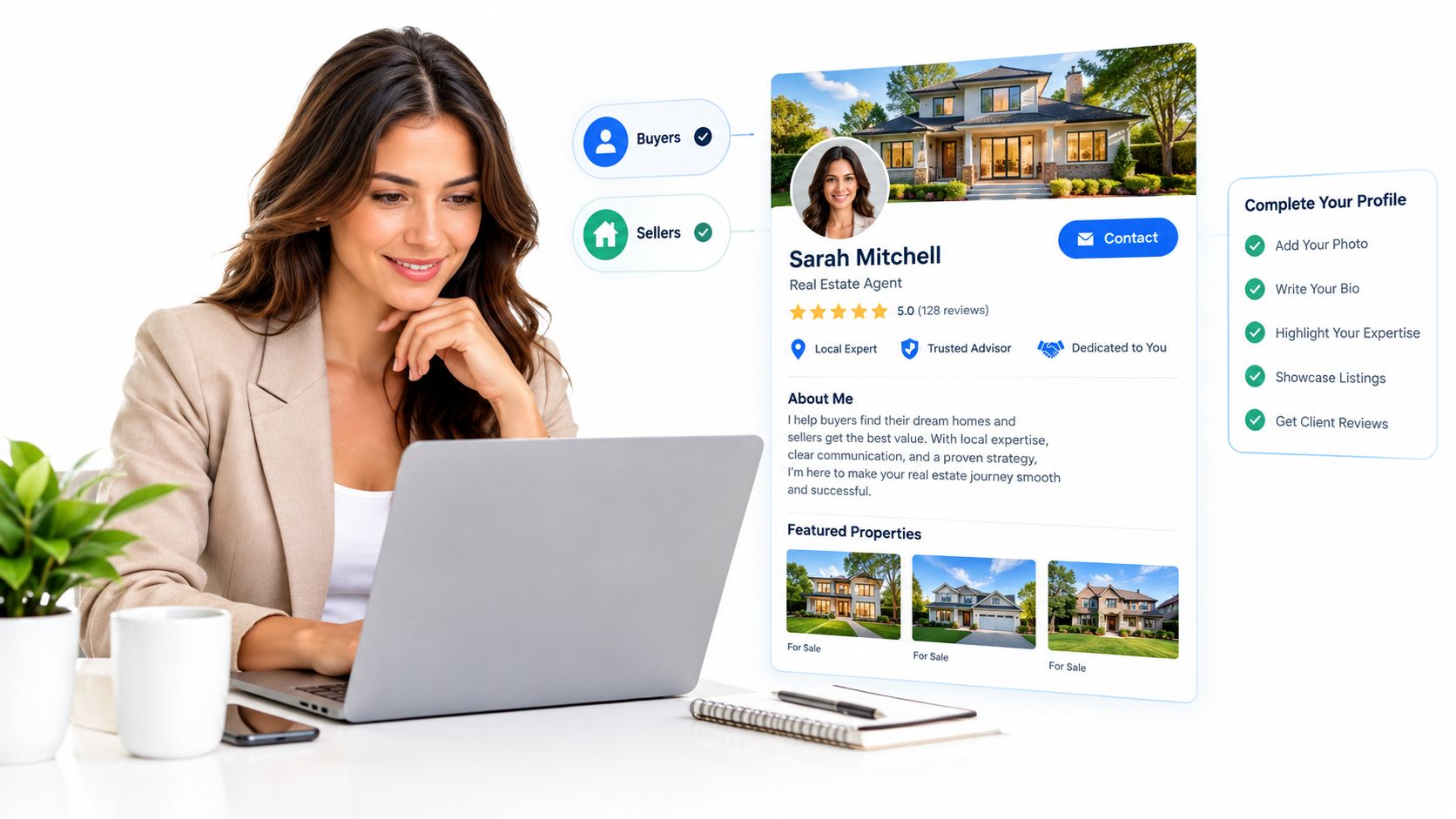
Organize Highlights around questions a new visitor is likely to have:
Start with a positioning line that names the audience and geography. “Helping first-time buyers find homes in Austin” is clearer than “Real estate professional.” If you serve sellers, say so directly. Add searchable local and service terms naturally, such as neighborhood names, buyer representation, listing agent, condos, or relocation.
Use a recognizable headshot with consistent lighting and branding. A logo may identify a brokerage, but a face usually makes the account easier to connect with. Add the available contact action buttons, then test each one from a separate device.
Build one clear path from profile to inquiry
Your link tool should behave like a small routing menu, not a random collection of destinations. Put the current featured listing, buyer resource, seller resource, and consultation or lead form where visitors can find them quickly. A Linktree-style page can work, but a native landing page may offer better control over tracking and message consistency.Organize Highlights around questions a new visitor is likely to have:
- Homes for sale: Show current properties and explain how to request details.
- Buyers: Save guides about showings, offers, and the local search process.
- Sellers: Include preparation advice, valuation information, and your listing workflow.
- Neighborhoods: Demonstrate local knowledge through amenities, streets, and practical context.
- Testimonials: Publish approved client feedback and outcome-focused stories.
- FAQs: Answer recurring questions about timelines, viewings, and communication.
Choosing the Right Format for Each Marketing Goal
Reels, carousels, and Stories aren't interchangeable containers. They do different jobs in the journey from unfamiliar viewer to active prospect.
Reels are useful for discovery because motion can introduce a listing, neighborhood, or point of view to people who don't yet follow you. Carousels support explanation and repeated reference, which makes them suitable for buyer education, seller preparation, comparisons, and listing sequences. Stories work best for warm-audience contact because replies, polls, question stickers, and link actions create low-friction interaction.
Benchmark figures show why a single “best format” rule is misleading. Hootsuite reporting cited carousels at 4.1% engagement and Reels at 3.0%, while another benchmark summary places Reels at about 35% of engagement for real-estate accounts in some datasets (real-estate social media statistics). Recent analysis cited by Inman reports 10.15% average engagement for carousels versus roughly 6% for Reels, while another benchmark found 6.90% by reach for carousels compared with 3.31% for Reels (format analysis).
Measure each format against its assigned job. Reels should be judged through reach, watch behavior, profile visits, and resulting actions. Carousels deserve attention for saves, shares, and profile activity. Stories should be evaluated through replies, sticker interactions, link taps, and conversations. The figures above come from different scopes, so use them as directional context, not as guaranteed results.
Reels are useful for discovery because motion can introduce a listing, neighborhood, or point of view to people who don't yet follow you. Carousels support explanation and repeated reference, which makes them suitable for buyer education, seller preparation, comparisons, and listing sequences. Stories work best for warm-audience contact because replies, polls, question stickers, and link actions create low-friction interaction.
Benchmark figures show why a single “best format” rule is misleading. Hootsuite reporting cited carousels at 4.1% engagement and Reels at 3.0%, while another benchmark summary places Reels at about 35% of engagement for real-estate accounts in some datasets (real-estate social media statistics). Recent analysis cited by Inman reports 10.15% average engagement for carousels versus roughly 6% for Reels, while another benchmark found 6.90% by reach for carousels compared with 3.31% for Reels (format analysis).
| Format | Primary Objective | Avg. Reach | Saves Rate | DM Inquiry Rate | Best Use Case |
|---|---|---|---|---|---|
| Reels | Discovery and reach | Often stronger for cold-audience discovery | Variable | Prompt-dependent | Listing hooks, neighborhood clips, objections |
| Carousels | Saves and education | Can be strong when the topic earns sharing | Often stronger for reference content | Prompt-dependent | Seller guides, buyer checklists, comparisons |
| Stories | Warm-lead nurturing | Primarily existing audience exposure | Not the main measure | Often strongest when interactive | Polls, replies, listing updates, appointment prompts |
Match the format to the outcome
Choose a Reel when the subject needs movement or a quick visual payoff. Choose a carousel when the audience needs to compare, remember, or explain something to another person. Choose Stories when you already have attention and want a response today.Measure each format against its assigned job. Reels should be judged through reach, watch behavior, profile visits, and resulting actions. Carousels deserve attention for saves, shares, and profile activity. Stories should be evaluated through replies, sticker interactions, link taps, and conversations. The figures above come from different scopes, so use them as directional context, not as guaranteed results.
Producing Reels That Earn Watch Time and Leads
A productive Reel starts before you open the camera. Pick one listing or neighborhood and create a short shot list that includes the strongest room, a detail buyers care about, a local visual, and a direct-to-camera explanation. A single batch session can produce several distinct assets without requiring a new concept for every post.
Use a three-part structure:
A useful caption formula is local insight plus one action. For example, explain why a neighborhood's layout suits commuters, then ask viewers to message a specific word for the full property details. One CTA keeps the routing path clear.
For a deeper production workflow, use this real estate video strategy system as a planning reference. If you're turning listing photos into motion-led assets, VideoTour.ai can create branded social videos with captions, music, motion, and multiple aspect ratios from uploaded property photos.
Reuse the finished walkthrough. Extract two carousels, one about features and one about buyer questions, then create a Story sequence with a teaser, a poll, a detail slide, and a message prompt. That gives you a campaign rather than a single post. You can also follow this practical guide on how to create a Reel for Instagram.
Use a three-part structure:
- Hook: Interrupt attention immediately with a visual change, a direct statement, or a local price-context question.
- Problem: Name the objection or uncertainty your audience already has.
- Payoff: Show the answer and give one clear next action, such as sending a keyword, opening the profile link, or requesting a showing.
- “Stop scrolling if you're searching under [local price range].”
- “Here's what buyers miss in this [neighborhood] home.”
- “Before you book a showing, check this feature.”
- “Would you trade extra space for this location?”
- “Three details that affect this home's resale appeal.”
Make the edit understandable without sound
Put the central idea on screen, not only in the caption. Captions should be large enough to read on a phone, remain visible long enough to process, and match the spoken point. Cut between rooms, details, and your face with a deliberate rhythm, but don't sacrifice comprehension for speed.A useful caption formula is local insight plus one action. For example, explain why a neighborhood's layout suits commuters, then ask viewers to message a specific word for the full property details. One CTA keeps the routing path clear.
For a deeper production workflow, use this real estate video strategy system as a planning reference. If you're turning listing photos into motion-led assets, VideoTour.ai can create branded social videos with captions, music, motion, and multiple aspect ratios from uploaded property photos.
Reuse the finished walkthrough. Extract two carousels, one about features and one about buyer questions, then create a Story sequence with a teaser, a poll, a detail slide, and a message prompt. That gives you a campaign rather than a single post. You can also follow this practical guide on how to create a Reel for Instagram.
Posting Cadence and the Weekly Content Rhythm
Consistency matters because an audience needs repeated opportunities to recognize your expertise. It also gives you enough comparable content to evaluate patterns instead of judging your entire strategy from one post.
A sustainable schedule can include four to five feed posts per week, with a working mix that favors Reels while preserving space for carousels and other formats. The ratio should serve your resources, not become a rigid rule. The benchmark context supports regular activity, with Hootsuite reporting an average of 8.6 Instagram posts per week for real-estate agents (real-estate benchmark data).
Use Stories as daily micro-touches rather than a second feed. Share preparation work, a quick neighborhood observation, a question sticker, a current listing reminder, or a response to a common buyer concern. The content can be informal, but it should still lead somewhere.
Rotate four content pillars: listings, market education, local lifestyle, and agent perspective. A listing post shows what you represent. Education explains how you think. Local content proves you know the area. Agent perspective makes the service feel personal and gives prospects a reason to start a conversation.
Avoid the launch burst. Publishing several listing posts in one day and disappearing afterward creates an uneven experience for followers and leaves future prospects with nothing new to evaluate. Schedule the campaign across the week, answer responses consistently, and review which posts generate profile activity or conversations rather than counting reactions. For more planning ideas, use this resource on real estate content marketing.
A sustainable schedule can include four to five feed posts per week, with a working mix that favors Reels while preserving space for carousels and other formats. The ratio should serve your resources, not become a rigid rule. The benchmark context supports regular activity, with Hootsuite reporting an average of 8.6 Instagram posts per week for real-estate agents (real-estate benchmark data).
A practical weekday rhythm
| Day | Format | Content Pillar | Primary Goal |
|---|---|---|---|
| Monday | Reel | Local lifestyle | Discovery |
| Tuesday | Carousel | Seller education | Saves and trust |
| Wednesday | Stories | Agent point of view | Replies |
| Thursday | Reel | Listing or buyer objection | Reach and profile visits |
| Friday | Carousel or Reel | Market education | Reference and inquiries |
Rotate four content pillars: listings, market education, local lifestyle, and agent perspective. A listing post shows what you represent. Education explains how you think. Local content proves you know the area. Agent perspective makes the service feel personal and gives prospects a reason to start a conversation.
Avoid the launch burst. Publishing several listing posts in one day and disappearing afterward creates an uneven experience for followers and leaves future prospects with nothing new to evaluate. Schedule the campaign across the week, answer responses consistently, and review which posts generate profile activity or conversations rather than counting reactions. For more planning ideas, use this resource on real estate content marketing.
Running Instagram Ads That Generate Listing Inquiries
Paid promotion works better when you decide what the prospect should do before choosing the creative. Select Leads if you need contact details and qualification fields. Select Messages if your team can respond promptly and prefers to qualify inside a conversation.
Start with the property location and a practical geographic area around it. Add audience signals that match the likely buyer or seller, but don't narrow the audience so aggressively that delivery becomes fragile. If you have a clean inquiry list, a lookalike audience can help you reach people with similar characteristics. Follow local housing advertising rules and platform policies before launching.
Don't invent a budget or expected cost per lead before checking your market, audience, property type, and creative quality. Those variables change substantially across campaigns. Start with a controlled test, monitor lead quality rather than volume alone, and pause variants that attract curiosity without useful contact information.
For help developing property-focused creative, review video ads for real estate by ContentBuck. The important operating principle is simple: paid reach only creates opportunity. Your form, CRM, notification process, and response owner determine whether that opportunity becomes a listing inquiry.
Start with the property location and a practical geographic area around it. Add audience signals that match the likely buyer or seller, but don't narrow the audience so aggressively that delivery becomes fragile. If you have a clean inquiry list, a lookalike audience can help you reach people with similar characteristics. Follow local housing advertising rules and platform policies before launching.
Sequence creative around one property
Build a small creative set with different jobs:- Still-image ad: Communicate the property's essential promise clearly.
- Reel ad: Use the organic walkthrough to show movement, layout, and atmosphere.
- Carousel ad: Present the rooms, features, and practical details in a sequence.
Don't invent a budget or expected cost per lead before checking your market, audience, property type, and creative quality. Those variables change substantially across campaigns. Start with a controlled test, monitor lead quality rather than volume alone, and pause variants that attract curiosity without useful contact information.
For help developing property-focused creative, review video ads for real estate by ContentBuck. The important operating principle is simple: paid reach only creates opportunity. Your form, CRM, notification process, and response owner determine whether that opportunity becomes a listing inquiry.
Turning Engagement Into Qualified Conversations
A comment or reaction is not yet a lead. Your job is to create a short, respectful path from interest to context, then route the person to the right next step.
Use a three-stage response process:
If a warm lead goes silent, use a soft check-in rather than repeated pressure. Share a relevant neighborhood update, a new property, or a short answer to the question that started the conversation. Engagement becomes commercially useful when your team records the source, qualification details, next action, and outcome in one place.
Use a three-stage response process:
- Acknowledge: Reply within your team's agreed service window and reference the person's actual question. A generic “send me a DM” response makes the prospect repeat themselves.
- Qualify: Ask about their timeline, price range, and motivation. For a buyer, you can also ask whether they're already working with an agent or have financing arranged, without turning the first exchange into an interrogation.
- Route: Offer a phone call, consultation, showing, valuation discussion, or resource link based on the answers.
If a warm lead goes silent, use a soft check-in rather than repeated pressure. Share a relevant neighborhood update, a new property, or a short answer to the question that started the conversation. Engagement becomes commercially useful when your team records the source, qualification details, next action, and outcome in one place.
Your First 30 Days on Instagram A Checklist
Treat the first month as an implementation sprint, not a test of whether one post goes viral. Each week should produce a visible improvement in the route from profile discovery to inquiry.
At the 60-day milestone, review the ratio of qualified DMs to appointments. At the 90-day milestone, identify which content themes and formats produced listing inquiries sourced directly from Instagram. That evidence should guide your next quarter more than follower totals.
VideoTour.ai turns sets of listing photos into ready-to-share property videos with motion, captions, music, branding, and social-friendly formats, helping agents maintain a consistent Instagram content rhythm without manual editing. Visit VideoTour.ai to create a property video and connect your next listing campaign to a clearer path from visual attention to inquiry.
Week one, remove friction
- Audit the profile: Rewrite the bio so it names your market, audience, and next action.
- Repair the storefront: Update the headshot, contact buttons, link destinations, and Highlight covers.
- Test the path: Open every link and submit the form yourself. Record what happens after submission.
- Define the dashboard: Track profile visits, saves, replies, link actions, DMs, qualified conversations, and appointments.
Week two, establish the baseline
Publish a four-post mix that includes a listing or property Reel, a buyer or seller carousel, a local post, and an agent-perspective post. Hold one batch shoot and turn the footage into several future assets. Label each post by objective so you can compare like with like.Week three, add conversation signals
Use Stories consistently, introduce polls or questions, and create one saved response for a recurring inquiry. Add a keyword CTA to one post and document how many people use it, what they ask, and whether they move toward a consultation.Week four, amplify one clear offer
Promote one listing or consultation path with a carefully defined audience and a creative variation from your organic content. Review Insights and your CRM together. Keep posts that generate meaningful actions, revise unclear CTAs, and remove destinations that create dead ends.At the 60-day milestone, review the ratio of qualified DMs to appointments. At the 90-day milestone, identify which content themes and formats produced listing inquiries sourced directly from Instagram. That evidence should guide your next quarter more than follower totals.
VideoTour.ai turns sets of listing photos into ready-to-share property videos with motion, captions, music, branding, and social-friendly formats, helping agents maintain a consistent Instagram content rhythm without manual editing. Visit VideoTour.ai to create a property video and connect your next listing campaign to a clearer path from visual attention to inquiry.