
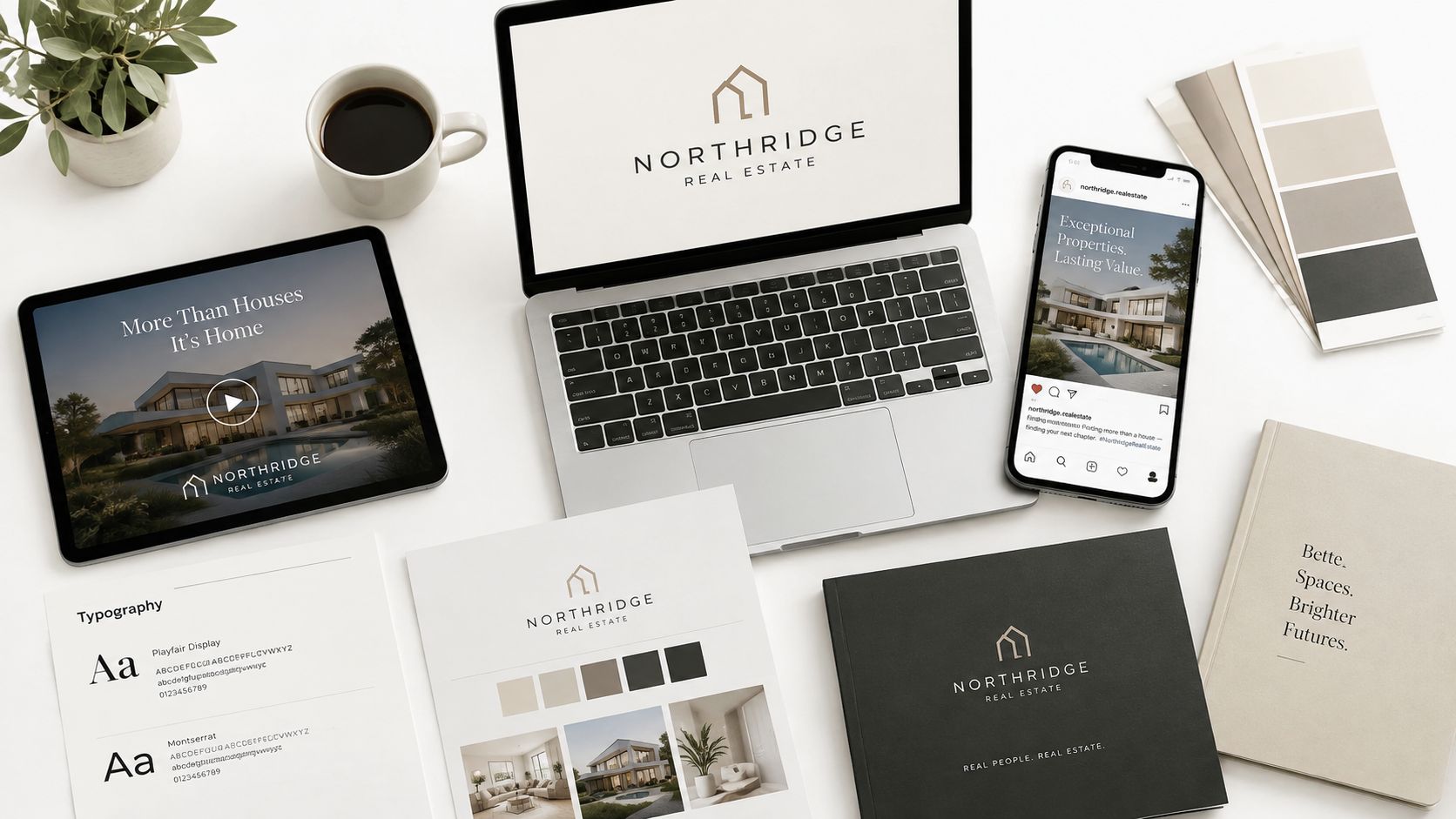
Social media is used by 75% of REALTORS®, matching the share that use drone photography or video, and 39% say it produces the highest number of quality leads. Real estate branding services now matter because they turn that visibility into a repeatable system, not just a polished logo.
A listing can look professional and still underperform if its photos, video, captions, thumbnails, contact details, and calls to action feel unrelated. Buyers often meet the property and the agent's brand online before they ever speak with either one. The practical question isn't whether you need branding. It's whether your branding can keep working when you publish the next listing, the next Reel, and the next market update.
A listing can look professional and still underperform if its photos, video, captions, thumbnails, contact details, and calls to action feel unrelated. Buyers often meet the property and the agent's brand online before they ever speak with either one. The practical question isn't whether you need branding. It's whether your branding can keep working when you publish the next listing, the next Reel, and the next market update.
Summary
Create an AI Video Tours from PhotosTry it For Free
Why Real Estate Branding Services Matter Now
The 2025 REALTORS® Technology Survey found that 75% of REALTORS® use social media in their businesses. It also reported that social media was the technology most often selected as producing the highest number of quality leads, at 39%, ahead of 23% for CRM systems and 17% for local MLS platforms. That matters because branding work now gets tested in motion, across feeds, story formats, listing pages, and team publishing habits.
A recognizable mark is the starting point. The actual deliverable is a visual language that survives resizing, animation, scrolling, listing portals, email, print, and handoffs between agents, coordinators, photographers, and editors.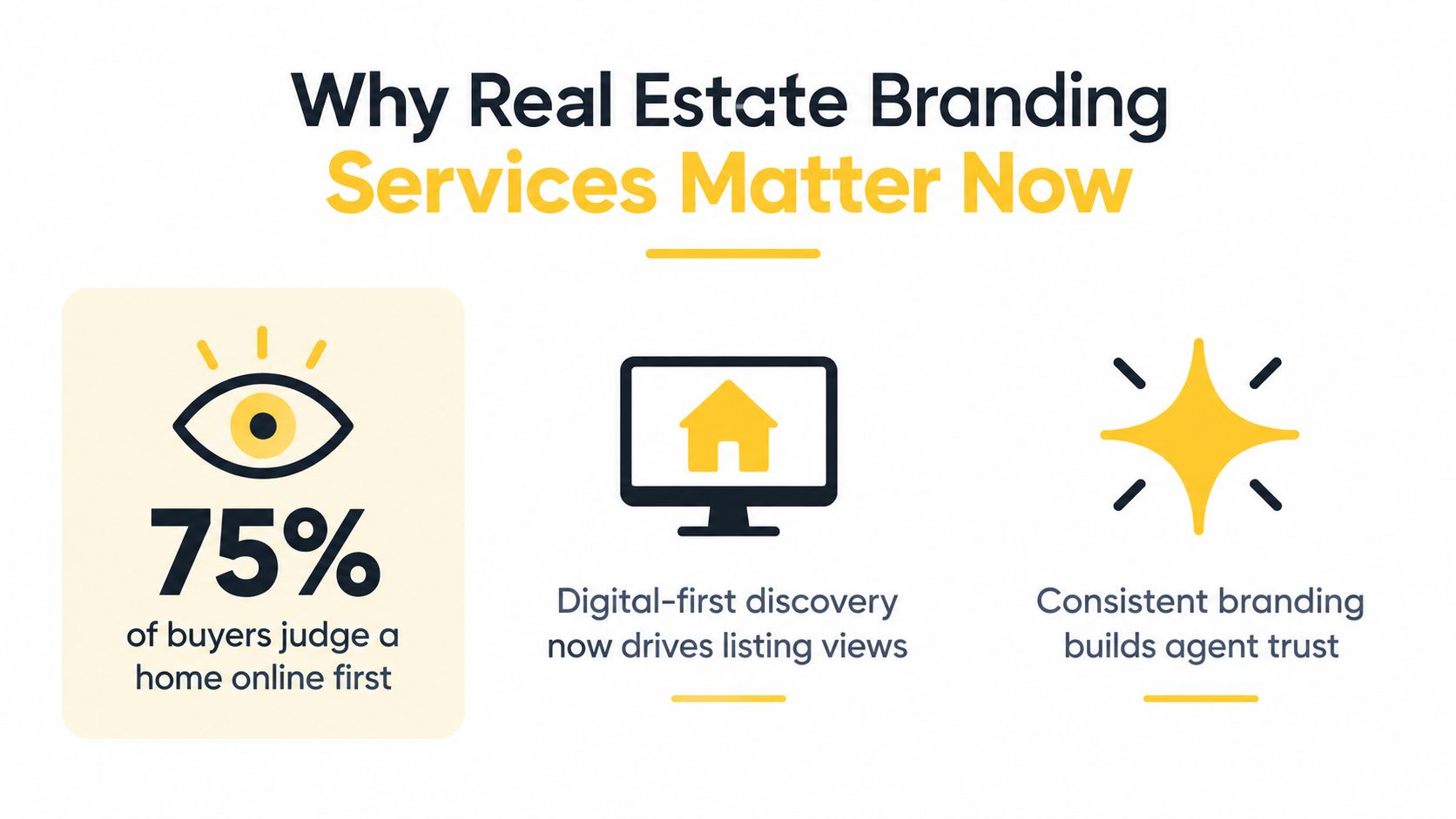
That changes what clients get from a branding firm. A basic logo package may include a mark, a few colors, and profile images. A working identity system covers how listing photos are cropped, how property titles animate, where contact details sit on vertical video, how thumbnails stay readable on mobile, and how captions and calls to action look like they came from the same business.
I have seen the difference on live listings. The logo-only package looks polished in the PDF reveal, then falls apart in production because every new asset needs a fresh decision. A fuller system costs more, but it reduces remixing, revision rounds, and off-brand one-offs that slow down publishing.
The shift is especially clear in video. Static brand files do not answer the day-to-day questions that come with reels, walkthrough clips, and agent updates. Scalable templates do. Teams that publish often can use a practical guide to real estate video marketing statistics to benchmark format choices, but the bigger issue is operational. Good branding removes routine decisions at the moment of publication.
It also closes a common attribution gap. An agent may know a listing video generated attention, but inconsistent intros, captions, end cards, and contact treatments make it harder to connect that response back to the brand. Clear positioning and messaging tactics help, but they have to show up inside the files people publish every week.
A recognizable mark is the starting point. The actual deliverable is a visual language that survives resizing, animation, scrolling, listing portals, email, print, and handoffs between agents, coordinators, photographers, and editors.
The first impression is usually visual
Reporting on the 2025 Profile of Home Buyers and Sellers states that 52% of buyers located the home they ultimately purchased online. The same reporting says 88% of sellers' agents viewed listing photographs as more important or much more important to clients, while videos followed at 47%. Buyers and sellers often meet the property and the agent through a screen long before a conversation happens.That changes what clients get from a branding firm. A basic logo package may include a mark, a few colors, and profile images. A working identity system covers how listing photos are cropped, how property titles animate, where contact details sit on vertical video, how thumbnails stay readable on mobile, and how captions and calls to action look like they came from the same business.
I have seen the difference on live listings. The logo-only package looks polished in the PDF reveal, then falls apart in production because every new asset needs a fresh decision. A fuller system costs more, but it reduces remixing, revision rounds, and off-brand one-offs that slow down publishing.
From identity to workflow
Branding services matter more now because they function like production workflows, not one-time design jobs. The useful deliverables are repeatable: a logo suite, type rules, color values, listing templates, video opens, lower-thirds, social layouts, thumbnail standards, caption formats, and usage guidance. That is what helps a solo agent publish faster and helps a brokerage keep multiple contributors aligned.The shift is especially clear in video. Static brand files do not answer the day-to-day questions that come with reels, walkthrough clips, and agent updates. Scalable templates do. Teams that publish often can use a practical guide to real estate video marketing statistics to benchmark format choices, but the bigger issue is operational. Good branding removes routine decisions at the moment of publication.
It also closes a common attribution gap. An agent may know a listing video generated attention, but inconsistent intros, captions, end cards, and contact treatments make it harder to connect that response back to the brand. Clear positioning and messaging tactics help, but they have to show up inside the files people publish every week.
Practical rule: If the brand guide only shows logo placement, it is an identity document. If it tells the team how to publish the next listing, it is a working system.
What Real Estate Branding Services Include
Real estate branding services vary widely, so the deliverables deserve more scrutiny than the presentation deck. A provider may call a package “full branding” when it contains only a logo, two color options, and social profile images. Another may build a complete asset library that lets an agent publish a property across several channels without redesigning every file.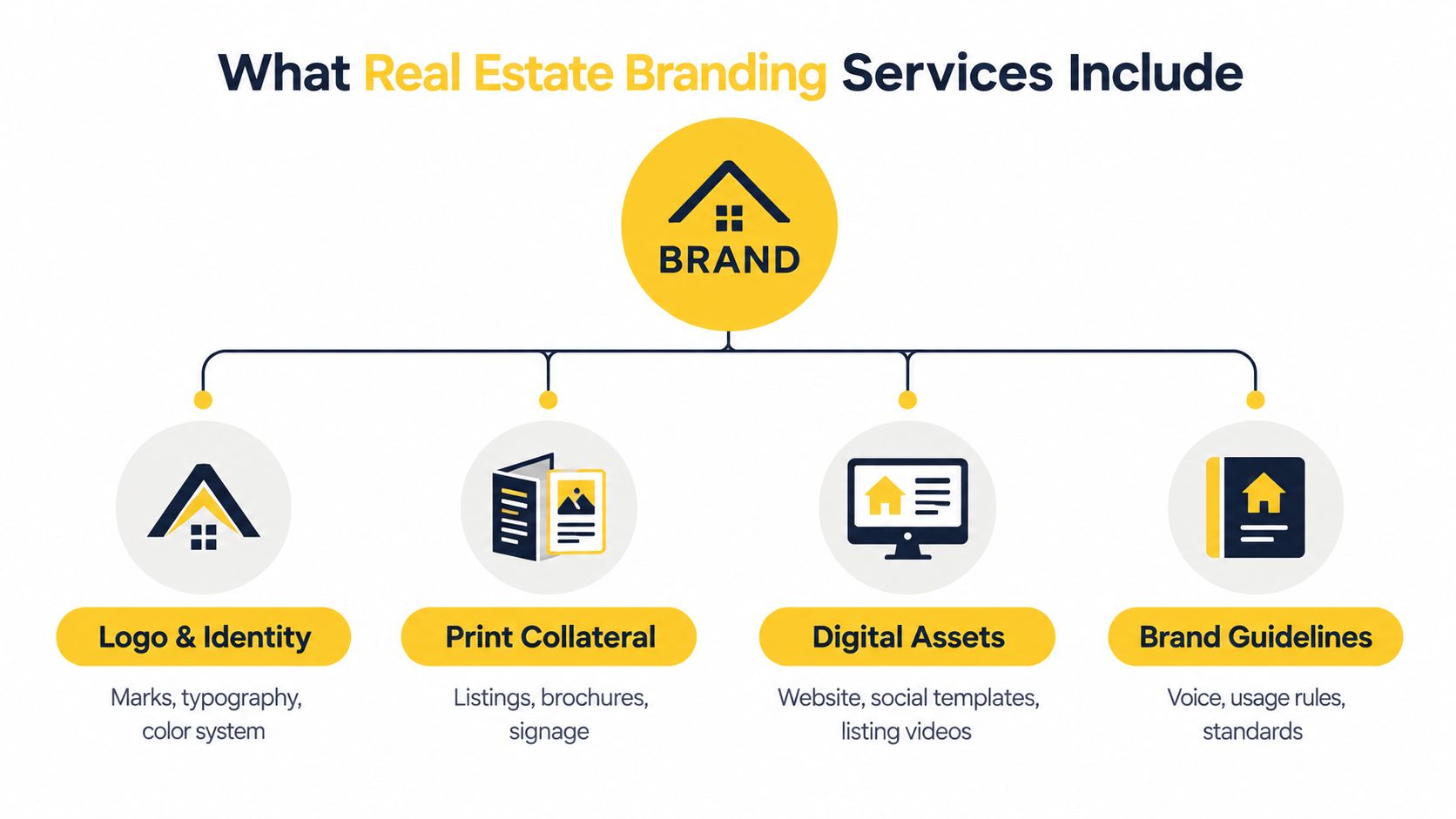
Many inexpensive packages stop here. That can be enough for an independent agent who needs basic recognition, but it won't solve inconsistent listing presentations.
For teams publishing through a video workflow, the VideoTour.ai help article on adding logos and branding illustrates the type of implementation detail worth requesting from any provider. You should know how a logo is uploaded, where it appears, which versions can be exported, and who can update the template later.
A logo package gives you assets. A full visual identity system gives your team repeatable decisions. That distinction determines whether the investment keeps paying off after the launch meeting.
The identity layer
A logo suite should cover more than one horizontal lockup. Ask for a primary mark, a compact version, a wordmark or monogram where appropriate, light and dark treatments, and files that work on property photos without becoming intrusive. The color system should include usable digital and print values, while typography should specify headline, body, label, and call-to-action roles.Many inexpensive packages stop here. That can be enough for an independent agent who needs basic recognition, but it won't solve inconsistent listing presentations.
The production layer
A useful system includes reusable templates for the materials agents produce:- Listing collateral: Prepare editable property sheets, brochures, open-house signage, presentation decks, and seller-report layouts.
- Digital profiles: Standardize website banners, email signatures, social profile images, and contact blocks.
- Video components: Define intro sequences, logo animation, lower-thirds, property-detail cards, watermark behavior, and end screens.
- Social publishing: Supply vertical, square, and horizontal layouts with thumbnail treatments that suit each channel.
- Copy structure: Create caption hierarchy, call-to-action patterns, disclaimer placement, and contact-information rules.
For teams publishing through a video workflow, the VideoTour.ai help article on adding logos and branding illustrates the type of implementation detail worth requesting from any provider. You should know how a logo is uploaded, where it appears, which versions can be exported, and who can update the template later.
The governance layer
Brand guidelines should answer practical questions, not just display beautiful mockups. Include examples of acceptable and unacceptable logo use, image treatments, minimum text contrast, video-safe areas, disclosure placement, file naming, and approval responsibility.A logo package gives you assets. A full visual identity system gives your team repeatable decisions. That distinction determines whether the investment keeps paying off after the launch meeting.
How Branding Integrates with Listing Videos
Listing video is where a static identity either proves its value or exposes its weaknesses. A logo that looks elegant on a white business card may disappear over a bright kitchen image. A thin typeface may work in a desktop presentation but become unreadable in a fast-moving vertical clip.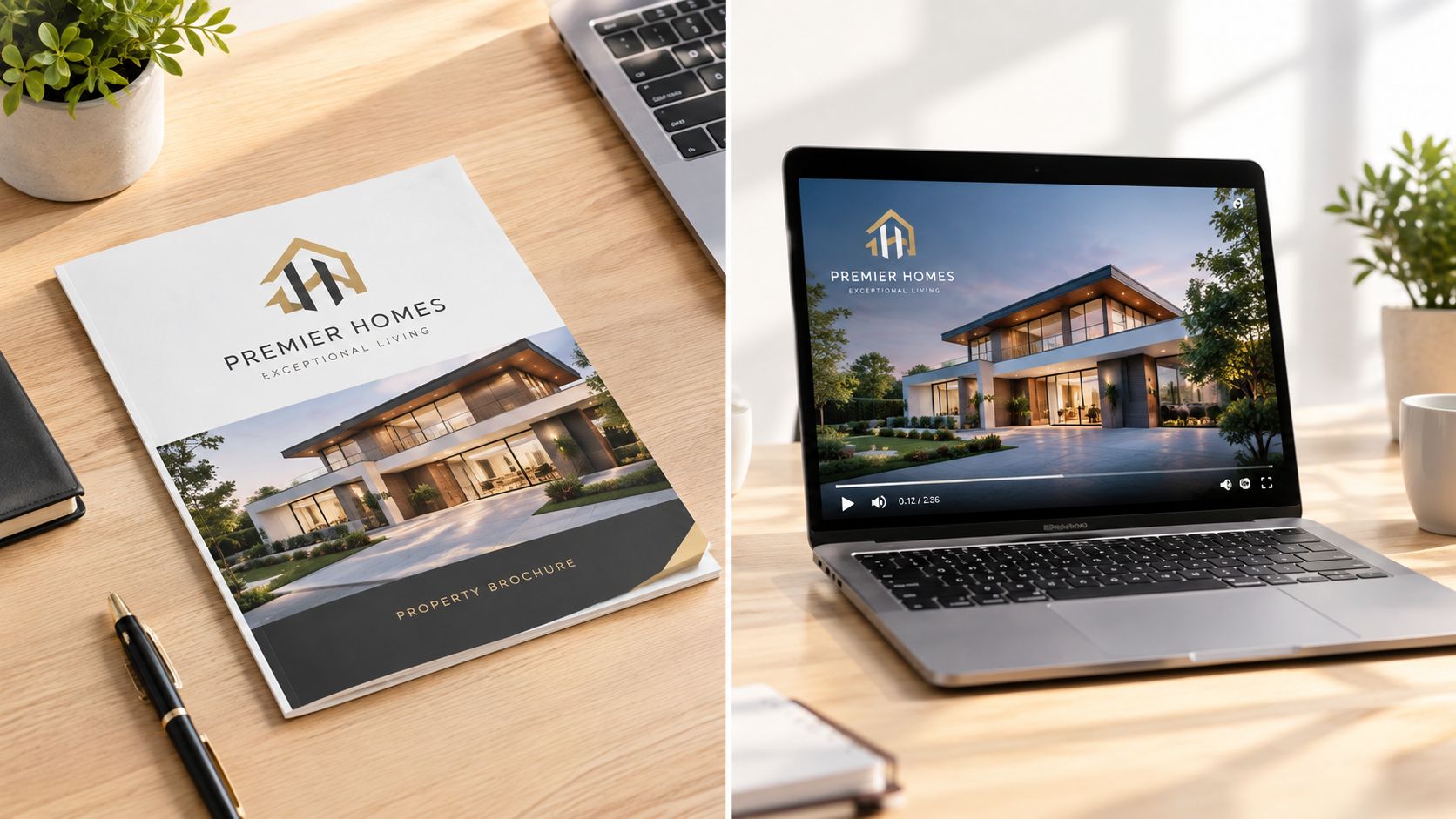
That doesn't mean every property should look identical. The home remains the subject. Branding should frame the experience, clarify information, and identify the responsible agent without covering windows, architectural details, or key finishes.
Use these production rules as a starting point:
VideoTour.ai is one example of a platform that converts photo sets into share-ready property videos while applying reusable fonts, colors, captions, thumbnails, logo treatments, and motion. It supports property tours, social Reel formats, and MLS-oriented exports, so the relevant question is whether its presets fit your approval and publishing process.
The practical handoff from a branding firm should include editable or configurable templates, a documented export process, approved logo files, and rules for exceptions. Without those items, the agent has to reinvent the visual system every time a new property arrives.
Start with the video template, not the overlay
A reliable branded listing video has a defined structure before anyone adds a property photo. The structure might include an opening frame, an address or property-type card, image transitions, feature captions, agent identification, and a closing call to action. The brand system controls typography, colors, motion behavior, logo position, audio treatment, and pacing.That doesn't mean every property should look identical. The home remains the subject. Branding should frame the experience, clarify information, and identify the responsible agent without covering windows, architectural details, or key finishes.
Use these production rules as a starting point:
- Reserve the opening for recognition. Keep the first frame clear enough for a viewer to understand who is presenting the property.
- Use lower-thirds selectively. Add location, room, or feature information where it helps the viewer interpret the image.
- Protect the architecture. Place logos and captions in defined safe areas, and avoid decorative movement across important details.
- Create separate compositions. Build vertical, square, and horizontal versions rather than forcing one crop onto every destination.
- Close with a measurable action. Give the viewer a clear route to a landing page, inquiry form, call, or appointment.
Automate repeatable choices
Photo-to-video tools can apply a saved visual system while arranging images, motion, captions, and music. That's useful when an agent has strong listing photography but no editing team. A service such as a photo-to-video maker can be evaluated by the control it gives you over image order, timing, text, aspect ratio, branding, and revisions.VideoTour.ai is one example of a platform that converts photo sets into share-ready property videos while applying reusable fonts, colors, captions, thumbnails, logo treatments, and motion. It supports property tours, social Reel formats, and MLS-oriented exports, so the relevant question is whether its presets fit your approval and publishing process.
Keep the identity recognizable but quiet
The strongest property videos don't make viewers admire the template instead of the home. They use consistent visual cues, restrained motion, readable typography, and a clear contact hierarchy. Recognition accumulates through repetition across listing videos, social posts, emails, and presentations.The practical handoff from a branding firm should include editable or configurable templates, a documented export process, approved logo files, and rules for exceptions. Without those items, the agent has to reinvent the visual system every time a new property arrives.
Measuring Branding Impact on Lead Generation
Branding should produce more than reach. In practice, it should shorten production time, keep every listing asset recognizable, and make it easier to trace which visual system, message, and call to action produced an actual conversation. That matters because real estate branding services now operate more like production workflows than one-time design jobs. A logo package may give you files. A working identity system should also give you reusable templates, naming rules, source tracking, and a reporting habit your team can maintain.
Earlier research already established that many agents adopt technology to save time and improve the client experience. That is the right standard here. If your branded templates help your team publish faster but send leads into a shared inbox with no source detail, you improved output without improving attribution. If your videos look consistent but your landing pages, forms, and follow-up tags are disconnected, the brand is visible but the pipeline is still hard to measure.
The reporting should compare branded and unbranded assets across click-through, watch-through, saves, shares, inquiry conversion, and appointment conversion. It should also show operational metrics such as production time, revision volume, and template adoption across the team. That is the difference between judging a branding engagement as a design expense and managing it as a repeatable lead-generation workflow.
Market behavior makes that gap visible. Social media ranks first as a source of quality leads for 39% of respondents, while the MLS is the most common channel used to market homes at 86%, and only 22% of sellers reported that their agent used social media while 12% reported video use by their agent, according to the National Association of REALTORS® technology survey. Those figures point to an implementation gap, which means disciplined attribution, not volume, is what separates branding that generates leads from branding that only generates views.
Earlier research already established that many agents adopt technology to save time and improve the client experience. That is the right standard here. If your branded templates help your team publish faster but send leads into a shared inbox with no source detail, you improved output without improving attribution. If your videos look consistent but your landing pages, forms, and follow-up tags are disconnected, the brand is visible but the pipeline is still hard to measure.
Separate attention from commercial intent
Measure the full path, not just the first click.- Exposure: Record the channel, campaign, listing, format, and publication date.
- Response: Track profile visits, landing-page sessions, saves, shares, and meaningful comments.
- Inquiry: Define what counts as a lead, then log source, property, buyer or seller intent, and response time.
- Appointment: Track consultations, showings, listing presentations, and other agreed milestones.
- Outcome: Connect the original campaign to later transactions where your CRM and privacy practices allow it.
Ask providers for evidence you can inspect
A case study should show what changed and what happened next. Ask which assets were redesigned, how the audience was segmented, how qualified inquiries were defined, and whether the provider measured appointments alongside views, saves, or watch-through. If they cannot explain attribution clearly, treat performance claims carefully.The reporting should compare branded and unbranded assets across click-through, watch-through, saves, shares, inquiry conversion, and appointment conversion. It should also show operational metrics such as production time, revision volume, and template adoption across the team. That is the difference between judging a branding engagement as a design expense and managing it as a repeatable lead-generation workflow.
Market behavior makes that gap visible. Social media ranks first as a source of quality leads for 39% of respondents, while the MLS is the most common channel used to market homes at 86%, and only 22% of sellers reported that their agent used social media while 12% reported video use by their agent, according to the National Association of REALTORS® technology survey. Those figures point to an implementation gap, which means disciplined attribution, not volume, is what separates branding that generates leads from branding that only generates views.
Evaluating Different Branding Service Providers
The right provider depends on what your business needs to produce repeatedly. A solo agent with one dominant market and limited content volume may need a focused identity refresh. A brokerage with multiple agents needs permissions, templates, asset storage, quality control, and a process that survives staff changes.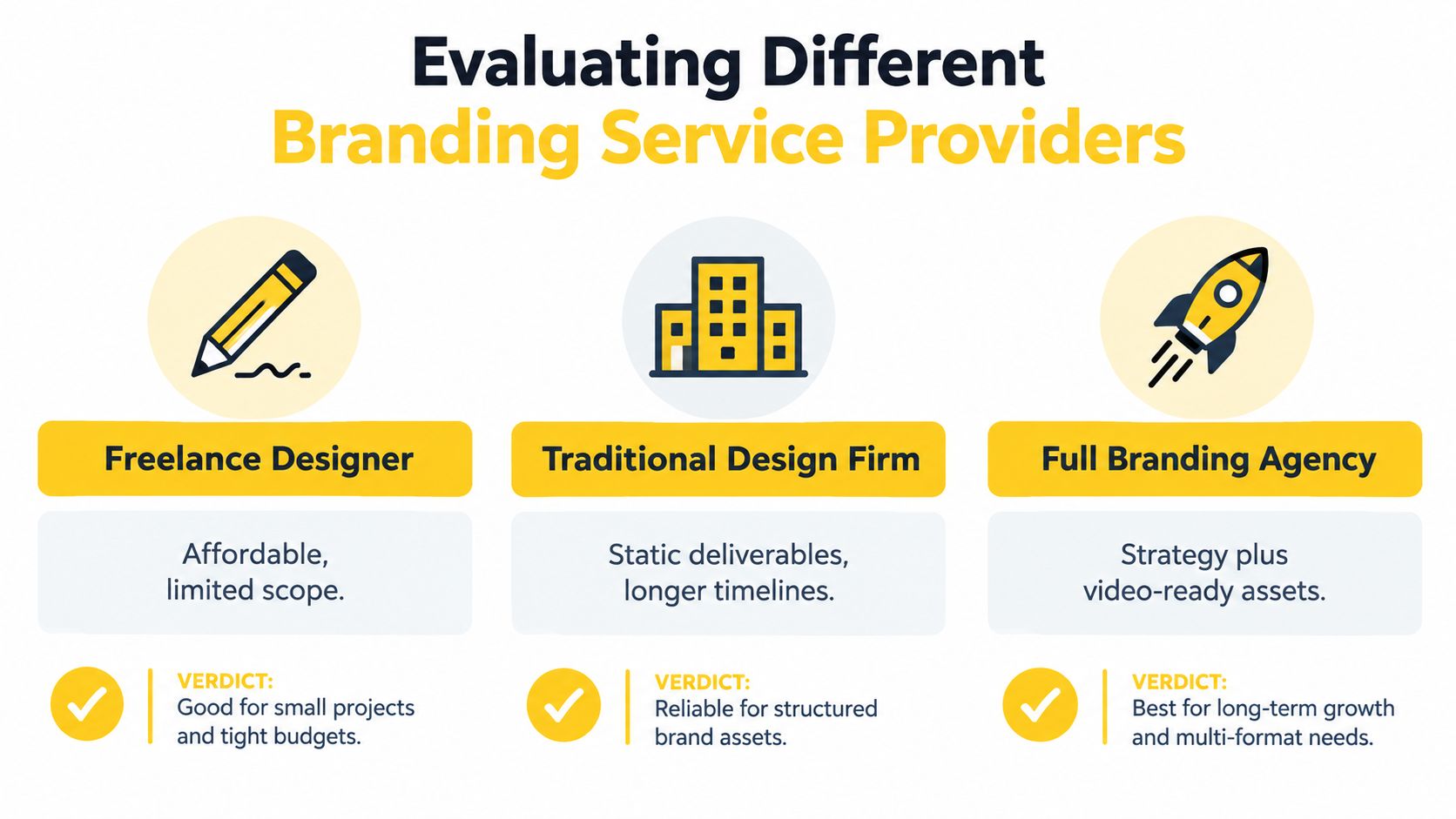
Revision terms deserve equal attention. “Unlimited revisions” can mean unlimited minor adjustments within a narrow template, while a project fee may include only a defined round of strategic changes. Clarify how new listing formats, seasonal campaigns, additional agents, and platform changes are billed.
Choose the provider that can demonstrate the next ten outputs, not just the launch presentation. Ask to see real estate listing videos, social variations, print collateral, mobile crops, and a working example of how a new property enters the system.
| Provider type | Usually strong at | Common limitation | Best fit |
|---|---|---|---|
| Freelance designer | Personal attention, focused identity work, flexible collaboration | May not support motion, team governance, or ongoing production | An agent starting with a clear, limited brief |
| Traditional design firm | Strategy, identity systems, print, and polished presentation | Video templates and rapid listing workflows may cost extra or take longer | A brokerage seeking a formal rebrand |
| Specialized branding agency | Positioning, templates, social assets, video-ready systems, and rollout support | Higher scope and more involved approval process | Teams that need a scalable marketing operation |
| Video production provider | Motion design, editing, sound, and listing presentation | May not solve broader identity or messaging problems | An established brand adding video capability |
| Software platform | Repeatable production, self-service updates, formats, and fast revisions | Requires internal judgment, setup, and governance | Agents or teams producing frequent listing content |
Compare the actual handoff
Request a sample deliverables list before discussing the final price. It should state whether you receive source files, editable templates, export presets, font licenses, image guidance, brand rules, and training. Ask who owns the assets and what happens if you stop using a subscription.Revision terms deserve equal attention. “Unlimited revisions” can mean unlimited minor adjustments within a narrow template, while a project fee may include only a defined round of strategic changes. Clarify how new listing formats, seasonal campaigns, additional agents, and platform changes are billed.
Match scope to production reality
A low-cost logo package can be rational if your immediate issue is an outdated mark. It's poor value if your team already struggles with inconsistent listing sheets and videos. Conversely, a large agency engagement can create unnecessary complexity for an agent who only needs a clean identity and a few reusable templates.Choose the provider that can demonstrate the next ten outputs, not just the launch presentation. Ask to see real estate listing videos, social variations, print collateral, mobile crops, and a working example of how a new property enters the system.
Building a Long-Term Branding Strategy
A brand becomes more valuable when people can use it consistently without asking the original designer to solve every small problem. That requires documentation, maintenance, and ownership. Treat the first identity launch as the beginning of a system, not the end of a project.
Store the master files in a controlled library with clear naming and version history. Keep working templates separate from final exports so an assistant doesn't accidentally edit a flattened file or publish an obsolete contact number.
Teams also need ownership. Assign someone to approve template updates, protect the master files, train new contributors, and maintain the asset library. A brokerage that doesn't assign this responsibility will eventually develop several unofficial versions of the same brand.
Agents who want a broader framework for building a personal branding strategy can apply the same principle here: define the audience, promise, proof, tone, and visible behaviors before commissioning more assets. Price matters, but a cheaper package that cannot support your publishing rhythm becomes expensive through repeated redesign.
Document decisions people can follow
Your guidelines should explain how the brand behaves across common situations. Include approved logo files, color values, type hierarchy, photo treatment, caption style, disclaimers, contact details, accessibility expectations, video safe areas, and examples of finished listing assets.Store the master files in a controlled library with clear naming and version history. Keep working templates separate from final exports so an assistant doesn't accidentally edit a flattened file or publish an obsolete contact number.
Schedule maintenance
Templates age through use. Review them when the team adds a new platform, changes its lead destination, hires a new producer, or notices recurring mistakes. An audit of published listings can reveal misplaced logos, inconsistent crops, broken calls to action, outdated property details, and missing disclosures.Teams also need ownership. Assign someone to approve template updates, protect the master files, train new contributors, and maintain the asset library. A brokerage that doesn't assign this responsibility will eventually develop several unofficial versions of the same brand.
Build recognition without becoming rigid
Consistency shouldn't erase personality or property character. Keep the core system stable while allowing different listing categories, neighborhoods, market messages, and agent specialties to use approved variations.Agents who want a broader framework for building a personal branding strategy can apply the same principle here: define the audience, promise, proof, tone, and visible behaviors before commissioning more assets. Price matters, but a cheaper package that cannot support your publishing rhythm becomes expensive through repeated redesign.
A durable brand is the one your team can apply correctly on a busy listing day.
Starting Your Branding Investment
Begin with an inventory, not a mood board. Gather your current logo files, listing presentations, brochures, social posts, videos, email signatures, website graphics, and portal assets. Then mark where the brand breaks, such as inconsistent contact details, unreadable overlays, mismatched fonts, or templates that only work in one format.
Prioritize the bottleneck that affects production most often. For many agents, that means a usable identity system plus listing and video templates. Others may need positioning and messaging first, particularly if the visual work looks polished but doesn't clearly distinguish the agent's market role.
Before choosing a provider, ask for:
Then test the system on one real property. Publish the approved variations, record the source and inquiry path, collect team feedback, and fix the template before expanding it. That small implementation loop is what turns real estate branding services from a design expense into a dependable production workflow.
VideoTour.ai converts property photo sets into branded video tours with automated motion, captions, music, logo treatments, thumbnails, and platform-specific formats. Upload a listing, customize the presentation, and explore the workflow at VideoTour.ai.
Prioritize the bottleneck that affects production most often. For many agents, that means a usable identity system plus listing and video templates. Others may need positioning and messaging first, particularly if the visual work looks polished but doesn't clearly distinguish the agent's market role.
Before choosing a provider, ask for:
- Relevant portfolio evidence: Request real estate listings, not only restaurant, fashion, or corporate work.
- Workflow samples: Review how one property becomes a brochure, listing image, vertical video, and closing card.
- File and ownership terms: Confirm source files, template access, licenses, storage, and future editing rights.
- Revision boundaries: Clarify included revisions, approval stages, and charges for new formats.
- Team support: Check permissions, training, brand governance, and handoff documentation.
- Measurement setup: Agree on source tags, landing pages, inquiry definitions, and reporting responsibilities.
Then test the system on one real property. Publish the approved variations, record the source and inquiry path, collect team feedback, and fix the template before expanding it. That small implementation loop is what turns real estate branding services from a design expense into a dependable production workflow.
VideoTour.ai converts property photo sets into branded video tours with automated motion, captions, music, logo treatments, thumbnails, and platform-specific formats. Upload a listing, customize the presentation, and explore the workflow at VideoTour.ai.