
An agent has forty listing photos, a deadline for social and MLS posts, and a voiceover that needs another take because the price changed. Re-recording every revision wastes time, especially when the same tour must become a vertical Reel, a square post, and a horizontal listing video. The right best voice cloning app removes that loop by letting you revise the script and regenerate narration without calling the agent back to the microphone.
This list ranks tools for the actual real-estate workflow, not voice quality in isolation. I'm weighing narration quality, pronunciation, consent controls, commercial use, cost per finished video, aspect-ratio production, revision speed, and whether the app stays inside the editing process. For broader category research, see this guide to best AI voice cloning tools.
This list ranks tools for the actual real-estate workflow, not voice quality in isolation. I'm weighing narration quality, pronunciation, consent controls, commercial use, cost per finished video, aspect-ratio production, revision speed, and whether the app stays inside the editing process. For broader category research, see this guide to best AI voice cloning tools.
Summary
Create an AI Video Tours from PhotosTry it For Free

1. ElevenLabs
ElevenLabs is the strongest choice when the voiceover itself carries the brand. Its neural speech handles natural pacing, timbre, emphasis, and conversational delivery well, which matters when a listing script moves from curb appeal to room dimensions and a closing call to action. For an MLS-grade property tour, an unnatural pause or misread street name can make polished visuals feel cheap.
The platform supports instant voice cloning from short samples, higher-fidelity professional cloning, multilingual generation, speech-to-speech, dubbing, voice changing, and an API. Teams can also use seats, roles, commercial licensing, and consent-oriented safety flows. That combination makes it useful for both one-off tours and automated production across a brokerage.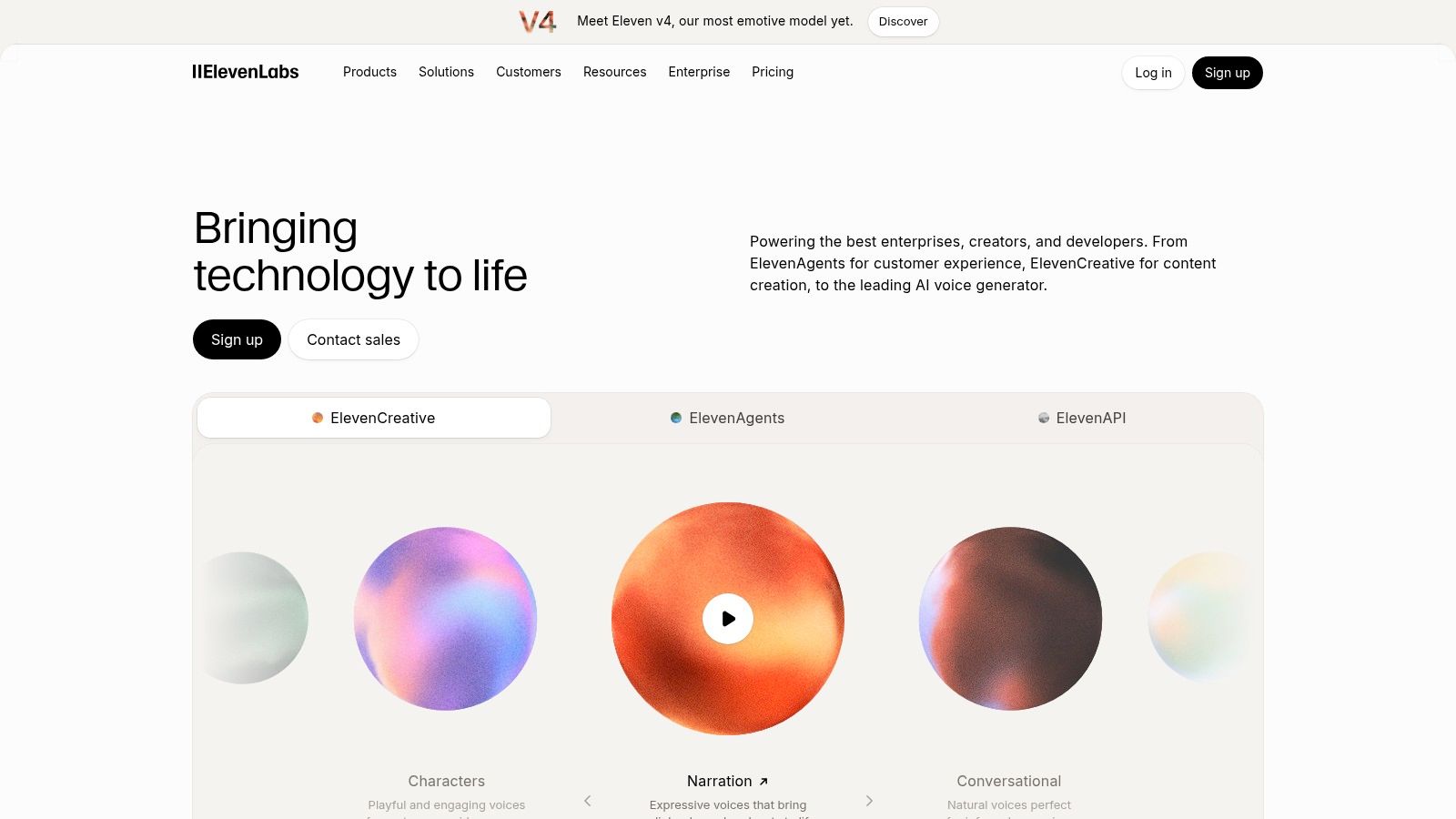
For a practical setup, capture a clean, authorized voice sample, create a reusable profile, and test proper nouns before publishing. VideoTour.ai's guidance on creating a reusable voice is relevant when an agent needs repeatable narration across listings.
The platform supports instant voice cloning from short samples, higher-fidelity professional cloning, multilingual generation, speech-to-speech, dubbing, voice changing, and an API. Teams can also use seats, roles, commercial licensing, and consent-oriented safety flows. That combination makes it useful for both one-off tours and automated production across a brokerage.
Where it fits the listing workflow
ElevenLabs works best when you generate the narration, export the audio, and finish the video in a separate editor or a platform such as VideoTour.ai. A reusable voice profile makes price changes and listing updates quick, but the production team still needs to manage image timing, captions, music, and multiple aspect ratios elsewhere.For a practical setup, capture a clean, authorized voice sample, create a reusable profile, and test proper nouns before publishing. VideoTour.ai's guidance on creating a reusable voice is relevant when an agent needs repeatable narration across listings.
Production rule: Use ElevenLabs when natural delivery is the priority and your editor already handles the visual assembly.The trade-off is usage cost. Character or minute-based generation can become expensive when a team repeatedly renders several versions of every tour, and higher quotas or advanced capabilities may require a more expensive plan. Cost per finished video should include discarded takes, not only the final export.
2. PlayHT
PlayHT earns its place through volume. Real-estate teams often need the same property story adapted for a listing video, a vertical social cut, a square feed post, and revised versions after feedback. PlayHT's instant and higher-fidelity cloning, batch generation, multilingual catalogue, streaming support, and API make that type of repeatable production straightforward.
The app is a good fit when you need many narrated variants without paying only for a premium studio experience. Downloads are simple, and the API can support templates that generate audio from structured listing data. That matters for agencies producing tours for multiple agents, where manual voiceover handling becomes a bottleneck.
The voice quality is strong enough for many listing scripts, although specialist platforms may produce more nuanced prosody on difficult sentences. Test local street names, development names, room measurements, and phrases such as “offers invited” rather than relying on a generic demo paragraph.
The app is a good fit when you need many narrated variants without paying only for a premium studio experience. Downloads are simple, and the API can support templates that generate audio from structured listing data. That matters for agencies producing tours for multiple agents, where manual voiceover handling becomes a bottleneck.
Cost per finished video
PlayHT's main advantage is its price-to-volume positioning, but plan and credit structures can change. Check the current allowance before committing, then calculate the cost of a complete tour with every aspect-ratio version and one likely revision. A low entry price can still become inefficient if each correction consumes another generation allocation.The voice quality is strong enough for many listing scripts, although specialist platforms may produce more nuanced prosody on difficult sentences. Test local street names, development names, room measurements, and phrases such as “offers invited” rather than relying on a generic demo paragraph.
- Use it for scale: Batch generation suits agencies producing many versions of the same narration.
- Protect the voice: Clone only an agent or narrator who has given explicit permission.
- Check the license: Confirm commercial-use rights and whether the selected voice profile can support client work.
3. Descript Overdub
Descript is the practical pick for teams that think in scripts and timelines. Overdub places consent-based voice cloning inside a full audio and video editor, so changing a sentence can be as simple as editing the transcript. If the seller updates the asking price or an agent spots a missing feature, you can revise the words without scheduling another recording session.
That workflow is more valuable than it first appears. A listing video contains many small facts, and those facts change. Descript keeps the narration, captions, media, and collaboration tools in one environment, reducing the handoff between a copy editor, voice tool, and video editor.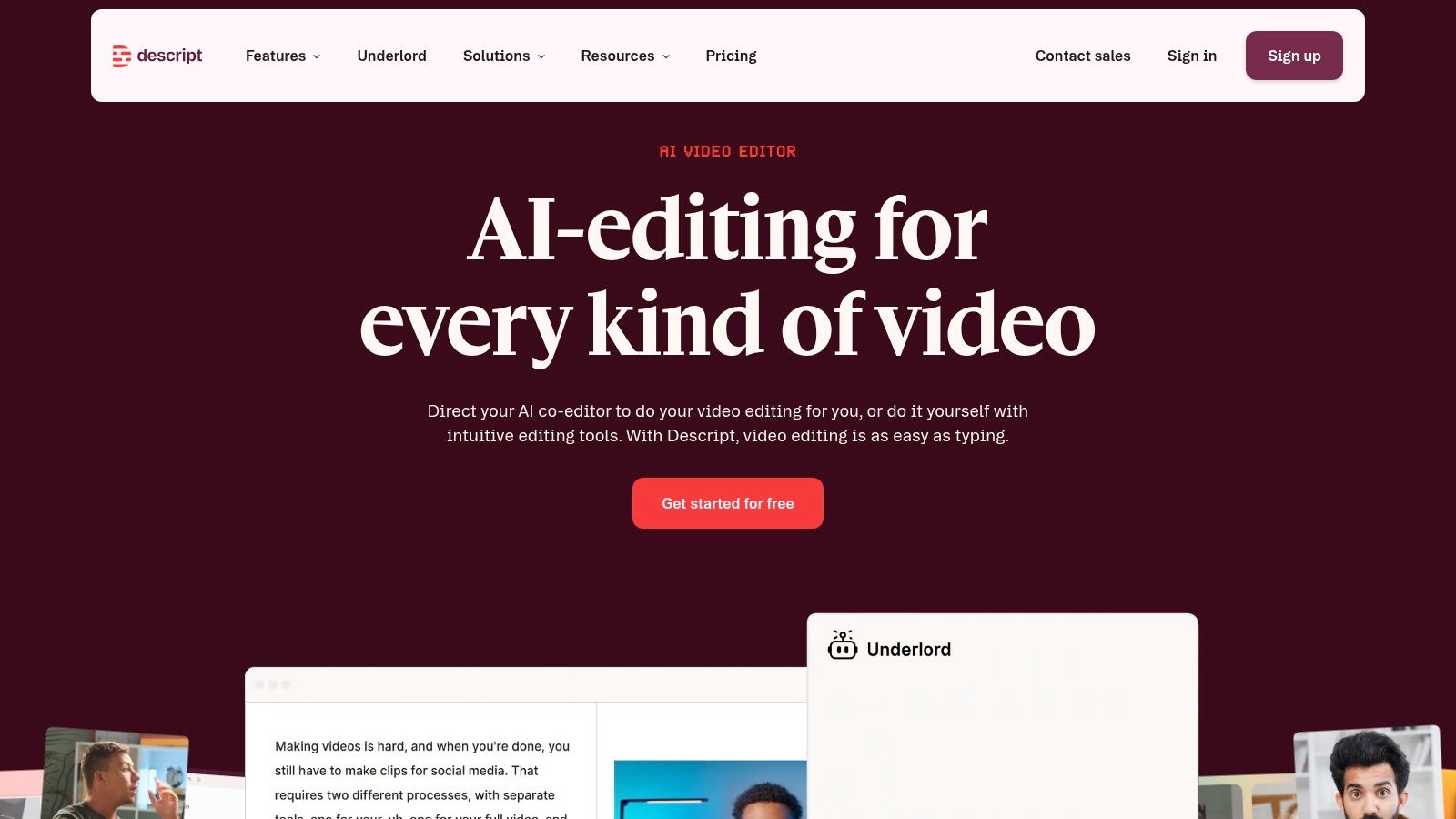
The app also combines automatic captions, stock media, collaboration, desktop editing, and cloud sharing. You won't need to export narration before adjusting the surrounding video, which keeps the cost of a finished revision lower in staff time.
That workflow is more valuable than it first appears. A listing video contains many small facts, and those facts change. Descript keeps the narration, captions, media, and collaboration tools in one environment, reducing the handoff between a copy editor, voice tool, and video editor.
The trade-off is convenience versus ceiling
Overdub's main strength is inline correction, not necessarily the highest possible vocal realism. Specialist text-to-speech tools can offer more control over expressive delivery, while Descript gives up some of that ceiling to make editing faster. For a talking-head update, podcast-style agent explanation, or light property tour, that trade can make sense.The app also combines automatic captions, stock media, collaboration, desktop editing, and cloud sharing. You won't need to export narration before adjusting the surrounding video, which keeps the cost of a finished revision lower in staff time.
If the producer is already editing in Descript, moving the voiceover elsewhere may create more work than it saves.Generation uses plan credits, so heavy iteration can exhaust the allowance. Before adopting it across a brokerage, run one complete listing through the process, including a price correction, a shorter social cut, captions, and a final export. If the team values transcript editing more than maximum voice fidelity, Descript is one of the most workflow-friendly choices.
4. Murf AI
Murf AI is built for organizations that need governance around voice production. Its creator studio serves straightforward narration, while its API and enterprise offering support automation, voice cloning, translation, dubbing, and controlled access. That separation is useful when a brokerage wants agents to create tours but wants the marketing or IT team to control voice assets and integrations.
For automated listing production, Murf can sit behind a workflow that sends approved scripts to an API, creates narration, and passes the audio into a video renderer. Latency-optimized models are relevant for agent-facing tools where a user expects a quick response rather than a manually managed batch.
The limitation is access. Self-serve studio cloning is limited, while fuller cloning capabilities may require an enterprise conversation. That can be excessive for a solo agent who only needs to narrate occasional tours.
Murf also makes sense for teams exploring AI voice characters, provided the voice is authorized and the output is clearly used as generated narration rather than evidence of a live statement. The studio-to-API split keeps production options clear, but it may send smaller teams into a sales-led process before they can test the full workflow.
For automated listing production, Murf can sit behind a workflow that sends approved scripts to an API, creates narration, and passes the audio into a video renderer. Latency-optimized models are relevant for agent-facing tools where a user expects a quick response rather than a manually managed batch.
Who should choose Murf
Murf is strongest for brokerages, agencies, and property brands with formal requirements around security, data use, access, or service commitments. Enterprise controls can include SSO, data-use restrictions, and SLAs. Those controls matter when the voice belongs to an employee, contractor, or recognizable agent whose identity must be protected.The limitation is access. Self-serve studio cloning is limited, while fuller cloning capabilities may require an enterprise conversation. That can be excessive for a solo agent who only needs to narrate occasional tours.
Murf also makes sense for teams exploring AI voice characters, provided the voice is authorized and the output is clearly used as generated narration rather than evidence of a live statement. The studio-to-API split keeps production options clear, but it may send smaller teams into a sales-led process before they can test the full workflow.
5. Speechify Studio
Speechify Studio suits teams that want cloning alongside broader creative production. Its paid studio tiers combine voiceovers, dubbing, voice changing, avatars, and a large voice library, so a marketing coordinator can handle more than plain narration in one subscription.
That breadth helps when a listing campaign includes an agent introduction, a narrated photo tour, and localized versions. Annual plans with credit banks can make budgeting easier, especially when the team knows roughly how much content it produces each month.
The right test is a finished deliverable, not a five-line demo. Use one property script with a price, address, room descriptions, and a call to action. Then count the generations required to reach an approved result.
That breadth helps when a listing campaign includes an agent introduction, a narrated photo tour, and localized versions. Annual plans with credit banks can make budgeting easier, especially when the team knows roughly how much content it produces each month.
Watch the credit economics
Credits are consumed by many changes, not only by the final video. A producer who experiments with several readings, rewrites a paragraph, and exports multiple versions can use the allowance faster than expected. Starter access may also become restrictive for daily production, while cloning isn't included in the free plan.The right test is a finished deliverable, not a five-line demo. Use one property script with a price, address, room descriptions, and a call to action. Then count the generations required to reach an approved result.
- Good fit: Nontechnical teams that want voice, dubbing, avatars, and creative assets together.
- Budget risk: Frequent revisions can consume credits before the campaign is complete.
- Workflow position: It can create the audio and related assets, but visual listing assembly may still happen in another editor.
6. HeyGen
HeyGen is the best fit here for agent-led video rather than pure property narration. Its voice cloning connects directly to talking avatars, text-to-video generation, captions, lip sync, and multilingual dubbing. An agent can create an introduction, explain a neighborhood, or deliver a branded listing update without recording each language or revision on camera.
That makes HeyGen useful beside a photo-tour workflow. The property video can show listing images while an avatar handles the introduction or call to action. If the campaign depends on face-to-camera communication, the platform keeps cloning, narration, and avatar rendering in one process instead of exporting audio to a separate editor.
Consent is central. A real person should authorize the clone, and the finished video should not imply that the agent personally recorded or approved words they didn't approve. For teams developing an AI talking avatar generator, that distinction protects trust with sellers and prospective buyers.
HeyGen is therefore a specialized workflow choice. It doesn't replace a photo-first real-estate editor for every listing, but it can eliminate the recording loop for agent introductions and explainers.
That makes HeyGen useful beside a photo-tour workflow. The property video can show listing images while an avatar handles the introduction or call to action. If the campaign depends on face-to-camera communication, the platform keeps cloning, narration, and avatar rendering in one process instead of exporting audio to a separate editor.
Choose it for video, not just audio
HeyGen's value drops if you only want a voice track. Credit-based plans can make video generations expensive when a producer renders several languages, aspect ratios, or revised scripts. The platform is easier to justify when the team also uses avatars, lip sync, and localized presenter content.Consent is central. A real person should authorize the clone, and the finished video should not imply that the agent personally recorded or approved words they didn't approve. For teams developing an AI talking avatar generator, that distinction protects trust with sellers and prospective buyers.
HeyGen is therefore a specialized workflow choice. It doesn't replace a photo-first real-estate editor for every listing, but it can eliminate the recording loop for agent introductions and explainers.
7. LOVO AI Genny
LOVO AI's Genny is a useful all-in-one option for short social videos. It combines custom voice cloning and multilingual text-to-speech with subtitles, effects, stock media, and a built-in editor. If the producer wants to turn listing photos into a quick Reel without opening a separate non-linear editor, that integrated approach is convenient.
The large voice library gives teams alternatives when an agent doesn't want to clone their own voice. Paid plans include commercial rights, but confirm the current terms for the specific plan and intended client work. The platform also offers an API, which gives agencies a route toward templates and automated renders once the creative format is stable.
Its weaknesses are practical. Pricing and quotas may require logging in to verify, so calculate the cost of a finished tour before scaling. The platform has also faced legal scrutiny connected to training data, which means compliance-focused agencies should review current documentation rather than relying on a feature page alone.
The large voice library gives teams alternatives when an agent doesn't want to clone their own voice. Paid plans include commercial rights, but confirm the current terms for the specific plan and intended client work. The platform also offers an API, which gives agencies a route toward templates and automated renders once the creative format is stable.
Where it works and where it doesn't
Genny is strongest for fast, short-form production. A producer can write a concise property script, generate narration, add captions and motion, and export a social cut from one workspace. That saves handoffs for teams that don't need advanced audio finishing.Its weaknesses are practical. Pricing and quotas may require logging in to verify, so calculate the cost of a finished tour before scaling. The platform has also faced legal scrutiny connected to training data, which means compliance-focused agencies should review current documentation rather than relying on a feature page alone.
Commercial-use reminder: A voice that sounds right is not enough. Document permission, confirm licensing, and retain an approval record for every person whose voice you clone.LOVO belongs near the bottom of this ranking because the category leader for a real-estate workflow isn't the tool with the most voices. It needs predictable production economics, strong governance, and efficient re-renders across every format.
Top 7 Voice Cloning Apps Comparison
| Service | 🔄 Implementation Complexity | ⚡ Resource & Cost Efficiency | 📊 Expected Outcomes | Ideal Use Cases | ⭐ Key Advantages / 💡 Tips |
|---|---|---|---|---|---|
| ElevenLabs | Moderate–High: mature API, team roles, consent/safety flows | ⚡ Lower cost-efficiency at very high volumes; higher-tier fees for advanced features | 📊 Studio-grade natural timbre, prosody, dubbing quality | MLS-grade property walk-throughs, professional narration, high-fidelity cloning | ⭐ Best audio realism and prosody; 💡 use pro cloning for top fidelity and budget for scale |
| PlayHT | Low–Moderate: straightforward API and cloning flow | ⚡ Competitive pricing for mid/high volume; cost-effective for many variants | 📊 High-quality TTS with broad multilingual support | Producing many narrated variants and scalable tours | ⭐ Good price-to-volume ratio; 💡 verify plan/credit changes before scaling |
| Descript (Overdub) | Low: integrated timeline editor with inline Overdub cloning | ⚡ Credit-based; edits/punch-ins consume plan credits | 📊 Fast, text-based narration edits; decent clone quality (not top prosody) | Video editors who need to edit narration like text and do punch-ins | ⭐ Excellent editing workflow efficiency; 💡 monitor credit usage for heavy editing |
| Murf AI | Moderate–High: creator studio plus enterprise API and governance | ⚡ Transparent pay-as-you-go API pricing; free trial credits available | 📊 Enterprise-ready TTS with latency-optimized models and dubbing | Businesses needing governance, compliance, and automated agent workflows | ⭐ Strong enterprise controls and clear API pricing; 💡 full cloning features may require enterprise plan |
| Speechify Studio | Low–Moderate: credit-based studio, simple onboarding | ⚡ Predictable annual plans with large credit banks; credits consumed for changes | 📊 Wide voice library and dubbing/avatar workflows for occasional use | Teams wanting single subscription for cloning and creative assets | ⭐ Predictable budgeting with annual credits; 💡 budget credits carefully, Starter may be limiting |
| HeyGen | Moderate: integrated clone→avatar pipeline with lip-sync | ⚡ Credit-based; video generations can consume credits quickly | 📊 End-to-end avatar videos with multilingual dubbing and lip-sync | Agent intros, branded listing explainers, face-to-camera avatar videos | ⭐ Strong multilingual avatar pipeline; 💡 best value when using video/avatar features, not just audio |
| LOVO AI (Genny) | Low–Moderate: creator studio with built-in editor and API | ⚡ All-in-one for quick reels; pricing/quotas require verification post-login | 📊 Fast narration and on-platform editing with 500+ voices | Short reels, social clips, quick on-platform edits | ⭐ Large voice library and commercial rights on paid plans; 💡 confirm pricing and compliance needs before scaling |
Building a Voice Workflow That Fits Your Listing Pipeline
Start with the finished video, not the voice sample. Take one real listing script and run it through two or three shortlisted tools. Include the address, property names, measurements, price, feature list, and call to action. Generic sentences hide the failures that matter in production, especially mispronounced streets, awkward pauses, and emphasis on the wrong selling point.
Then calculate the cost of one approved video. Include the initial narration, discarded takes, script corrections, captions, and every aspect-ratio version. A tool with an attractive subscription can become expensive if each revision consumes credits, while a tool with a higher voice fee may reduce editing time enough to justify the spend.
Consent needs its own approval step. Research from Consumer Reports on commercial voice-cloning products found that four of six tested products allowed clones from publicly available recordings without a technical mechanism verifying the speaker's consent. The practical lesson is simple: public availability is not permission. Get explicit authorization, confirm commercial licensing, understand deletion controls, and disclose generated narration when an audience could reasonably mistake it for a live recording.
Quality also needs more than a natural-sounding demo. A peer-reviewed listening study evaluated intelligibility, naturalness, prosody, and social impression separately, finding differences between systems even when speech remained understandable. The study's evaluation supports testing the actual listing script in quiet and moderately noisy playback conditions.
Finally, decide where narration belongs. ElevenLabs and PlayHT are strong export-first choices. Descript keeps words and media together. Murf is suited to governed automation. HeyGen is designed for avatar-led communication, while LOVO and Speechify combine narration with broader creative tools. VideoTour.ai can also turn property photo sets into branded tours with voiceover, captions, motion, aspect-ratio versions, and browser-based revisions. For reference-audio planning, research on zero-shot cloning found that roughly 6 to 10 seconds of reference audio can produce high-fidelity results in the evaluated workflow, although recording quality and pronunciation still need testing.
The strongest choice is the one that keeps revisions fast across every format you publish. Test the complete pipeline before committing, and choose the app that protects consent while letting your team update a listing without reopening the recording process.
VideoTour.ai turns listing photo sets into ready-to-share property videos with automated motion, captions, music, branding, voiceover, and multiple aspect ratios. Upload your photos, revise the script in the editor, and visit VideoTour.ai to create a polished tour without manual camera work or a separate editing workflow.
Then calculate the cost of one approved video. Include the initial narration, discarded takes, script corrections, captions, and every aspect-ratio version. A tool with an attractive subscription can become expensive if each revision consumes credits, while a tool with a higher voice fee may reduce editing time enough to justify the spend.
Consent needs its own approval step. Research from Consumer Reports on commercial voice-cloning products found that four of six tested products allowed clones from publicly available recordings without a technical mechanism verifying the speaker's consent. The practical lesson is simple: public availability is not permission. Get explicit authorization, confirm commercial licensing, understand deletion controls, and disclose generated narration when an audience could reasonably mistake it for a live recording.
Quality also needs more than a natural-sounding demo. A peer-reviewed listening study evaluated intelligibility, naturalness, prosody, and social impression separately, finding differences between systems even when speech remained understandable. The study's evaluation supports testing the actual listing script in quiet and moderately noisy playback conditions.
Finally, decide where narration belongs. ElevenLabs and PlayHT are strong export-first choices. Descript keeps words and media together. Murf is suited to governed automation. HeyGen is designed for avatar-led communication, while LOVO and Speechify combine narration with broader creative tools. VideoTour.ai can also turn property photo sets into branded tours with voiceover, captions, motion, aspect-ratio versions, and browser-based revisions. For reference-audio planning, research on zero-shot cloning found that roughly 6 to 10 seconds of reference audio can produce high-fidelity results in the evaluated workflow, although recording quality and pronunciation still need testing.
The strongest choice is the one that keeps revisions fast across every format you publish. Test the complete pipeline before committing, and choose the app that protects consent while letting your team update a listing without reopening the recording process.
VideoTour.ai turns listing photo sets into ready-to-share property videos with automated motion, captions, music, branding, voiceover, and multiple aspect ratios. Upload your photos, revise the script in the editor, and visit VideoTour.ai to create a polished tour without manual camera work or a separate editing workflow.