

A marketing team can get stuck in the same place fast. The listing photos are ready, the social clips are overdue, and someone still has to narrate three versions of the same property without making every video sound like a fresh recording session. That is where ai voice characters become a production choice, not just a novelty. The best option depends less on the longest feature list and more on the persona you need, the format you are producing, the level of control you want, the licensing you can clear, and whether the workflow is pre-recorded or live.
For teams starting from property photos, VideoTour.ai is especially relevant because it turns still images into branded narrated video instead of asking you to assemble audio separately. If your job is to ship polished tours, recurring brand voices, or live voice transformations, the right tool changes by use case. For a broader framing on voiceovers in branded video work, see professional voice over for brand video.
For teams starting from property photos, VideoTour.ai is especially relevant because it turns still images into branded narrated video instead of asking you to assemble audio separately. If your job is to ship polished tours, recurring brand voices, or live voice transformations, the right tool changes by use case. For a broader framing on voiceovers in branded video work, see professional voice over for brand video.
Summary
Create an AI Video Tours from PhotosTry it For Free

1. AI Real Estate Video Tour Maker | Photos to Video in Minutes
A listing can be photo-ready and still feel unfinished if the narration, pacing, and branding are handled in separate tools. VideoTour.ai keeps that work in one place, turning still images into a narrated property video with motion, captions, branding, and music already aligned. The built-in AI avatar and voice cloning make it useful when the voice needs to sound consistent across repeated listings, while the visuals are assembled from the photo set.
If the listing photos are already strong, the video should add structure, not more work. Use the voice layer to set pacing and tone, then keep the visuals focused on the property itself. Pair the tour with a real estate portfolio monitoring report if you need the listing details to stay aligned with portfolio records as the campaign changes.
Pros
Why it fits real production work
The practical value is speed without turning the output into a generic slideshow. Teams can upload up to 60 photos, render vertical, square, or horizontal versions, and keep fonts, colors, logos, and thumbnails consistent across properties. MLS-safe presets matter here because polished video is still useless if it cannot be published where the listing needs to appear.If the listing photos are already strong, the video should add structure, not more work. Use the voice layer to set pacing and tone, then keep the visuals focused on the property itself. Pair the tour with a real estate portfolio monitoring report if you need the listing details to stay aligned with portfolio records as the campaign changes.
Practical rule: start with the assets you already trust, then use the narration layer to create consistency across every version of the tour.The first video is free, paid plans remove watermarks, and HD exports open on paid tiers. That makes the tool useful for solo agents and agencies that want to standardize video tours before committing to a heavier editing stack. The trade-off is familiar with any cloned or avatar-based workflow, output quality depends on the sample quality and on whether consent was handled correctly before the voice is reused.
Pros
- Photo-to-video automation: Turns existing images into motion-driven tours without camera work or manual editing.
- Voice and avatar workflow: Adds a speaking presenter and cloned narration from a short sample, which helps when the same brand voice appears across many listings.
- Multi-platform output: Exports for social and listing channels with captions, music, and multiple aspect ratios.
- Brand consistency: Supports reusable branding, team seats, and MLS-safe presets.
- Premium limits: Watermark-free HD exports and advanced features require paid plans.
- Consent sensitivity: Voice cloning and avatar use need clear permission and a clean sample.
- Best fit is specific: It works well for property tours, not as a broad voice-character library.
2. ElevenLabs
For a property team publishing polished listing narration, ElevenLabs is a strong first test when the voice must sound convincing on close listening. It also suits character reads and dubbed content where delivery needs personality rather than a neutral announcer tone. The community voice library supports quick comparisons across narrator styles, locales, and recurring brand personas without creating every voice from scratch.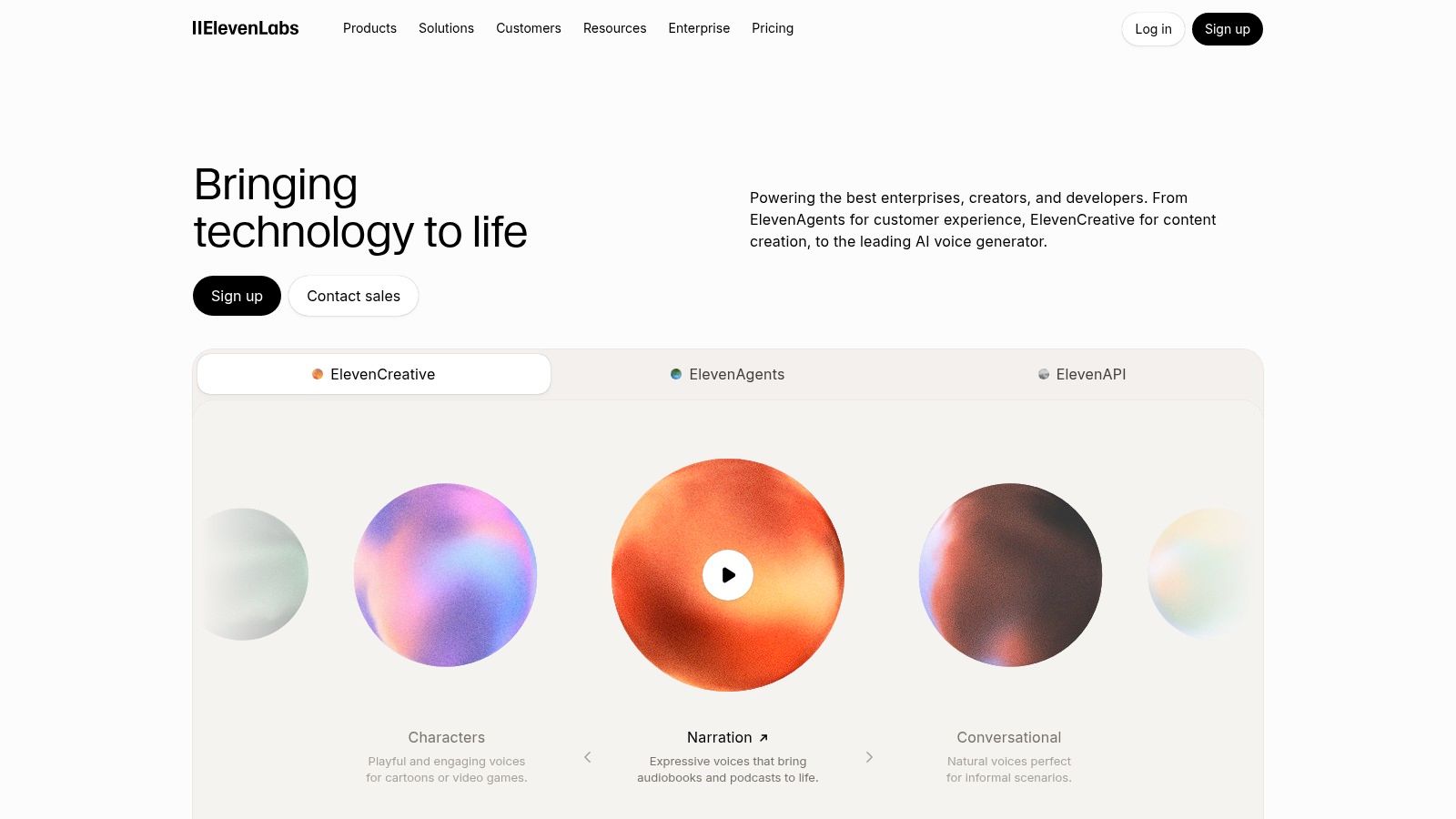
The trade-off is production and budget control. Credit-based usage is harder to forecast when a team tests multiple voices, generates alternate takes, and revises scripts repeatedly. Its broad feature set can also encourage unnecessary experimentation. For a short, factual listing read, a simpler tool may require less setup. ElevenLabs earns its place when character, emotional nuance, or localization affects how the message is received.
The repeatable property narration workflow shows how a selected voice can connect listing scripts with reusable narration assets.
Where it stands out
ElevenLabs gives script-led teams control over several production paths: Voice Design for a new character, cloning for an approved brand or narrator voice, real-time text-to-speech for responsive use cases, and multilingual dubbing for localized campaigns. A single project can therefore support a main narrator, alternate social versions, and translated edits while retaining a related vocal identity. Commercial usage rights on paid plans make the tool more suitable for published marketing work than for internal experiments alone, although teams still need to check the current license terms and secure consent before cloning a recognizable voice.The trade-off is production and budget control. Credit-based usage is harder to forecast when a team tests multiple voices, generates alternate takes, and revises scripts repeatedly. Its broad feature set can also encourage unnecessary experimentation. For a short, factual listing read, a simpler tool may require less setup. ElevenLabs earns its place when character, emotional nuance, or localization affects how the message is received.
The repeatable property narration workflow shows how a selected voice can connect listing scripts with reusable narration assets.
Test the voice against the final script, not an isolated sample. Persuasive delivery depends on pacing, emphasis, and whether the character fits the property and audience.Pros
- Expressive reads: Natural delivery with meaningful emotional control.
- Voice library depth: Broad community selection for testing and localization.
- Flexible production paths: Supports designed voices, cloning, real-time TTS, and dubbing.
- Budget planning takes discipline: Credits can be difficult to forecast during revisions.
- Tier differences matter: Voice access, commercial rights, and features depend on the plan.
- Potential overkill for simple jobs: Basic listing narration may not need its full range.
3. PlayHT
A property team preparing several listing videos needs a voice it can reuse without rebuilding the workflow for every script. PlayHT suits that production job. Its web studio and API support quick narration for property descriptions, branded clips, and other recurring content, while voice cloning can maintain a recognizable persona across related assets.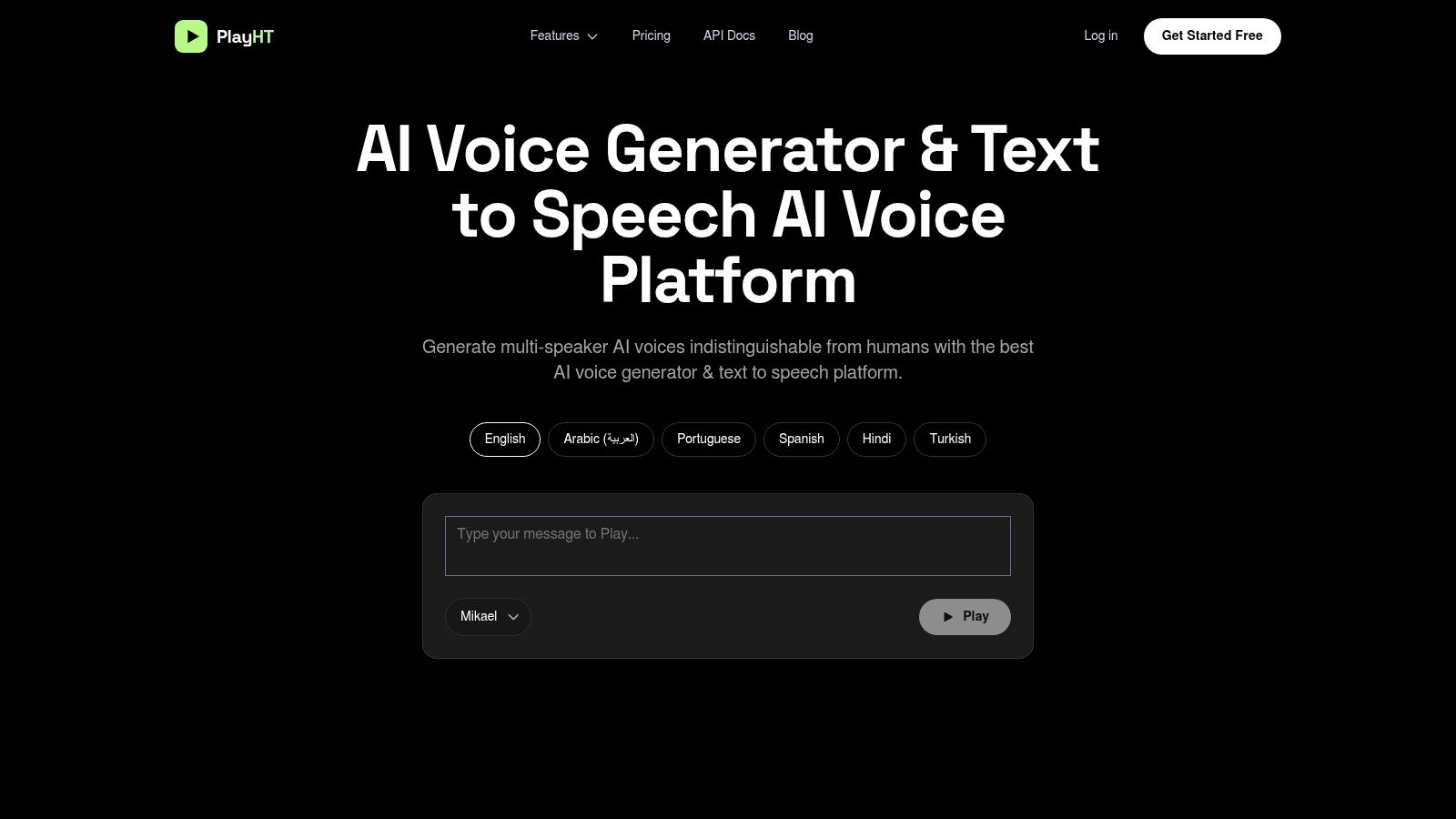 The practical advantage is speed. A clean script can move from text to usable audio with limited setup, which helps agencies testing a repeatable narration process or producing a large batch of similar videos. The platform is better suited to controlled, consistent delivery than to highly theatrical character performance, so teams should judge the voice against the intended persona and audience.
Voice cloning also introduces a consent and licensing check. Use it only when the speaker has granted the required permission, and confirm that the selected plan covers the intended commercial use. The same review applies before a cloned persona becomes a recurring brand character.
Plan details affect rollout decisions. Credit usage, minute limits, and feature access can vary by tier or region, so verify the current terms and in-app allowances before committing to a large campaign. Revisions and alternate takes can consume more capacity than an initial test suggests.
Pros
The practical advantage is speed. A clean script can move from text to usable audio with limited setup, which helps agencies testing a repeatable narration process or producing a large batch of similar videos. The platform is better suited to controlled, consistent delivery than to highly theatrical character performance, so teams should judge the voice against the intended persona and audience.Voice cloning also introduces a consent and licensing check. Use it only when the speaker has granted the required permission, and confirm that the selected plan covers the intended commercial use. The same review applies before a cloned persona becomes a recurring brand character.
Plan details affect rollout decisions. Credit usage, minute limits, and feature access can vary by tier or region, so verify the current terms and in-app allowances before committing to a large campaign. Revisions and alternate takes can consume more capacity than an initial test suggests.
Pros
- Fast script-to-audio workflow: Suitable for clean, repeatable narration.
- Consistent recurring personas: Cloning can support continuity when consent and usage rights are clear.
- Web and API access: Fits both small tests and production processes that need repeat generation.
- Plan details need checking: Credits, limits, and rights vary by tier.
- Limited dramatic range: Practical narration may fit better than performance-led character work.
- Script quality still matters: Awkward phrasing and unclear direction remain audible in the final read.
4. Murf AI
A team handling property tours, compliance reads, and quick client approvals usually needs one tool that can move between clean narration and more flexible voice work. Murf AI fits that kind of workflow well. It is more practical than theatrical, so it works best when the priority is controlled delivery, not a heavily stylized character.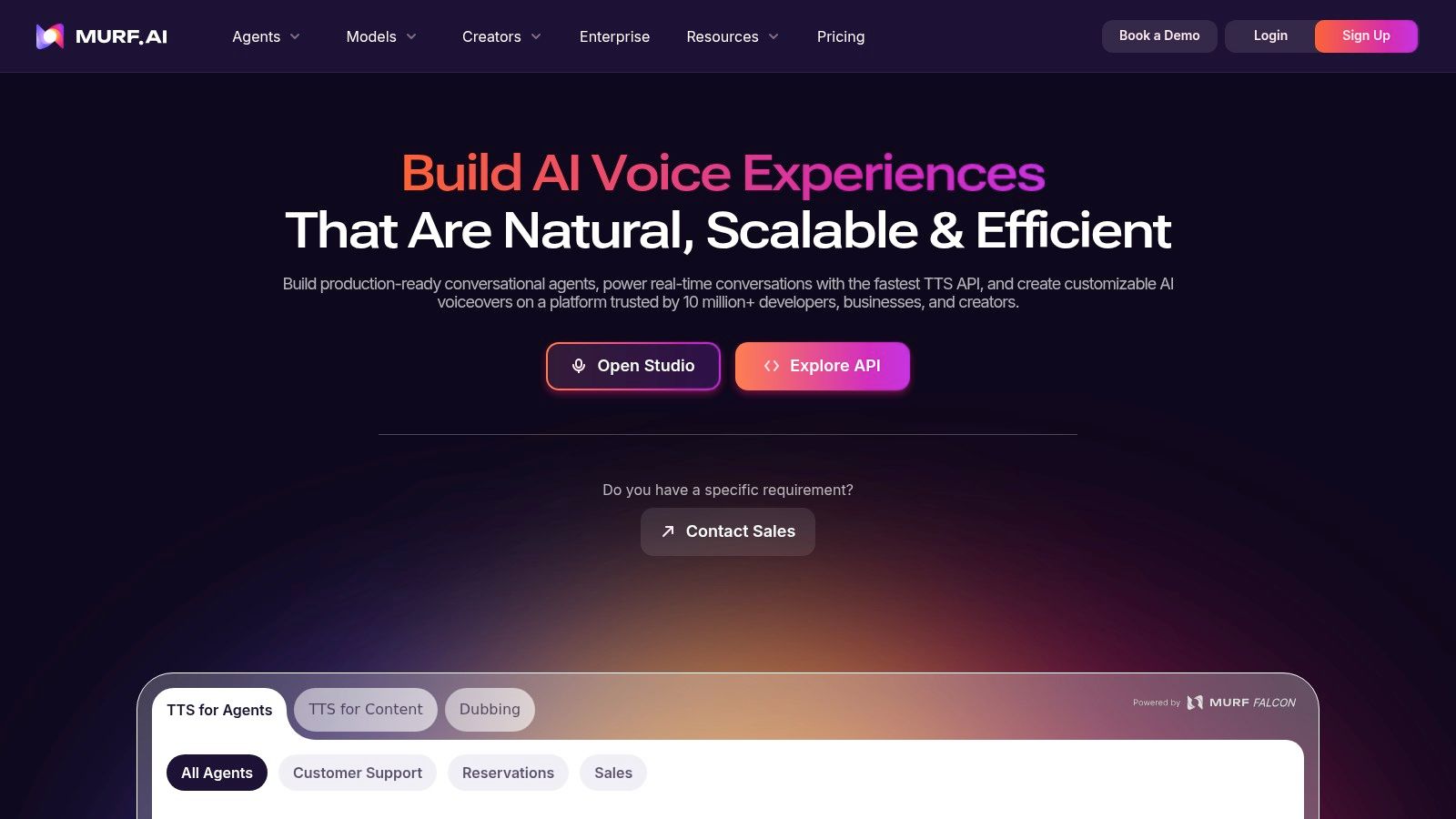 The strongest case for Murf is production discipline. Its real-time and studio-style modes let one team handle rough reads, polished final cuts, and dubbing without changing tools midstream. The voice changer also helps when recorded speech needs a different delivery style, which is useful in agency workflows that start with a scratch track and finish with a cleaner version.
For recurring listings or brand narration, consistency matters more than novelty. Murf supports that by making repeatable reads easier to standardize, while still leaving room for more controlled output when a project needs it. Teams building a reusable voice process can pair that workflow with a reusable voice setup guide to keep production rules clear.
The trade-off is straightforward. Murf rewards teams that already have a process for script review, voice selection, and version control. It is less attractive if you want a highly expressive character read with minimal direction. Plan details also deserve a check before rollout, since feature access can differ by tier.
Pros
The strongest case for Murf is production discipline. Its real-time and studio-style modes let one team handle rough reads, polished final cuts, and dubbing without changing tools midstream. The voice changer also helps when recorded speech needs a different delivery style, which is useful in agency workflows that start with a scratch track and finish with a cleaner version.For recurring listings or brand narration, consistency matters more than novelty. Murf supports that by making repeatable reads easier to standardize, while still leaving room for more controlled output when a project needs it. Teams building a reusable voice process can pair that workflow with a reusable voice setup guide to keep production rules clear.
The trade-off is straightforward. Murf rewards teams that already have a process for script review, voice selection, and version control. It is less attractive if you want a highly expressive character read with minimal direction. Plan details also deserve a check before rollout, since feature access can differ by tier.
Pros
- Works across different production needs: Covers quick reads, dubbing, and studio narration.
- Supports repeatable workflows: Helpful for recurring listings and brand voices.
- Fits organized teams: Best when script control and versioning already exist.
- Less suited to performance-heavy characters: It favors controlled delivery.
- Plan access needs review: Feature availability can vary by tier.
- Requires a clear workflow: Stronger teams get more value from it.
5. Speechify
A campaign that needs a recognizable narrator, rather than a neutral read, is a strong use case for Speechify. Its Reader, Studio, and API products cover different stages of production. A team can test character ideas in the app, refine scripts in Studio, then connect voice generation to a publishing workflow through the API.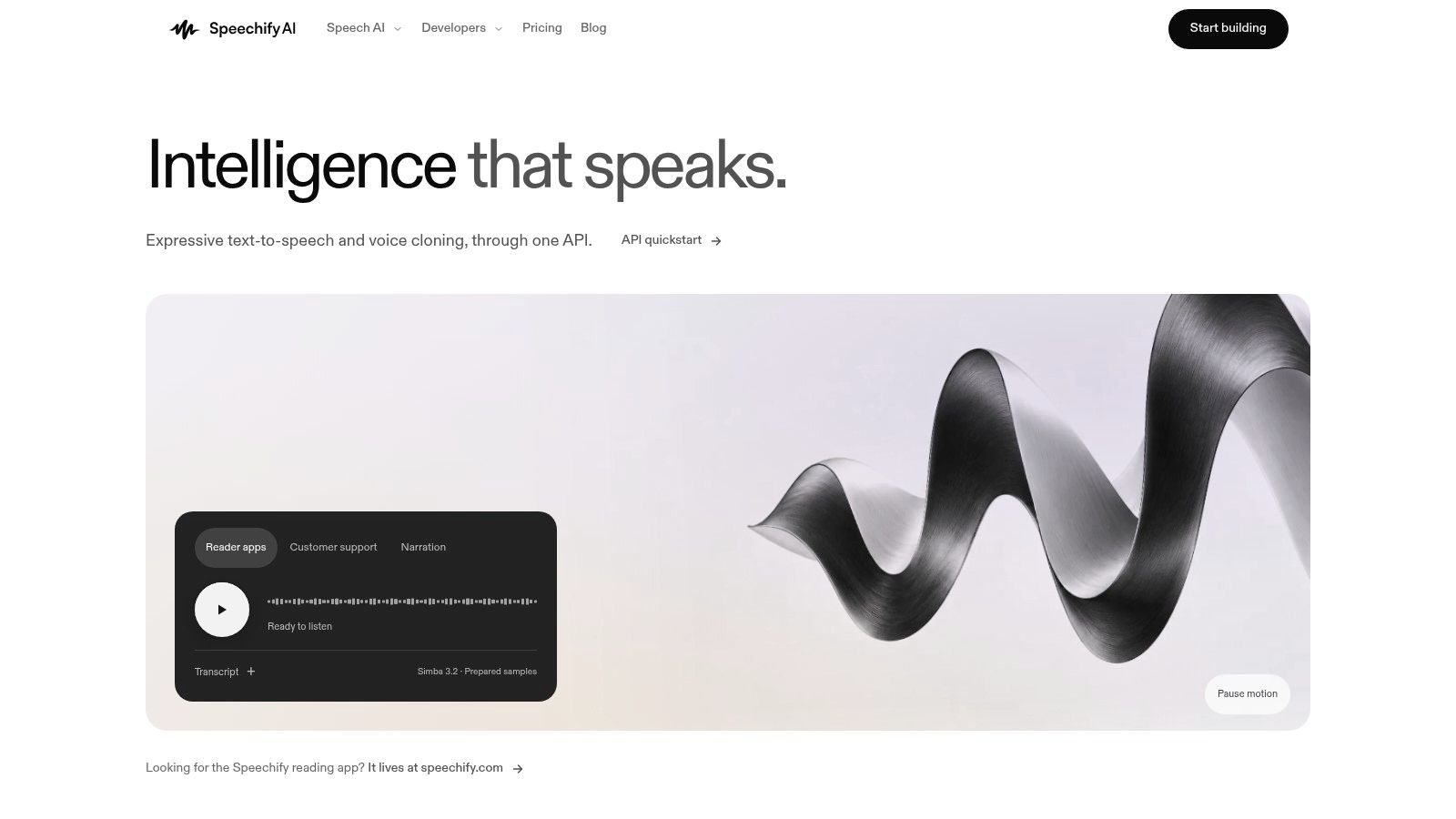 The catalog suits branded social clips, lifestyle content, and recurring campaign personas. Its large selection includes licensed creator or celebrity-style voices, so the voice can function as a recognizable brand element instead of background narration. That choice also creates a rights check: confirm the permitted use, channels, territory, and term for any licensed voice before building a repeatable campaign around it.
Script control makes Speechify more practical for production than a basic reader. SSML support helps shape pacing and pronunciation, while streaming support can serve applications that need generated audio as part of a live or automated workflow. The trade-off is implementation effort. Teams need a clear review process for tone, pronunciation, approvals, and voice consistency across versions.
Studio download access and pricing may require contact with sales. Verify current terms before committing to frequent publishing, especially when licensing or API use affects the workflow.
Pros
The catalog suits branded social clips, lifestyle content, and recurring campaign personas. Its large selection includes licensed creator or celebrity-style voices, so the voice can function as a recognizable brand element instead of background narration. That choice also creates a rights check: confirm the permitted use, channels, territory, and term for any licensed voice before building a repeatable campaign around it.Script control makes Speechify more practical for production than a basic reader. SSML support helps shape pacing and pronunciation, while streaming support can serve applications that need generated audio as part of a live or automated workflow. The trade-off is implementation effort. Teams need a clear review process for tone, pronunciation, approvals, and voice consistency across versions.
Studio download access and pricing may require contact with sales. Verify current terms before committing to frequent publishing, especially when licensing or API use affects the workflow.
Pros
- Recognizable voice options: Supports distinctive brand personas and licensed styles.
- Multiple workflow paths: Reader, Studio, and API suit testing, production, and integration.
- Useful script control: SSML and streaming support extend its production range.
- Rights require verification: Licensed voices need a careful commercial-use review.
- Terms may vary by product: Confirm pricing, downloads, and permissions.
- More than basic narration requires: Teams seeking a simple read may find the setup unnecessary.
6. Typecast
A social video needs a recurring host, while a property listing often needs a calm, credible narrator. Typecast fits the first production job better. Its character-focused voices, avatars, and dialogue tools help teams keep the same on-screen persona across episodes instead of treating each script as a separate voiceover.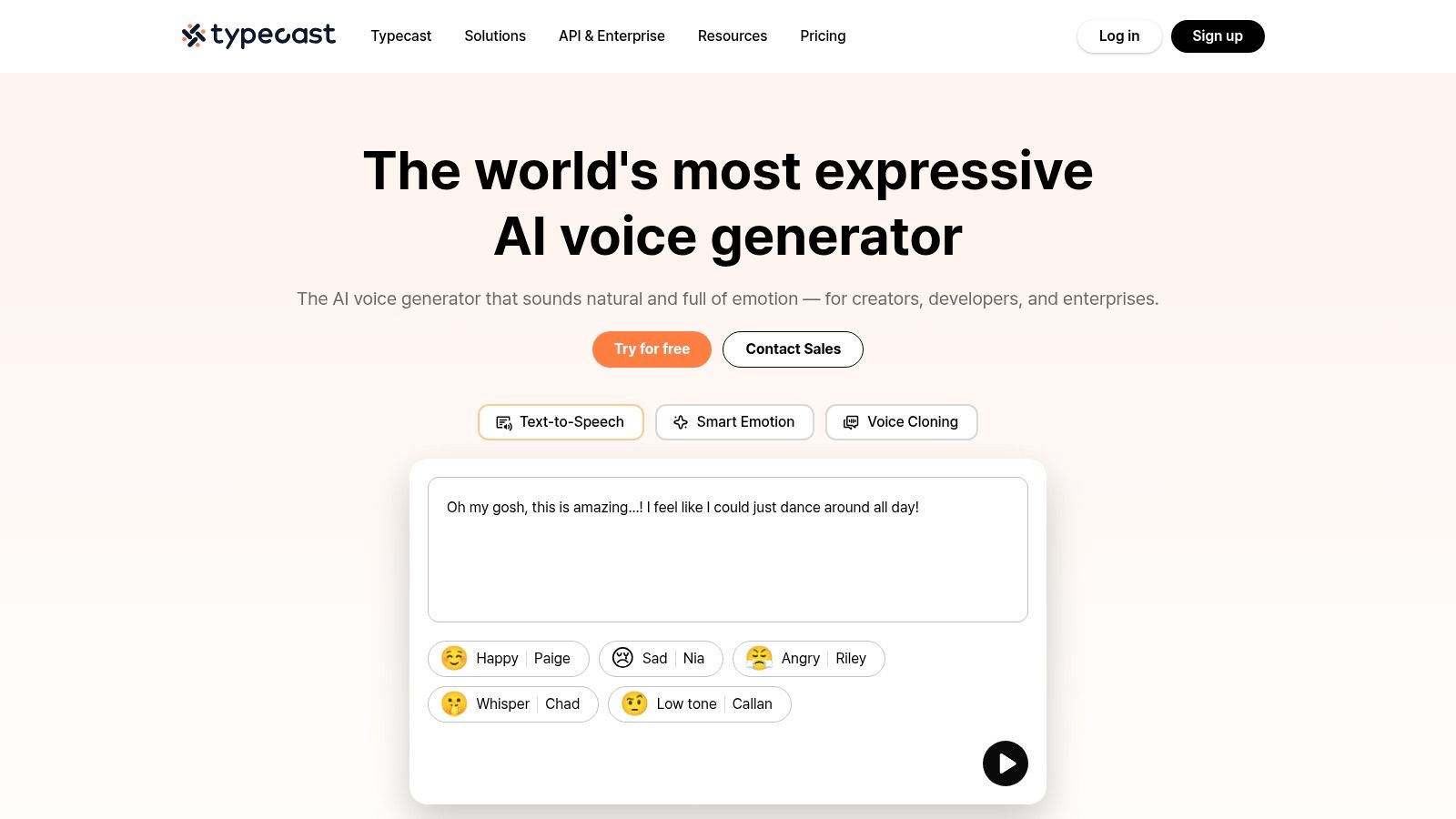 The platform suits branded explainers, social series, and agent characters where voice identity matters as much as pronunciation. A team can define a host, test dialogue, and reuse that character in batch production. Avatar support adds a visible presentation layer, while the API can connect recurring generation to an automated workflow.
Script control is practical for dialogue-heavy work, but the character emphasis can be a limitation. Formal listing narration may benefit from a neutral TTS stack with restrained expression and simpler review criteria. Typecast also requires plan checks before scaling. Confirm available minutes, quotas, API access, export rights, and commercial permissions for the channels where the content will appear.
Choose Typecast when the audience should recognize the presenter from one video to the next. Choose another option when consistent, understated narration matters more than persona.
Pros
The platform suits branded explainers, social series, and agent characters where voice identity matters as much as pronunciation. A team can define a host, test dialogue, and reuse that character in batch production. Avatar support adds a visible presentation layer, while the API can connect recurring generation to an automated workflow.Script control is practical for dialogue-heavy work, but the character emphasis can be a limitation. Formal listing narration may benefit from a neutral TTS stack with restrained expression and simpler review criteria. Typecast also requires plan checks before scaling. Confirm available minutes, quotas, API access, export rights, and commercial permissions for the channels where the content will appear.
Choose Typecast when the audience should recognize the presenter from one video to the next. Choose another option when consistent, understated narration matters more than persona.
Pros
- Character-first production: Works well for recurring hosts, agents, and stylized dialogue.
- Avatar workflow: Connects voice identity with an on-screen character.
- Scalable setup: API support can reduce repetitive generation work.
- Less suited to neutral reads: Expressive personas may not fit formal property narration.
- Plan limits affect scale: Check minutes, quotas, exports, and API availability.
- Consent and rights still matter: Review voice and avatar permissions before creating a repeatable campaign.
7. Kits AI
A property team may need one recognizable voice across listing videos, social clips, and branded campaigns. Kits AI suits that job when a standard narrator feels too generic. Its voice cloning and Voice Designer and Voice Blender tools support custom timbre work, giving producers more control over a character's identity than a fixed library usually allows.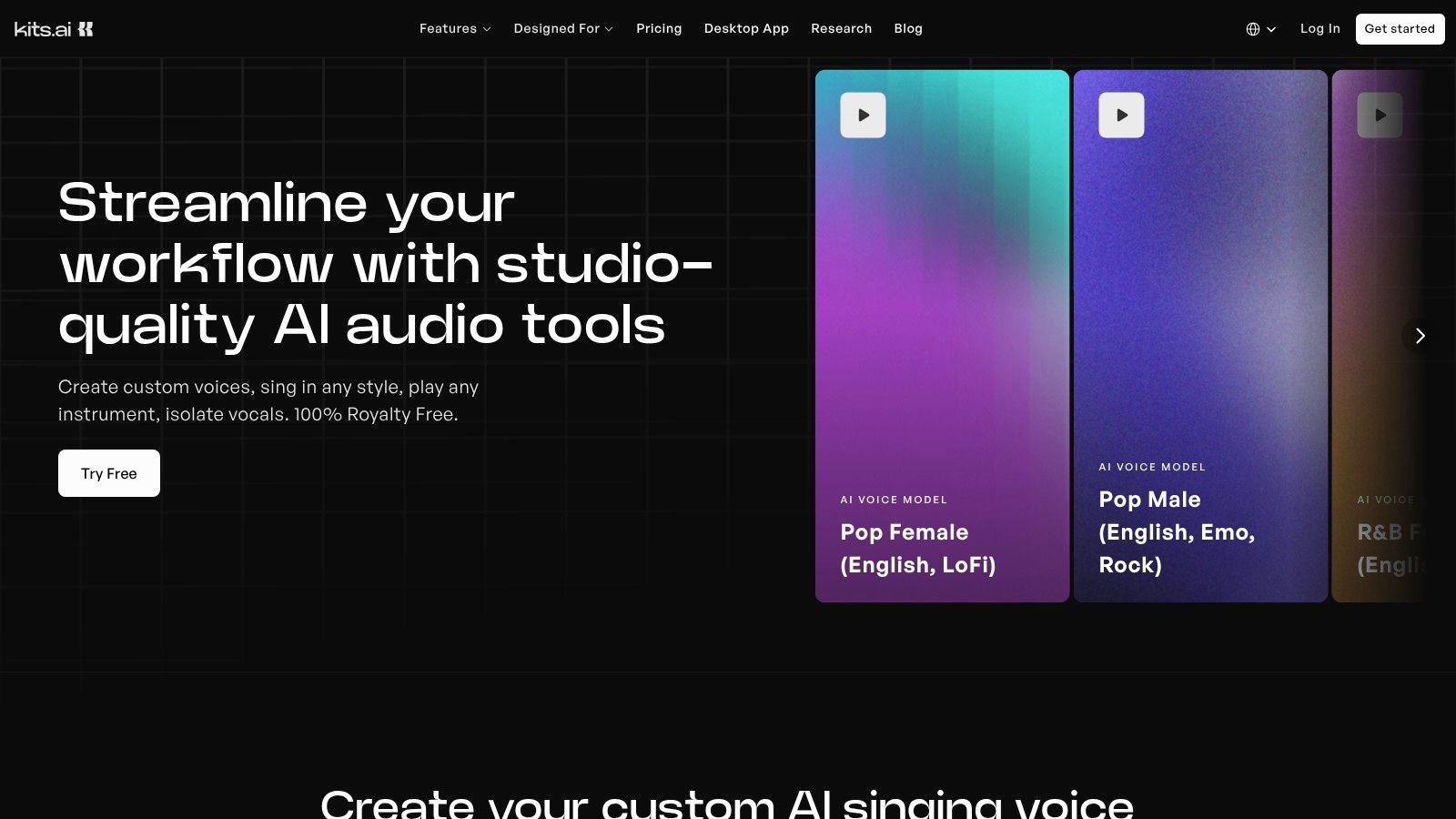 The practical advantage is fast auditioning. Instant cloning can establish a direction quickly, while the broader audio tools fit workflows that combine narration with music or other stylized assets. That makes Kits AI useful for an agent persona, a recurring host, or distinctive campaign voice where character matters more than a restrained listing read.
Script control remains workable for dialogue and repeated formats, but teams should review the output carefully when pronunciation, pacing, or factual property details must stay exact. It is also worth checking consent and usage rights for reference recordings before cloning a real person, especially when the voice will represent a long-running brand. Teams adding an on-screen persona can pair the audio workflow with this guide to how to make an AI avatar.
Plan structure affects production capacity. Download limits and minute caps may shape batch work, and regional or account-specific pricing can change, so confirm current inclusions before standardizing the tool.
Choose Kits AI for a designed voice identity and creative audio workflow. Choose a conventional TTS platform when neutral, repeatable narration and simple review matter more.
The practical advantage is fast auditioning. Instant cloning can establish a direction quickly, while the broader audio tools fit workflows that combine narration with music or other stylized assets. That makes Kits AI useful for an agent persona, a recurring host, or distinctive campaign voice where character matters more than a restrained listing read.Script control remains workable for dialogue and repeated formats, but teams should review the output carefully when pronunciation, pacing, or factual property details must stay exact. It is also worth checking consent and usage rights for reference recordings before cloning a real person, especially when the voice will represent a long-running brand. Teams adding an on-screen persona can pair the audio workflow with this guide to how to make an AI avatar.
Plan structure affects production capacity. Download limits and minute caps may shape batch work, and regional or account-specific pricing can change, so confirm current inclusions before standardizing the tool.
Choose Kits AI for a designed voice identity and creative audio workflow. Choose a conventional TTS platform when neutral, repeatable narration and simple review matter more.
- Fast cloning: Builds a custom voice from reference audio.
- Stylized character control: Supports voices with a distinct personality.
- Audio workflow fit: Works alongside music-focused creative production.
- Usage limits: Verify minutes, downloads, and plan inclusions before scaling.
- Consent checks: Confirm permission and commercial rights for cloned voices.
8. Voicemod
A presenter can switch from a natural delivery to a game character during a live property walkthrough without pausing to render new audio. Voicemod is built for that situation, using a virtual microphone, soundboard, and hotkeys to apply voice effects in real time. It suits streams, webinars, live events, and interactive demos more than a library of finished narration files.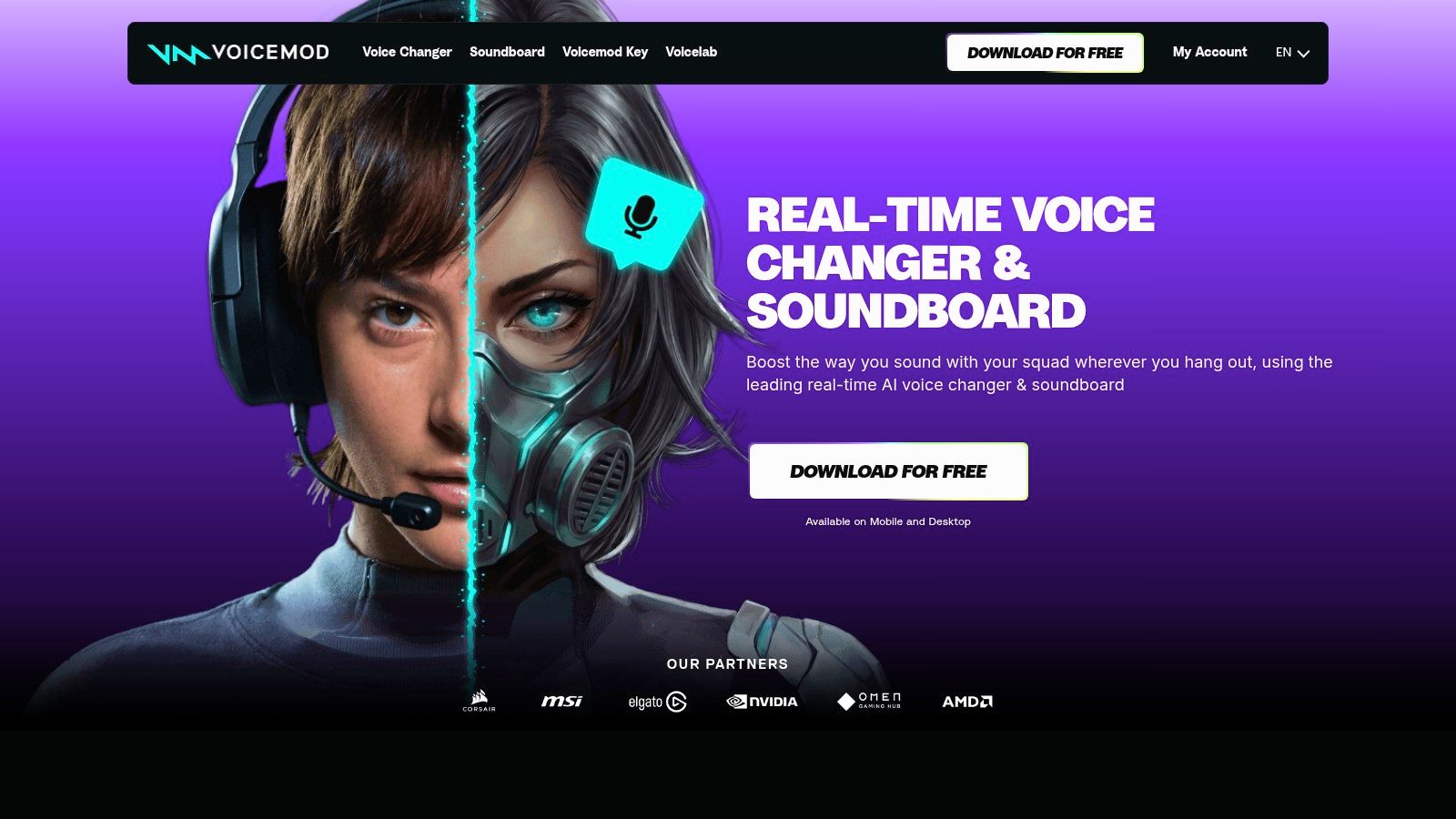 The production advantage is responsiveness. A host can change character during a call or walkthrough, while integrations with OBS, Zoom, and Discord support familiar live setups. Presets provide quick character changes, and the soundboard adds cues or recurring audio moments without requiring an editor between takes.
Script control is limited compared with offline text-to-speech. Voicemod changes the spoken performance rather than generating a carefully timed read from a final script, so teams handling listing facts, names, or compliance language should record and review the session closely. It also favors playful or theatrical identities, which may conflict with a restrained real-estate brand persona.
Use Voicemod when live interaction matters more than polished post-production. Check current in-app pricing, licensing terms, and any consent requirements before deploying a recognizable or cloned voice in public campaigns.
The production advantage is responsiveness. A host can change character during a call or walkthrough, while integrations with OBS, Zoom, and Discord support familiar live setups. Presets provide quick character changes, and the soundboard adds cues or recurring audio moments without requiring an editor between takes.Script control is limited compared with offline text-to-speech. Voicemod changes the spoken performance rather than generating a carefully timed read from a final script, so teams handling listing facts, names, or compliance language should record and review the session closely. It also favors playful or theatrical identities, which may conflict with a restrained real-estate brand persona.
Use Voicemod when live interaction matters more than polished post-production. Check current in-app pricing, licensing terms, and any consent requirements before deploying a recognizable or cloned voice in public campaigns.
- Live transformation: Real-time character changes for presenters and hosts.
- Fast operation: Hotkeys and presets reduce interruption during broadcasts.
- Workflow fit: Strong with streaming and meeting software.
- Post-production limits: Less suitable for precise, repeatable tour narration.
- Brand review: Confirm tone, usage rights, and consent before release.
9. Voice.ai
A team producing a polished property tour can use Voice.ai for scripted narration, then test the same character in an interactive demo or phone-agent workflow. That range makes it useful when a voice project may expand beyond recorded content, although it also increases the amount of planning required.
Voice.ai combines voice transformation, cloning, text-to-speech, and agent workflows. Its practical advantage is continuity across production modes. Teams can evaluate a character voice, generate scripted passages, and prototype customer interactions without assembling separate platforms.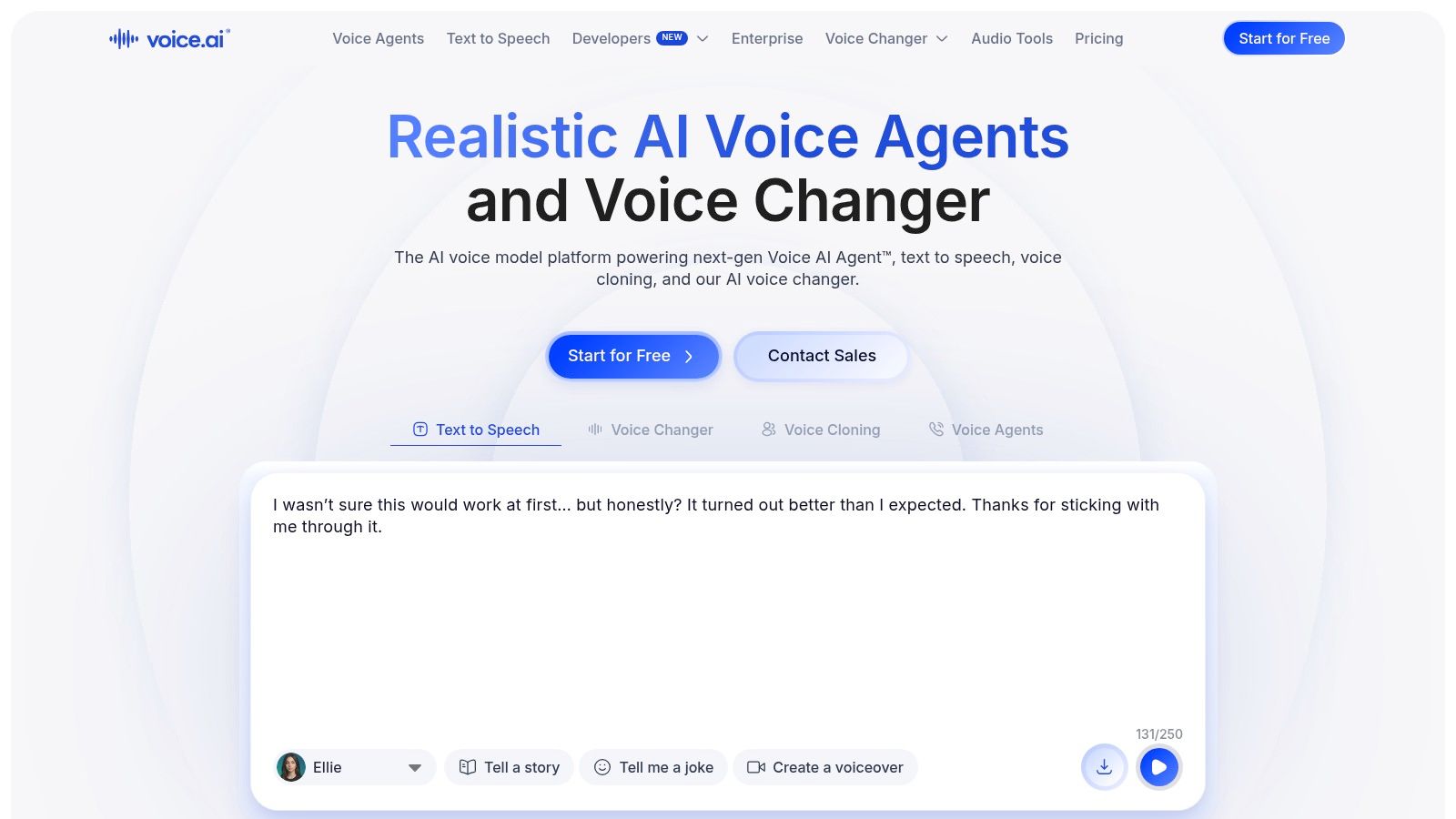 Choose the workflow before choosing the plan. For listing narration, script control and repeatable pronunciation matter more than live transformation. For demonstrations or events, responsiveness may matter more. Agent projects also require attention to calling features, credit usage, and concurrency. A broad catalog helps only when the team has a defined production path.
Voice.ai fits marketing groups testing whether a character belongs in narration, live presentations, or customer conversations. It is less efficient for a simple voiceover brief if the extra modes will remain unused. Cloned or recognizable voices also require documented permission and a review of commercial licensing terms before public release.
Voice.ai combines voice transformation, cloning, text-to-speech, and agent workflows. Its practical advantage is continuity across production modes. Teams can evaluate a character voice, generate scripted passages, and prototype customer interactions without assembling separate platforms.
Choose the workflow before choosing the plan. For listing narration, script control and repeatable pronunciation matter more than live transformation. For demonstrations or events, responsiveness may matter more. Agent projects also require attention to calling features, credit usage, and concurrency. A broad catalog helps only when the team has a defined production path.Voice.ai fits marketing groups testing whether a character belongs in narration, live presentations, or customer conversations. It is less efficient for a simple voiceover brief if the extra modes will remain unused. Cloned or recognizable voices also require documented permission and a review of commercial licensing terms before public release.
- Scripted narration: Suitable for testing character voices against controlled copy.
- Live transformation: Supports interactive demonstrations and real-time use cases.
- Workflow range: Covers content, live voice, and agent experiments in one ecosystem.
- Implementation effort: Teams must map credits, concurrency, and required modes to the actual workflow.
- Consent review: Confirm voice rights and permission before cloning or publishing a recognizable voice.
10. CereProc
A campaign needs a regional narrator, a childlike character, or an accent that carries the brand identity. In that situation, CereProc offers a more focused catalog than general-purpose TTS platforms. Its voices often feel selected for a specific persona rather than interchangeable narration.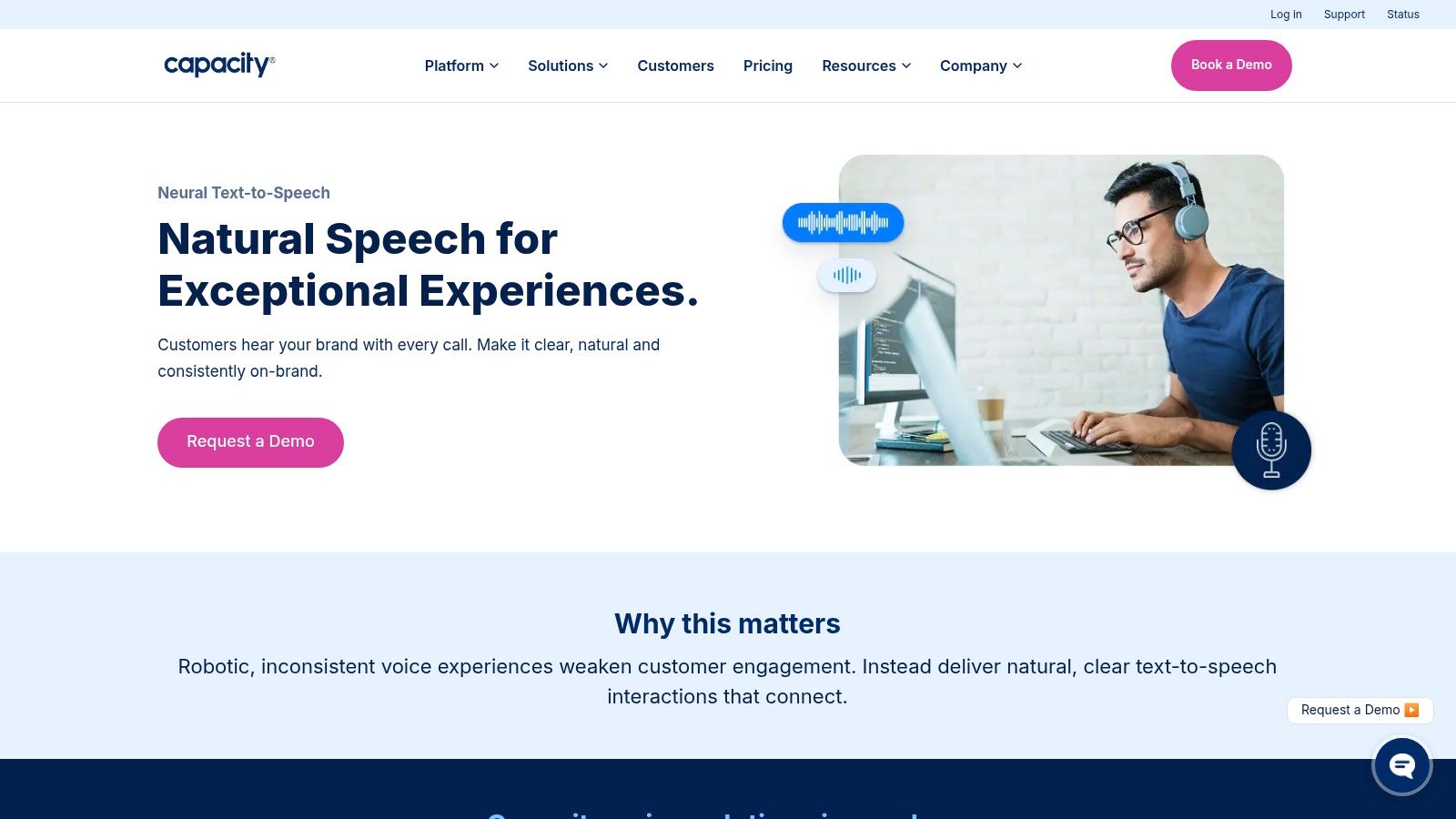
Its annual pricing model can simplify commercial planning, but licensing still needs a voice-by-voice check. Confirm the permitted channels, territory, duration, and any restrictions on synthetic use before publishing a recognizable or distinctive voice. Consent and usage rights matter as much as the audio quality when the voice becomes part of a public brand.
The workflow feels more like classic speech software than a modern creator studio. Teams producing controlled narration may appreciate that functional approach. High-volume marketers looking for rapid experimentation, live transformation, or an all-in-one content workspace may need additional tools.
Best fit for distinctive licensed characters
CereProc works well for polished listing narration, recurring brand personas, and other scripted jobs where the same character must sound consistent across many recordings. Cloud API access, SSML, and lexicon controls give production teams control over pronunciation, pacing, and repeatable terminology. That makes it more practical for structured copy than for spontaneous creator content.Its annual pricing model can simplify commercial planning, but licensing still needs a voice-by-voice check. Confirm the permitted channels, territory, duration, and any restrictions on synthetic use before publishing a recognizable or distinctive voice. Consent and usage rights matter as much as the audio quality when the voice becomes part of a public brand.
The workflow feels more like classic speech software than a modern creator studio. Teams producing controlled narration may appreciate that functional approach. High-volume marketers looking for rapid experimentation, live transformation, or an all-in-one content workspace may need additional tools.
- Voice character: Strong choice for unusual accents, regional identity, and specific personas.
- Script control: SSML and lexicons support consistent delivery and pronunciation.
- Scalability: API-based production suits repeatable narration, though pricing and licensing vary by voice.
- Implementation effort: More setup and workflow planning than in creator-focused platforms.
- Rights review: Verify commercial permissions and consent for each selected voice.
Top 10 AI Voice Character Tools Comparison
| Product | Core features | ★ Quality | 💰 Price / value | 👥 Target | ✨🏆 Key differentiator |
|---|---|---|---|---|---|
| VideoTour.ai | Photo→HD property tours, social reels, AI avatar, branding toolkit, MLS‑safe presets | ★★★★☆ | 💰 Free first video; paid plans remove watermark + monthly video allowance; optional AI credits | 👥 Real estate agents, agencies, brokers | ✨ Auto-sync music/captions, unlimited re-renders, MLS presets 🏆 |
| ElevenLabs | Expressive TTS, large community voice library, voice cloning, dubbing studio | ★★★★★ | 💰 Credit-based; paid tiers for commercial rights | 👥 Producers needing natural narration, multilingual dubbing | ✨ High emotional control, vast voice marketplace 🏆 |
| PlayHT | Web studio + API, voice cloning, credit model, free tier available | ★★★★☆ | 💰 Free-to-pro tiers; clear credit guidance | 👥 Agents scaling branded narrations | ✨ Easy trial-to-scale workflow, transparent credits |
| Murf AI | Real-time & studio TTS tracks, dubbing, voice changer, API | ★★★★☆ | 💰 Tiered pricing (per modality); API pricing clear | 👥 Teams/Content studios standardizing voiceovers | ✨ Low-latency agent reads + studio-quality tracks |
| Speechify | Large voice catalog (incl. licensed styles), Reader app, Studio & API | ★★★★☆ | 💰 Mixed pricing; some commercial features via sales | 👥 Brand/lifestyle creators seeking distinctive voices | ✨ Celebrity-style/licensed voices for high-engagement clips |
| Typecast | Character-driven voices, avatar support, creator & enterprise plans | ★★★★☆ | 💰 Tiered minutes/quotas; creator→enterprise | 👥 Narrative reels, character-led content creators | ✨ Built-in avatar + character persona tooling 🏆 |
| Kits AI | Instant voice cloning, Voice Designer/Blender, music-centric effects | ★★★★ | 💰 Starter plans with voice slots; download minute caps | 👥 Creators wanting stylized character timbres | ✨ Fast cloning & blending for unique timbres |
| Voicemod | Real-time voice changer, virtual mic, soundboard, low latency | ★★★★☆ | 💰 App-based pricing; PRO subscription options | 👥 Live hosts, streamers, live virtual walk‑throughs | ✨ Live voice transforms + hotkey soundboard 🏆 |
| Voice.ai | Real-time changing + TTS + cloning, agent integrations, concurrency tiers | ★★★★ | 💰 Credit/minute framing; tiers for scale | 👥 Teams needing live agents + character voices | ✨ Combines live agents, TTS and scaling concurrency |
| CereProc | Distinctive licensed voices, accent diversity, cloud API, SSML control | ★★★★ | 💰 Per-voice licensing (annual options) | 👥 Brands needing unique regional/persona voices | ✨ Off‑the‑shelf distinctive personas; transparent licensing 🏆 |
Match the Character to the Production Job
The right ai voice characters tool depends on the production job, not the hype around the voice. If the deliverable starts with property photos and needs a branded narrated tour, an end-to-end workflow like VideoTour.ai is the most efficient route because it turns the whole package into a single production step. If the brief calls for polished narration, expressive TTS platforms such as ElevenLabs or PlayHT are better starting points. If the narrator needs to be a recurring host or stylized persona, Typecast, Kits AI, or Speechify make more sense. If the voice has to change live on camera, Voicemod or Voice.ai is the more natural fit. If the brand needs a distinctive licensed accent, CereProc is the specialist to check first.
The selection process should stay practical. Run the same short script across finalists, listen for pronunciation and emotional consistency, and check how each tool handles revisions before you commit to a production pipeline. Confirm commercial and cloning permissions, estimate credits or minutes against your real output volume, and verify export formats or integrations before you lock the workflow in. That part matters as much as the voice itself, because a great voice that breaks your export or licensing rules is not a usable asset.
A few patterns are already clear from the market. AI voice has moved well past experimentation, with business adoption, cloud delivery, and text-to-speech growth all pointing toward routine production use rather than one-off novelty (enterprise adoption data, market growth view, usage and regional concentration). At the same time, the hardest questions now sit around consent, trust, and where human performance still wins, especially when the voice has to carry legitimacy or emotional nuance (cloning and governance concerns, performance nuance in 2026 voice workflows). That is why the best choice is the one that matches your delivery model, not the one with the longest feature list.
For real estate teams, the shortcut is obvious. If you need the voice to live inside the same workflow as the photos, captions, motion, and branding, choose the system that was built to assemble all of that together. VideoTour.ai is the relevant choice when the job is to turn property photos into branded narrated videos, not when the job is to audition standalone audio tools one by one. For broader production buying decisions, a good reference point is this overview of video production companies.
If your team needs to turn listings into branded narrated videos without stitching together separate tools, VideoTour.ai gives you the photo-to-video workflow, AI avatar options, voice cloning, and social-ready exports in one place. It is built for the exact production problem this article covers, moving from property photos to polished tours fast. Visit VideoTour.ai to see how it can fit your next listing or campaign.
The selection process should stay practical. Run the same short script across finalists, listen for pronunciation and emotional consistency, and check how each tool handles revisions before you commit to a production pipeline. Confirm commercial and cloning permissions, estimate credits or minutes against your real output volume, and verify export formats or integrations before you lock the workflow in. That part matters as much as the voice itself, because a great voice that breaks your export or licensing rules is not a usable asset.
A few patterns are already clear from the market. AI voice has moved well past experimentation, with business adoption, cloud delivery, and text-to-speech growth all pointing toward routine production use rather than one-off novelty (enterprise adoption data, market growth view, usage and regional concentration). At the same time, the hardest questions now sit around consent, trust, and where human performance still wins, especially when the voice has to carry legitimacy or emotional nuance (cloning and governance concerns, performance nuance in 2026 voice workflows). That is why the best choice is the one that matches your delivery model, not the one with the longest feature list.
For real estate teams, the shortcut is obvious. If you need the voice to live inside the same workflow as the photos, captions, motion, and branding, choose the system that was built to assemble all of that together. VideoTour.ai is the relevant choice when the job is to turn property photos into branded narrated videos, not when the job is to audition standalone audio tools one by one. For broader production buying decisions, a good reference point is this overview of video production companies.
If your team needs to turn listings into branded narrated videos without stitching together separate tools, VideoTour.ai gives you the photo-to-video workflow, AI avatar options, voice cloning, and social-ready exports in one place. It is built for the exact production problem this article covers, moving from property photos to polished tours fast. Visit VideoTour.ai to see how it can fit your next listing or campaign.