
Picture this. You've got forty listing photo sets queued for the week, the agent wants the first cut today, and the narrator who usually saves you can't record every property. That's where voice cloning AI helps, but the tools are not interchangeable. Some are built for fast commercial narration, some are easier to govern, and some are only safe if you've already sorted consent, disclosure, and rights. This ranking focuses on the questions that matter before anything goes live, whether the clone is licensed for commercial use, what the voice owner has to agree to, how the tool fits a listing-video workflow, and where it creates brand or legal risk. If you want a broader overview while you compare options, check out Drumloop AI's picks.
Summary
Create an AI Video Tours from PhotosTry it For Free

1. ElevenLabs
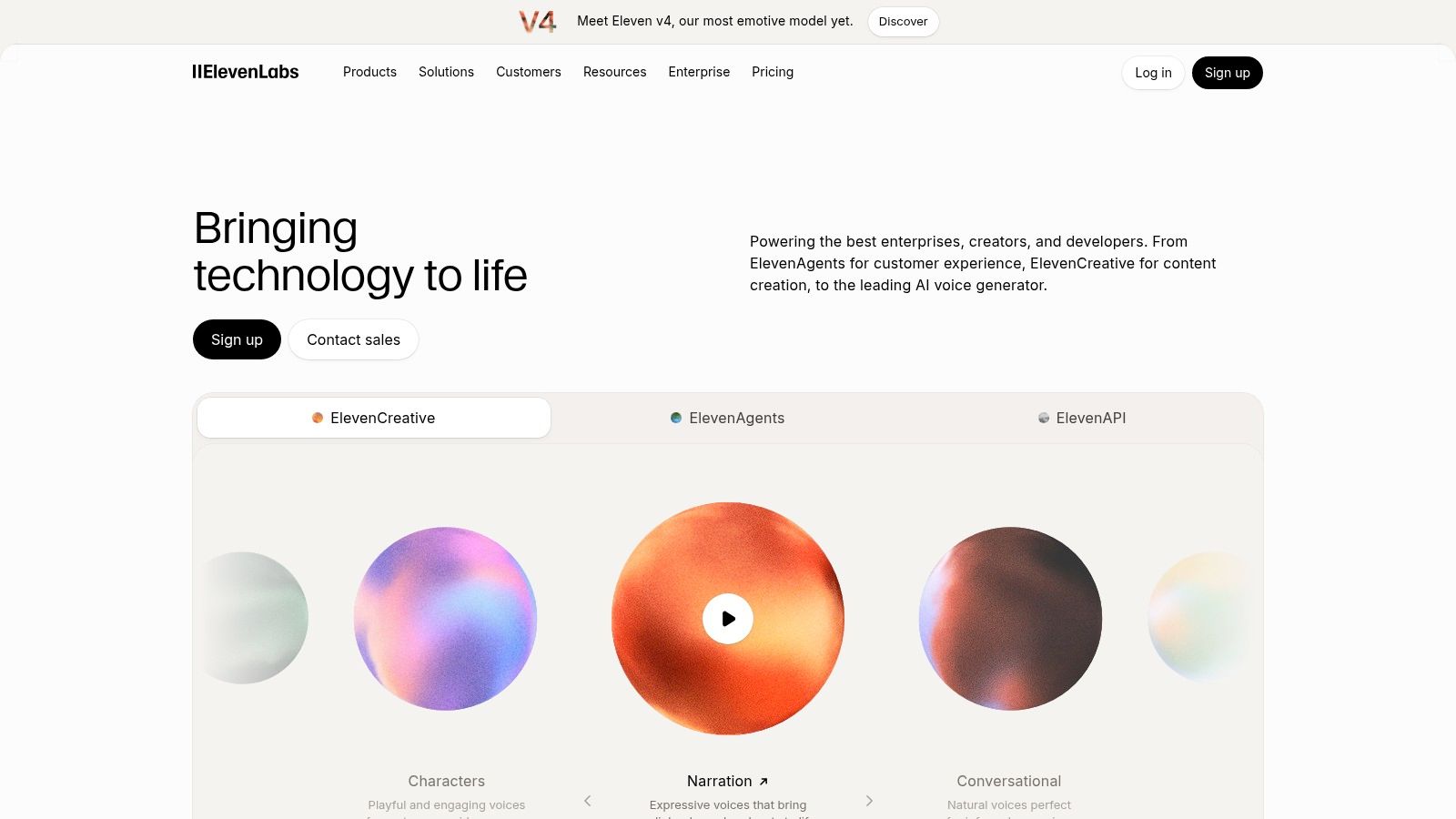 ElevenLabs is the first tool I'd put in front of a team that needs a clone to sound polished quickly. Its Instant Voice Cloning works with roughly 10 seconds to about 1 to 2 minutes of audio, and the platform's newer multilingual models support more than 90 languages in the published docs ElevenLabs voice cloning documentation. In practice, that makes it useful for listing videos, agent intros, social clips, and multilingual narration where speed matters as much as tone.
Why it ranks first for marketers
The primary reason it leads is workflow breadth. ElevenLabs isn't just a clone engine, it also gives you dubbing, voice isolation and changer tools, a voice library, SFX, and an API, so it can sit in the middle of a production pipeline instead of forcing you to stitch together several apps. The docs also describe instant cloning as few-shot conditioning at inference time, which is a strong fit when you need quick onboarding or a short-term campaign voice.Practical rule: use instant cloning for speed, then require standardized recordings if you want a brokerage brand voice that stays stable across many listings.
What to watch before you publish
The trade-off is governance and cost planning. The platform uses credit-based metering, so high-volume teams need to forecast usage instead of assuming every export is cheap. You also need to verify how the voice was sourced, because a convincing clone still carries consent and impersonation risk if the owner didn't explicitly authorize it. ElevenLabs is the most flexible choice here, but flexibility only helps if your rights documentation is clean.For teams already building around VideoTour.ai, the fit is obvious. The internal workflow can be linked to a reusable voice process, and the team can reuse a checked clone across property videos instead of rebuilding narration from scratch. See VideoTour.ai's reusable voice guidance for how that kind of workflow gets structured in production.
2. PlayHT
PlayHT is the strongest pick when a marketing team wants a broad speech stack without forcing every video through a heavyweight production process. It combines voice cloning, ultrarealistic TTS, auto-dubbing, voice changer and isolation tools, plus music and SFX, all in one place at PlayHT's site. That matters for property teams that publish a lot of short clips, because one tool can cover narration, language variants, and quick edits.
Where it fits in a listing workflow
PlayHT makes the most sense for repeatable exports. If an agent wants a clone for walk-through videos, neighborhood reels, or fast property recaps, the platform is close to a one-stop shop. The paid plans are built around large monthly usage allowances, and voice cloning is included across those plans, which helps if your bottleneck is output volume rather than one perfect flagship voice.The trade-offs that show up in production
The downside is consistency. Voice quality can vary by model or voice, so you can't assume one clone will behave the same way across all scripts. I'd treat that as a testing requirement, not a dealbreaker. Run the same listing script through the voices you're considering, then check how each one handles addresses, bedroom counts, and neighborhood names before you commit.PlayHT is a good operational choice when you need many exports and don't want to assemble separate tools for dubbing, voice effects, and background audio.The consent question still matters here. A clone that works technically can still create risk if your approval process is weak or if the business can't show who authorized the source voice. For a brokerage, that's often more important than squeezing out a slightly better demo.
3. Resemble AI
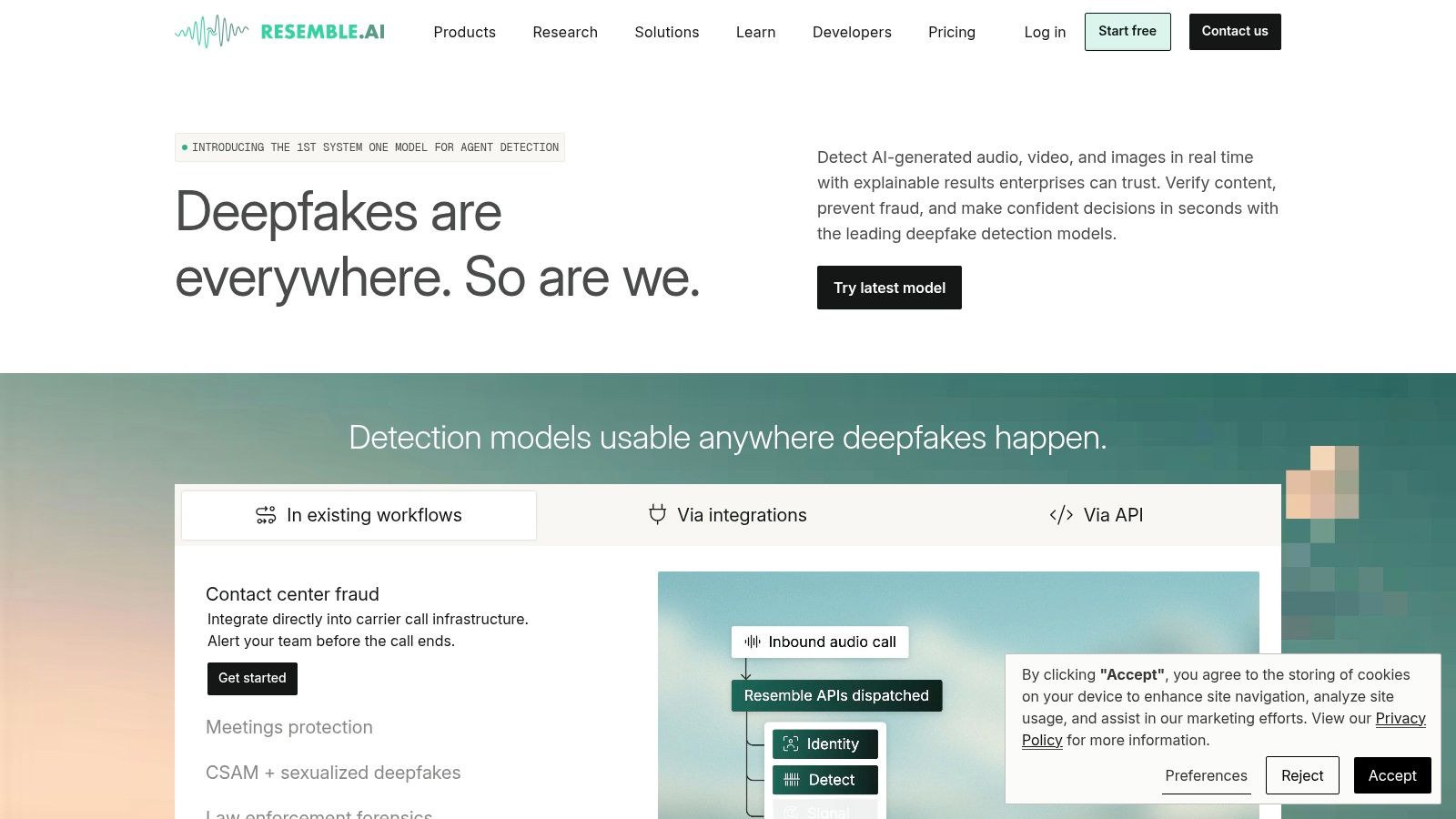 Resemble AI belongs near the top if your main concern is governance, not just audio polish. Its platform includes secure cloning paths, multilingual output from a single clone, watermarking and detection features, and an API, which makes it a credible fit for teams that need more than a quick voice toy Resemble AI. If a marketing department wants a clone that can travel across languages while staying inside a compliance-heavy workflow, this is one of the more serious options.
Why safety changes the ranking
The evidence around cloning risk is not subtle. Consumer Reports found researchers could create clones from publicly available audio in four of six tested products, and NBC News reported that five of six leading services had safeguards that were easily bypassed Consumer Reports assessment. That's exactly why watermarking, detection, permission tracking, and an audit trail belong in the buying decision.Where it works well
Resemble AI is strongest when voice generation is part of a larger controlled system. If a brokerage wants multilingual narration, internal approvals, and a way to show what was authorized, the platform fits that use case better than a casual creator tool. It's also a better match for teams that are already thinking about voice as a protected identity asset, not just a production shortcut.Direct recommendation: if legal review is likely to slow your launch, pick the platform that makes that review easier, not the one with the flashiest demo.The downside is that the interface and pricing can feel enterprise-oriented. That's not a flaw if your team needs enterprise controls, but it can be overkill for a solo agent who only wants a few listing videos a month.
4. Descript Overdub
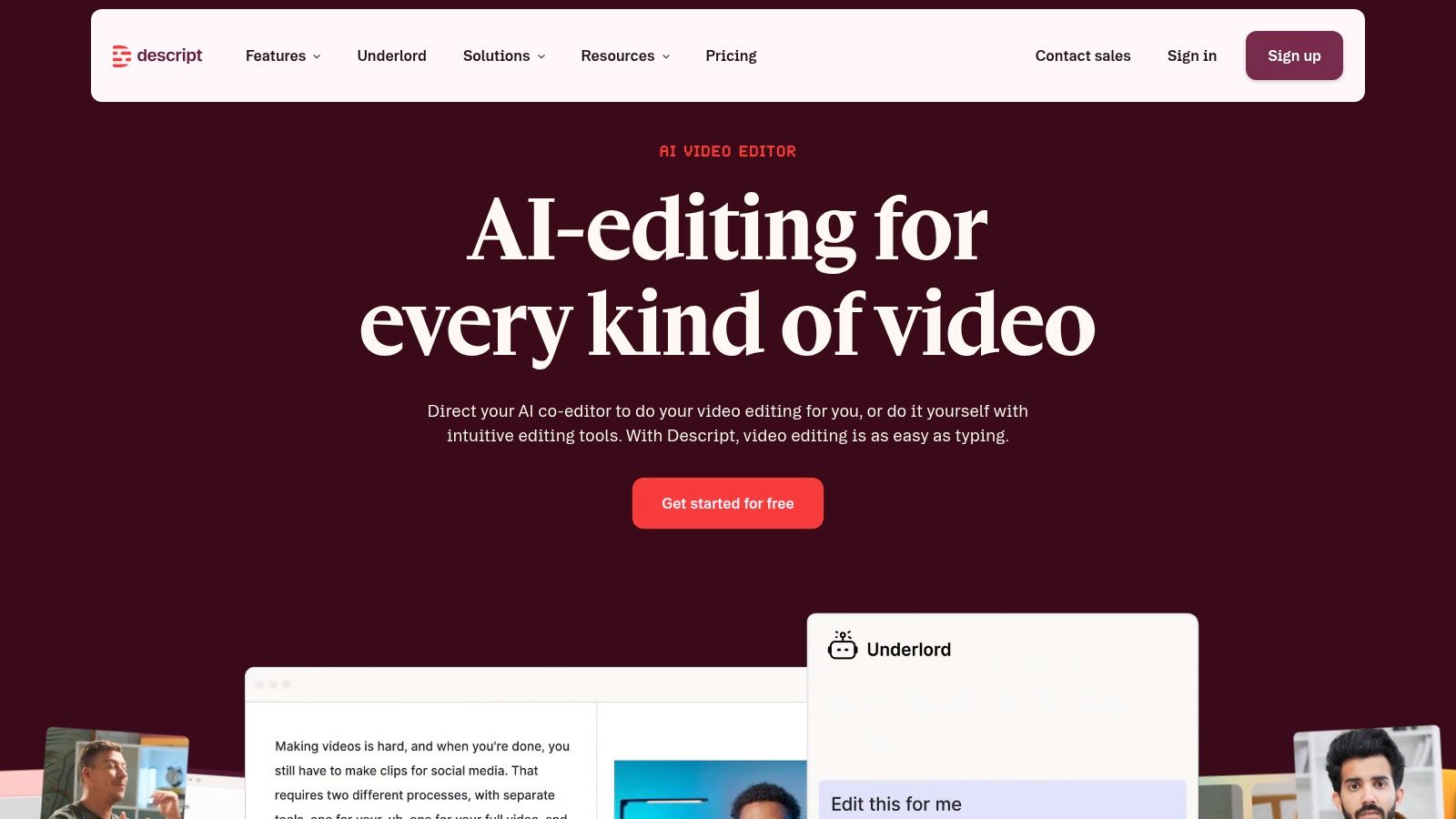 Descript Overdub makes sense when editing and voice generation need to live in the same workspace. Instead of exporting a script, generating narration elsewhere, then bringing the file back into an editor, you can fix text, trim audio, clean noise, and work with captions in one place at Descript. That saves a lot of friction when a listing price changes, an agent wants a line rewritten, or a video needs a last-minute property detail correction.
Best use case in real estate
This is the strongest option for teams already cutting reels, walkthroughs, or longer promo videos inside Descript. The “type-to-fix” style workflow is exactly what you want when one sentence changes after the edit lock should have been final. For production teams, that can matter more than having the most advanced standalone clone engine.Where it falls short
The trade-off is control. Descript gives you less parameter-level tuning than a dedicated voice platform, so it's not where I'd go if I needed to fine-tune a brand voice for high-visibility listing campaigns. Lower tiers can also impose vocabulary or usage limits, so you need to know how often you'll generate and revise before you standardize on it.The compliance question is still there, but Descript's value is operational. It reduces hops between transcription, editing, and output, which is useful when the bottleneck is the number of tiny changes a realtor asks for after the first draft.
5. Microsoft Azure AI Speech Custom Neural Voice
Microsoft's Custom Neural Voice is the most conservative choice on this list, and that's why it belongs here. It's an enterprise service built for custom voices with strict consent and verification requirements, run through Azure Speech infrastructure at Microsoft Speech. If your team needs approvals, governance, and a formal paper trail, this is the tool that behaves like a regulated production system instead of a creator app.
For teams using VideoTour.ai, this kind of reusable voice process fits well with a controlled property-video workflow. VideoTour.ai's reusable voice help article is useful if you're trying to connect a cloned voice to a repeatable narration setup instead of a one-time export.
Why enterprises choose it
The strongest argument for Azure is control. You're not just uploading a sample and hoping nobody asks questions later. The platform's process is built around talent consent statements, security controls, transparency, and disclosure requirements for synthetic voices. That makes it a better fit for brokerages, agencies, or corporate real-estate brands that need legal review before public use.What the workflow feels like
It's slower to start than self-serve tools. Access requires application and approval, and the setup is more technical because pricing and configuration run through Azure services rather than a single flat consumer plan. That's the right trade-off when the voice will become part of a durable brand system, but it's not the fastest path for a one-off listing campaign.For teams using VideoTour.ai, this kind of reusable voice process fits well with a controlled property-video workflow. VideoTour.ai's reusable voice help article is useful if you're trying to connect a cloned voice to a repeatable narration setup instead of a one-time export.
If your legal team needs to approve the voice before the marketing team can use it, this is the category to start with.
6. WellSaid Labs
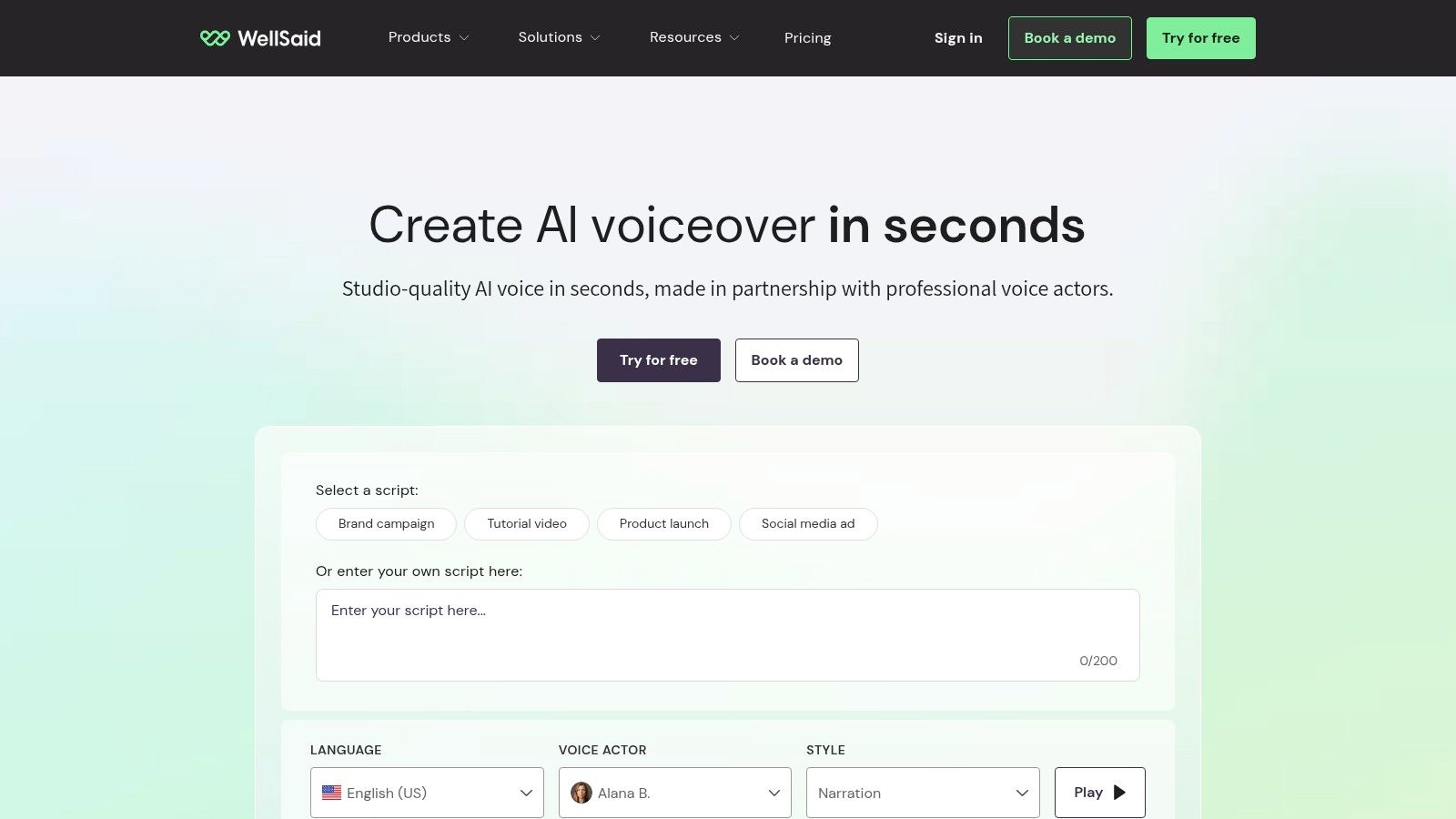 WellSaid Labs fits teams that need a polished commercial read, not a flashy clone. It offers English voice styles, enterprise language support, API access with streaming and SSML, and commercial usage rights on paid plans at WellSaid Labs. For property marketing, that gives you a cleaner path on licensing and a voice that holds up in listing videos.
Why it appeals to brand teams
Consistency is the selling point. Listing videos, luxury property reels, and recurring brand narrations benefit from a steady tone that does not draw attention away from the property. Paid-plan commercial rights are also easier to explain to stakeholders than a vague output policy, and that matters when legal and marketing both need a clear answer. If your team is comparing licensing setups, AI voice characters in practice offer a useful reference point.Where it's less flexible
Custom voice cloning usually sits behind enterprise engagement, so it is not the quickest choice for a solo agent who wants to clone a personal voice today. Multilingual support also leans toward enterprise plans, which makes it a weaker fit for teams that need one voice to cover several languages without a sales process.WellSaid is the tool I would pick when the script is stable, the tone needs to feel premium, and the organization values predictable commercial use over experimentation. That trade-off is plain in real-estate marketing, where licensing clarity can matter as much as the voice itself.
7. Speechify AI
Speechify AI works best when you want a practical, developer-friendly cloning setup for short-form content. It gives you voice cloning, consent verification, streaming, SSML, and API endpoints through a web console at Speechify AI. That combination is useful for automated property reels and social clips where you care more about throughput than highly manual voice design.
If you're comparing tools for commercial use, ask the consent question early and make the business prove the voice can be used the way the client expects. A platform can be fast and still be the wrong choice if it's hard to document authorization or if the voice quality changes too much from one model to another.
Why it can fit automation-heavy teams
The documentation is straightforward, and the platform is built for programmatic generation. That's useful if your workflow already turns listing data into assets and you want narration to be another automated step. For agencies that publish many short pieces of content, the API-first shape can save time.What to validate before rollout
The main caution is the same one I'd apply to any clone tool. Evaluate the selected voice on the actual property script, not just a demo sentence. Street names, unit numbers, square footage, price formatting, and local terminology are where a clone either feels reliable or starts creating cleanup work.If you're comparing tools for commercial use, ask the consent question early and make the business prove the voice can be used the way the client expects. A platform can be fast and still be the wrong choice if it's hard to document authorization or if the voice quality changes too much from one model to another.
Top 7 Voice Cloning AI Comparison
| Product | Implementation & Complexity 🔄 | Resource & Cost ⚡ | Expected Quality & Impact ⭐📊 | Ideal Use Cases 💡 | Key Advantages |
|---|---|---|---|---|---|
| ElevenLabs | Low–Medium: self-serve UI + API; consent checks for cloning | Credit-based metering; plan for high-volume use | ⭐ Very natural voices; strong multilingual coverage and dubbing | Fast generation of natural voiceovers, social clips, automated renders | Natural-sounding TTS, broad end-to-end audio tools (dubbing, SFX) |
| PlayHT | Low: self-serve platform with API and fast cloning | Competitive pricing; large monthly credits with rollover | ⭐ High quality but model-dependent; optimized for volume | Affordable many-export workflows for creators and teams | Large credit allotments and full feature set for creators |
| Resemble AI | Medium–High: enterprise-oriented setup and API integration | Enterprise pricing; may require sales/contact for advanced tiers | ⭐ High, enterprise-grade with watermarking and detection | Compliance-sensitive multilingual narration and regulated brands | Strong safety/compliance tooling and multilingual "clone once" capability |
| Descript Overdub | Low: built into editor for immediate in-context edits | Included in Descript plans; limits on lower tiers | ⭐ Good for editorial fixes; less granular model control | Editors needing "type-to-fix" narration in video/audio projects | Seamless in-editor cloning + noise cleanup and transcript-based edits |
| Microsoft Azure AI Speech, Custom Neural Voice | High: application/approval process and technical Azure setup | Pay-as-you-go across Azure services; enterprise cost model | ⭐ Enterprise-level quality with strict governance and controls | Large organizations requiring legal review, consent, and scale | Mature compliance, global Azure infrastructure and monitoring |
| WellSaid Labs | Low–Medium: self-serve TTS; custom voices via enterprise sales | Paid plans with clear commercial rights; enterprise pricing for custom | ⭐ Studio-quality voices and fast rendering | Premium brand narrations and serialized content | Consistent studio sound, clear licensing and enterprise security |
| Speechify AI | Low: web console and developer-friendly API; quickstart docs | Moderate; API pricing and custom cloning may need sales | ⭐ Practical quality for automated pipelines; model-dependent | Automated property reels, short social clips, agent/brand clones | Developer-friendly docs and rapid programmatic generation |
Turn Your Shortlist Into a Two-Week Voice Test
Pick two or three providers that match your workflow, then run the same listing script and brand line through each one. Compare how the clone handles proper nouns, addresses, and property terms, then confirm the consent and commercial-use terms before you record the voice owner. The best tool is the one that survives your real script, your legal review, and your expected export volume.
If your bigger goal is turning listing photos into finished videos, test these narration options against the voiceover and cloning features built into VideoTour.ai before you commit. The platform is built to turn photo sets into ready-to-share video tours, so it's a natural place to compare how cloned narration fits into the rest of the production chain.
VideoTour.ai turns listing photos into finished property videos, and it includes voiceover and voice cloning inside that workflow. If you're comparing best voice cloning AI options for real-estate marketing, visit VideoTour.ai to see how reusable narration fits into video generation, branding, and export.
If your bigger goal is turning listing photos into finished videos, test these narration options against the voiceover and cloning features built into VideoTour.ai before you commit. The platform is built to turn photo sets into ready-to-share video tours, so it's a natural place to compare how cloned narration fits into the rest of the production chain.
VideoTour.ai turns listing photos into finished property videos, and it includes voiceover and voice cloning inside that workflow. If you're comparing best voice cloning AI options for real-estate marketing, visit VideoTour.ai to see how reusable narration fits into video generation, branding, and export.