
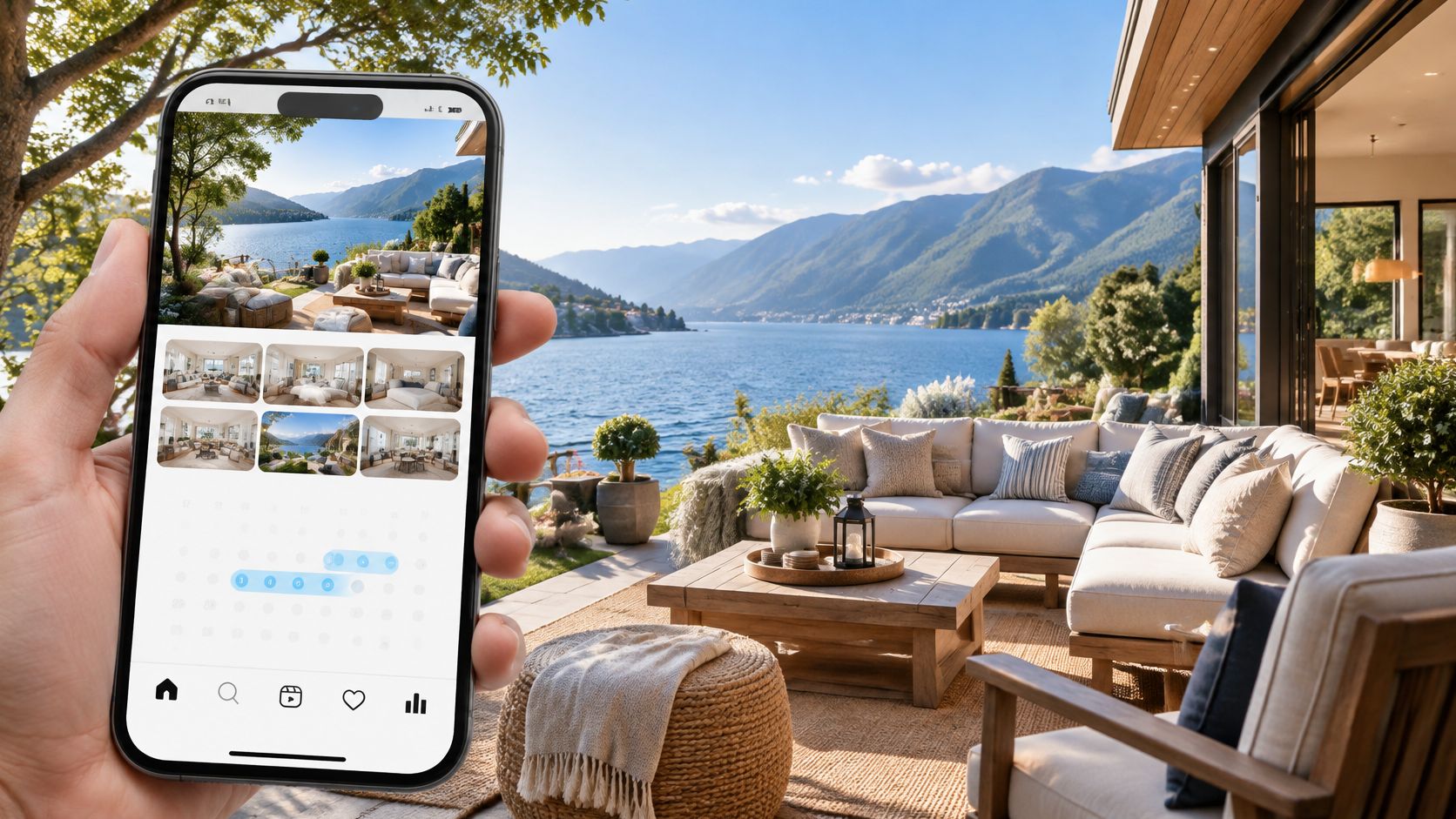
Airbnb reported 492 million nights and experiences booked in 2024, up 10% from 448 million in 2023, with revenue up 12% to $11.1 billion, according to Airbnb's 2024 annual filing with the SEC. That scale changes how you should think about short term rental marketing. You're not competing for a small pool of travelers who stumble onto your listing. You're competing for attention inside a marketplace that processes hundreds of millions of booking occasions, then trying to convert a brief look into paid nights at a rate that holds up.
Summary
Create an AI Video Tours from PhotosTry it For Free
Why Short Term Rental Marketing Is a Revenue Process
Say a two bedroom unit near a hospital gets steady search impressions, decent clicks, and almost no inquiries on weekdays. The owner assumes the price is wrong and cuts it. Inquiries still don't move, because the first five photos show a pretty living room but never show the desk, the second bedroom, or parking that weekday guests filter for. The leak wasn't price. It was the step between looking and asking.
Think of marketing as the pipe that fills your calendar, and occupancy as the water level that pipe produces. A leak at any joint shows up the same way, as empty nights, but the repair is different at each joint. That's why copying another host's tactics so often wastes money.
Think of marketing as the pipe that fills your calendar, and occupancy as the water level that pipe produces. A leak at any joint shows up the same way, as empty nights, but the repair is different at each joint. That's why copying another host's tactics so often wastes money.
The five stages a traveler moves through
Every booking passes through the same sequence, whether it starts on social media or on a platform search page.- Discovery: The traveler sees your place, your neighborhood, or your destination on social, search, or a booking platform.
- The click: Your cover photo, title, price, and review score earn a tap instead of a scroll past.
- The inquiry: The listing answers enough questions that the guest asks about dates, parking, or check in.
- The booking: Price, cancellation terms, reply speed, and availability turn interest into a paid reservation.
- The repeat stay: A good stay, plus a way to reach the guest again, produces a second booking without paying to find them twice.
A listing with strong photos and no inquiries has a different problem from one with plenty of views and no bookings. Fixing the wrong stage is the most common way hosts spend money and see nothing change.Your weakest stage is specific to your property, your guest mix, and your market. A beach house might leak at discovery in shoulder season. A city condo might leak at booking because weekday pricing doesn't match business demand. Before you spend on ads, a website, or a new photo shoot, look at your own numbers and ask one question. Which stage of the funnel is weakest in your own numbers this month?
Where Your Bookings Actually Come From
| Channel | Best for | Effort | Role in the funnel |
|---|---|---|---|
| Booking platforms (Airbnb, Vrbo, Booking.com) | First-time guests and volume | Low to set up, ongoing ranking work | Main source of new demand and first bookings |
| Direct booking website | Repeat guests and referrals | Medium, requires a simple site and booking tool | Captures returning and referred guests |
| Instagram, TikTok and YouTube Shorts | Destination inspiration and awareness | Medium, requires regular content | Introduces your property before a guest searches |
| Google search and Business Profile | Local searches with clear intent | Low to medium | Reaches travelers already considering the area |
| Email to past guests | Repeat stays and referrals | Low once a list exists | Promotes available dates to a known audience |
| Paid ads | Short-term visibility for specific dates | Medium, requires tracking | Targets campaigns for gap nights |
Direct demand can still make a material difference. In the first quarter of 2024, one Airbnb host increased direct bookings from 10% to 25% of reservations, generating an additional $500,000 in revenue, according to Business Insider's reporting on hosts building direct channels. Direct bookings avoid platform fees, but a website does not create demand on its own. It needs visitors from repeat stays, referrals, social content, or search.
Why direct share alone misleads you
Direct booking share misses how guests move between channels. Someone may see a Reel, search for the property by name weeks later, and book through Google. Analytics may credit Google with the reservation, even though the Reel helped create it. A guest who first discovered you on a booking platform and later rebooks directly is another mixed case. Judge channels by the bookings they start or assist, not just by the final click.Still, relying on one platform creates exposure. In a 2026 survey of 326 operators across 46 countries, 62.3% generated less than 25% of revenue from direct bookings and 73.6% reported increasing competition, according to The Host Report's summary of the operator survey. If one platform supplies most reservations, a change in its ranking can affect a large share of your calendar.
Google serves a narrower purpose. A Business Profile and local search presence can reach travelers who already know the area they want. In 2024, Google accounted for 5% of bookings among vacation-rental operators surveyed, according to Hostfully's 2024 hospitality report as reported by Short Term Rentalz. Treat it as a supporting channel unless your own results show otherwise.
How to split the budget when attribution is messy
Set a fixed test budget for each channel and track inquiries, bookings, and cost per booking over 30 days. Cost per inquiry is useful for an early read, but a cheap inquiry that never books is not a good return. Compare channels by speed as well as results: compare traffic channels by speed before putting a quarter's budget into a slow channel when you need to fill near-term gap nights. For broader context on evaluating acquisition sources, see how real estate lead sources are compared.First 90 days rule: Choose two primary channels, one where travelers already search and one you can build. Add another only when you can track whether it contributes inquiries and bookings.
Listing Photos and Video Tours That Earn Clicks
Your cover photo does more selling than any other asset you own. A peer reviewed study in Management Science found that the cover image has a significantly larger effect on demand than subsequent images, and optimizing the full photo order increased bookings by an average of 11.0%, according to the Management Science study of Airbnb photo sequencing. The same modeling put the gain at an estimated 2 to 5 additional booked nights annually, equivalent to approximately $500 to $1,100 in added revenue, depending on neighborhood and market size. Photo order isn't decoration. It's a conversion funnel in miniature.
That finding should also settle the professional photography question for most hosts. A Management Science study found that listings using verified professional photos achieved 8.98% higher occupancy than listings using host taken images, as summarized in BnBCalc's review of Airbnb listing research. I would spend first on a professional shoot of the hero image and the first five photos, where the sequence effect is strongest, before paying for anything else. A full reshoot of every corner can wait. The first five frames can't.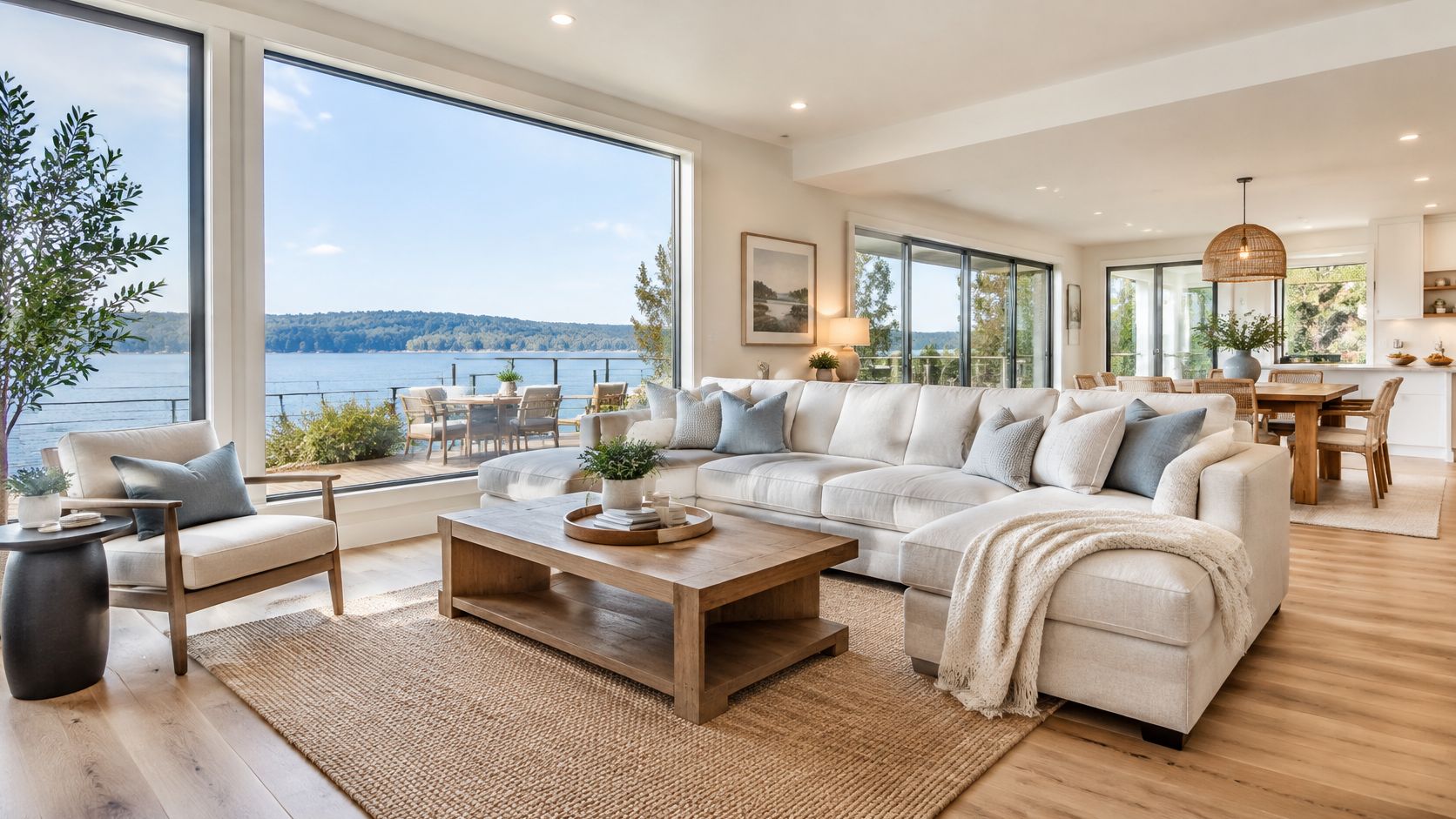
Clicks rising while inquiries stay flat means the new image attracts the wrong guest or promises more than the listing delivers. Inquiries rising while bookings stay flat points at price, minimum stay, or slow replies, not photography. Let the stage that moves tell you what you fixed.
That finding should also settle the professional photography question for most hosts. A Management Science study found that listings using verified professional photos achieved 8.98% higher occupancy than listings using host taken images, as summarized in BnBCalc's review of Airbnb listing research. I would spend first on a professional shoot of the hero image and the first five photos, where the sequence effect is strongest, before paying for anything else. A full reshoot of every corner can wait. The first five frames can't.
Build the sequence in this order
- Lead with the differentiator. Choose a bright, wide shot that shows the property's strongest feature, such as a lake view, a rooftop terrace, or the bed facing the water. If nothing distinguishes the first frame from the twelve listings around it, the scroll continues.
- Answer objections with the next four images. Put sleeping capacity, bathrooms, workspace, outdoor space, and access in that early run. Guests don't book what they can't verify, and every unanswered question is a reason to open a competitor's listing instead of sending you an inquiry.
- Shoot for accuracy, not drama. Shoot in daylight, straighten verticals, and remove clutter, cords, and cleaning supplies. Accurate framing sets expectations, and a guest who arrives to find the room smaller than the photo suggested writes the review you don't want.
- Cover every sellable amenity. Photograph parking, laundry, the coffee machine, the crib, the EV charger, and self check in hardware. If guests ask about it in messages, it belongs in the gallery with a caption.
- Turn the ordered set into motion. Build a short video with captions from the same sequence, then cut vertical and square versions for each placement. Using a dedicated Airbnb video tour format keeps the opening frame and thumbnail deliberate rather than whatever frame the platform grabs.
Test one variable at a time
Change one hero image, run it for two to four weeks, and compare listing views and inquiry rate against the prior period. Don't swap the hero, the title, and the price in the same week, or you'll learn nothing. Watch listing views, inquiry rate, booking conversion, and revenue per available night together.Clicks rising while inquiries stay flat means the new image attracts the wrong guest or promises more than the listing delivers. Inquiries rising while bookings stay flat points at price, minimum stay, or slow replies, not photography. Let the stage that moves tell you what you fixed.
Writing Offers and Pricing Promotions That Protect Rates
Your headline and first sentence should name the guest the place suits. "Two bedrooms, one block from the ski lift, sleeps six" tells a family more in eight words than "charming mountain retreat" tells anyone. A remote worker scanning listings wants to see a desk and fast internet in the first line, not after three paragraphs about the throw pillows. Specific beats attractive, because the guest is filtering, not browsing for fun.
Promotions work the same way. Each one fits a situation, and each one carries a cost when you use it in the wrong one.
The trap sits right next to it. A discount on a date that would have booked anyway is pure margin given away, and you can't always tell the difference in advance. Weekend dates in peak season, event weekends, and dates inside your normal booking window often fill without help. Discounting those trains guests to wait and pulls your average rate down for no extra nights.
Promotions work the same way. Each one fits a situation, and each one carries a cost when you use it in the wrong one.
| Promotion | Best used when | Risk to watch |
|---|---|---|
| Early-bird discount | Booking well ahead of the date | Lower rate on dates that would have booked anyway |
| Length-of-stay discount | Weekly or monthly stays on quieter weeks | Lower nightly rate for guests who would have paid full price |
| Last-minute gap-night offer | Open dates within seven days | Can cannibalize full-price bookings that would have arrived organically |
| Repeat guest code | Past guests and referrals | Codes leak onto public listings if not controlled |
| Event or weather-responsive campaign | Local events, storms or holidays | Strong urgency, but needs fast creative and clear availability |
The logic of a gap night
An open date seven days out is worth more discounted than empty. A discounted night still covers cleaning, utilities, and some margin, while an empty night covers nothing and can't be stored for later. That's the honest case for last minute offers, and it's a strong one.The trap sits right next to it. A discount on a date that would have booked anyway is pure margin given away, and you can't always tell the difference in advance. Weekend dates in peak season, event weekends, and dates inside your normal booking window often fill without help. Discounting those trains guests to wait and pulls your average rate down for no extra nights.
Guardrails that keep offers honest
- Set a floor for average daily rate. Decide the lowest nightly rate you'll accept by season and don't let stacked promotions push below it. Without a floor, an early bird discount plus a weekly discount plus a platform promotion can combine into a rate you'd never have agreed to.
- Use minimum stays on peak weekends. A two or three night minimum around events protects you from a single discounted Saturday blocking a full price three night stay.
- State cancellation terms before checkout. Urgency offers convert worse when guests hit a surprise policy at the last step, and unclear terms produce chargebacks and complaints.
- Keep repeat guest codes private. Send them by email to past guests. A code pasted into a public listing becomes a permanent public discount.
Discount the empty date, not the property. If an offer doesn't name the specific nights it's trying to fill, it's probably discounting nights that didn't need help.Close the loop with a simple test. Compare last minute bookings during the offer with the same dates a year earlier, and look at total revenue for those dates, not just booking count. If bookings rose but revenue fell, the offer moved demand earlier or cheaper without creating any. If both rose, you found incremental demand and you can repeat the play with confidence.
Building a Content Routine for Reels and Video
Social content earns its place before the search happens. In a Booking.com commissioned survey of 32,300 adults across 32 markets, 39% of people who had booked vacation rentals used social media for trip inspiration, and among those, 63% said content from friends and family helped them choose a destination, according to Booking.com's partner guidance on vacation rental discovery. That pattern favors content that looks like a real traveler's recommendation over polished ad creative. Your job is to be present, specific, and repeatable.
The routine that works for a small operator is plan once and cut many times. One property produces far more usable assets than most hosts realize, especially when the photo sequence is already ordered by booking objection. You're not inventing content weekly. You're slicing the same material for different moments.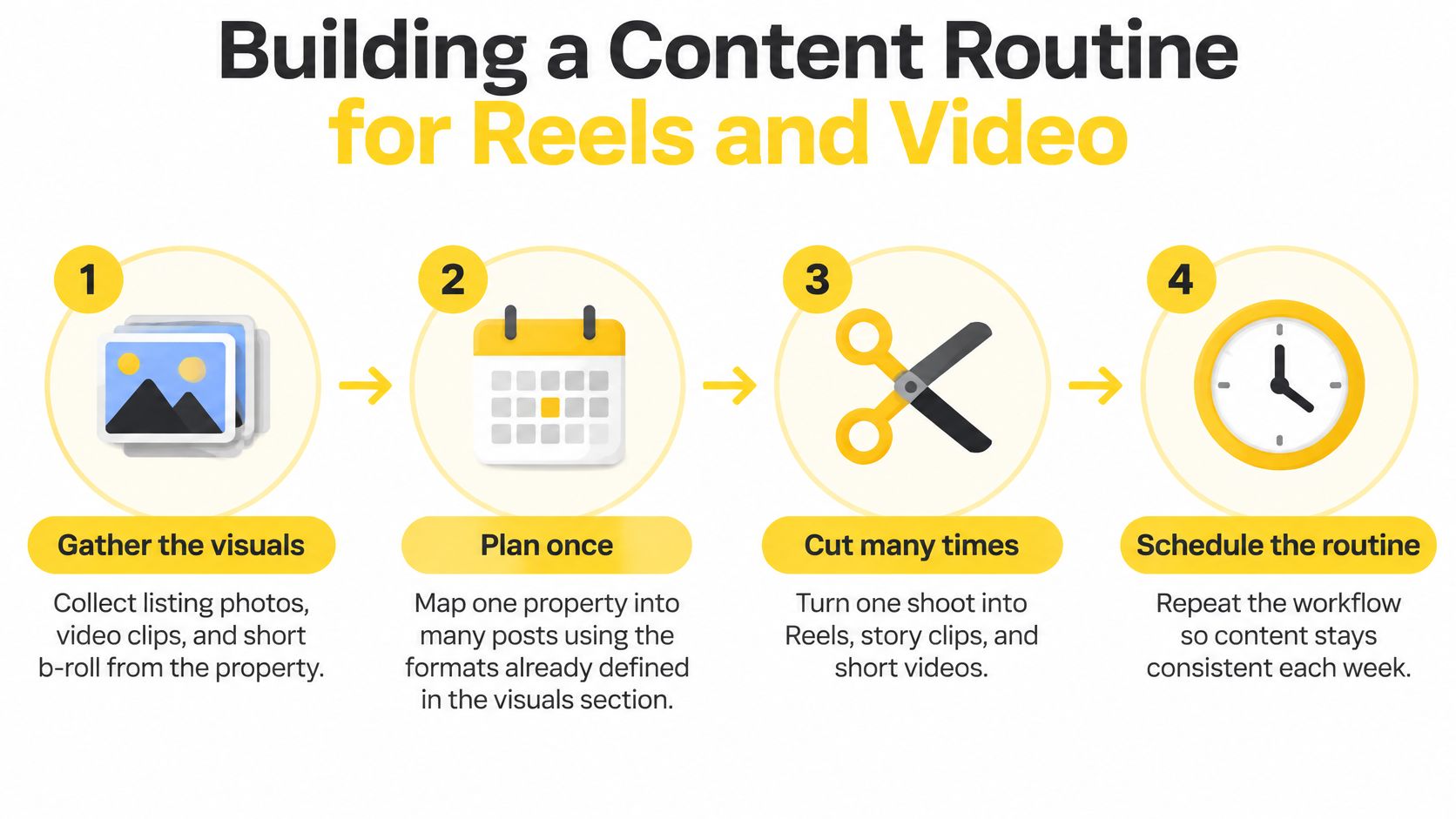
For the broader mechanics of cadence, formats, and captions, the practices in a structured approach to real estate social media marketing transfer directly to rental properties. The difference is your success metric. A listing agent wants showing requests. You want saves that turn into inquiries for specific open dates, and a past guest list that answers when you have a gap to fill.
The routine that works for a small operator is plan once and cut many times. One property produces far more usable assets than most hosts realize, especially when the photo sequence is already ordered by booking objection. You're not inventing content weekly. You're slicing the same material for different moments.
A weekly workflow you can actually keep
- Gather and sort the assets. Collect the property's photos and any short guest clips, sorted by room, view, and amenity. Sorting once saves you from hunting through a camera roll every time you post.
- Make one vertical Reel of 15 to 30 seconds. Put the hook in the first two seconds, such as the view from the bed, the door opening onto the terrace, or the walk from the front door to the water. Everything after that opening answers one question well.
- Post with location context. Add a location tag, name the neighborhood in the caption, and include one line that answers a question guests ask often, such as parking, walk time to the venue, or whether the desk fits two monitors.
- Reuse the same assets downstream. Send the clip to past guests by email when you have open dates, and use it in a gap night campaign. Production cost is already sunk, so each reuse is nearly free distribution.
- Review weekly and cut losers. Look at saves, shares, and inquiry messages, not views alone. Drop formats that bring none of those after a fair run.
What to film besides the rooms
Guest oriented storytelling carries the weeks when you have no new property footage. Show a local hiking route from the trailhead, the breakfast place you'd send your own family to, or the balcony at sunset with the actual sounds of the street. When guests create that kind of material for you, a structured UGC platform can help you collect and organize permissioned guest content instead of losing it in direct messages. Always get permission before reposting, and credit the guest.For the broader mechanics of cadence, formats, and captions, the practices in a structured approach to real estate social media marketing transfer directly to rental properties. The difference is your success metric. A listing agent wants showing requests. You want saves that turn into inquiries for specific open dates, and a past guest list that answers when you have a gap to fill.
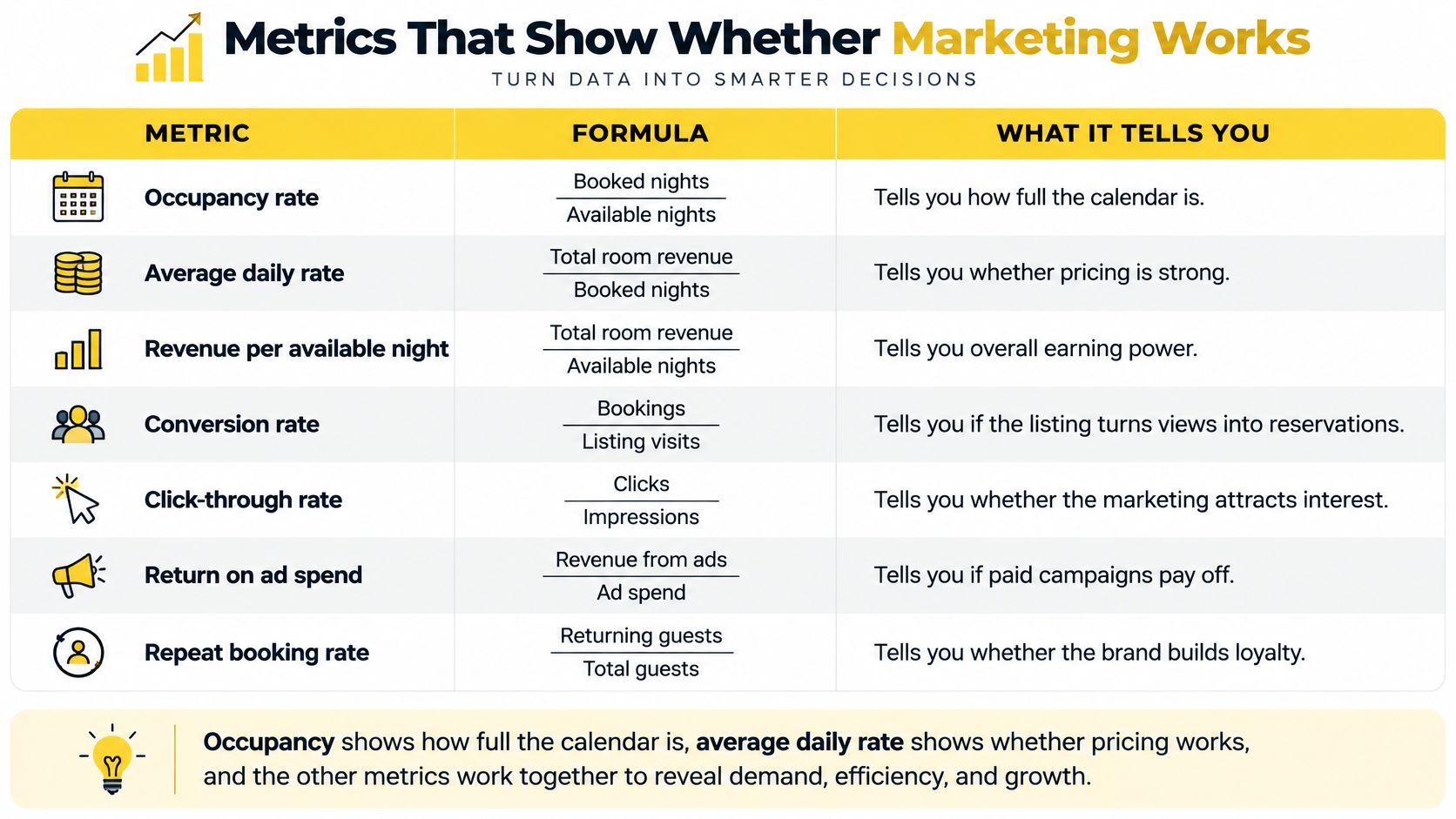
Metrics That Show Whether Marketing Works
| KPI | How to calculate | What it tells you |
|---|---|---|
| Occupancy rate | Booked nights divided by available nights | How full the calendar is |
| Average daily rate (ADR) | Stay revenue divided by booked nights | Whether pricing and promotions hold value |
| Revenue per available night (RevPAR) | Total revenue divided by available nights | Combined effect of occupancy and rate |
| Listing view-to-inquiry rate | Inquiries divided by listing views | Whether the listing convinces people who look |
| Inquiry-to-booking conversion | Bookings divided by inquiries | Whether price, reply speed and availability work |
| Direct booking share | Direct bookings divided by total bookings | How much you depend on platform fees and rankings |
| Repeat booking rate | Guests with two or more stays divided by all guests | Loyalty and the effect of email and content |
Diagnose with the funnel metrics
The two middle metrics point to different repairs, so track them separately. A weak listing view to inquiry rate means people look and leave, which sends you back to photo order, headline, amenity coverage, or review score. A weak inquiry to booking conversion means interested guests stall, which points at total price with fees, minimum stay rules, cancellation terms, or how fast and clearly you reply.When results disappoint, check view to inquiry rate first. It's the earliest metric you control directly, and it responds within days of a photo or headline change. Revenue metrics lag by weeks and mix in seasonality, so they confirm a fix rather than locate one.
Attribution without fooling yourself
Perfect attribution isn't available in a market split across platforms, social, search, and direct. Useful attribution is. Use a unique tagged link per channel where the platform allows it, a distinct promo code for each offer, and one short post stay question asking how the guest found you. Three imperfect signals that agree beat one dashboard you trust blindly.Track repeat booking rate by cohort, meaning guests grouped by the quarter they first booked. Cohort tracking shows whether your email and content build loyalty over time, instead of letting one busy season flatter the number. When you set targets, it helps to choose social metrics by goal so awareness content is judged on saves and profile visits while gap night posts are judged on inquiries.
Views and likes can rise while inquiries stay flat. When that happens, the content is entertaining people who will never book, or the hero image is promising something the listing doesn't deliver.Set a review rhythm and keep it boring. Check funnel metrics weekly, revenue metrics monthly, and compare each period with the same period last year so seasonality doesn't masquerade as marketing skill. Change one variable at a time, note the date you changed it, and give it enough bookings to mean something before you judge it.
Confirm Your Channel Mix This Month
Turn the last sections into a dated 30 day plan. Five actions, each with an owner and a deadline, beat a vague intention to market more.
Start with one number. Check your listing view to inquiry rate first, because it tells you whether the listing itself converts before you spend to send it more traffic. Then make the one decision that matters this week. Which channel gets the next 30 days of your budget, and what inquiry number will prove it deserved it?
Turn the listing photos you already have into ready to share video tours and Reels with cinematic motion, captions, music, and branding, so your hero sequence can work across your listing, social posts, and gap night emails without another shoot. Visit VideoTour.ai to create your first property video and put it into this month's channel test.
- Audit the first five photos. Check the hero image and the next four frames against the objection order of sleeping capacity, bathrooms, workspace, outdoor space, and access. Replace or reorder anything that doesn't earn its place.
- Pick two primary channels. Choose one where demand already exists and one you're building, then set a fixed weekly time block for each. Time you don't schedule goes to guest messages instead.
- Add tracking before you spend. Create a unique link or promo code per channel and add a post stay question about how the guest found you. Data collected after a campaign starts is data you don't have.
- Schedule two gap night tests. Run one last minute offer and one content push for open dates in the next 30 days, each with a clear end date. Compare outcomes on bookings and revenue, not reach.
- Review at day 30 and cut. Keep only what raised inquiries or bookings. Everything else loses its budget to the channels that did.
Start with one number. Check your listing view to inquiry rate first, because it tells you whether the listing itself converts before you spend to send it more traffic. Then make the one decision that matters this week. Which channel gets the next 30 days of your budget, and what inquiry number will prove it deserved it?
Turn the listing photos you already have into ready to share video tours and Reels with cinematic motion, captions, music, and branding, so your hero sequence can work across your listing, social posts, and gap night emails without another shoot. Visit VideoTour.ai to create your first property video and put it into this month's channel test.